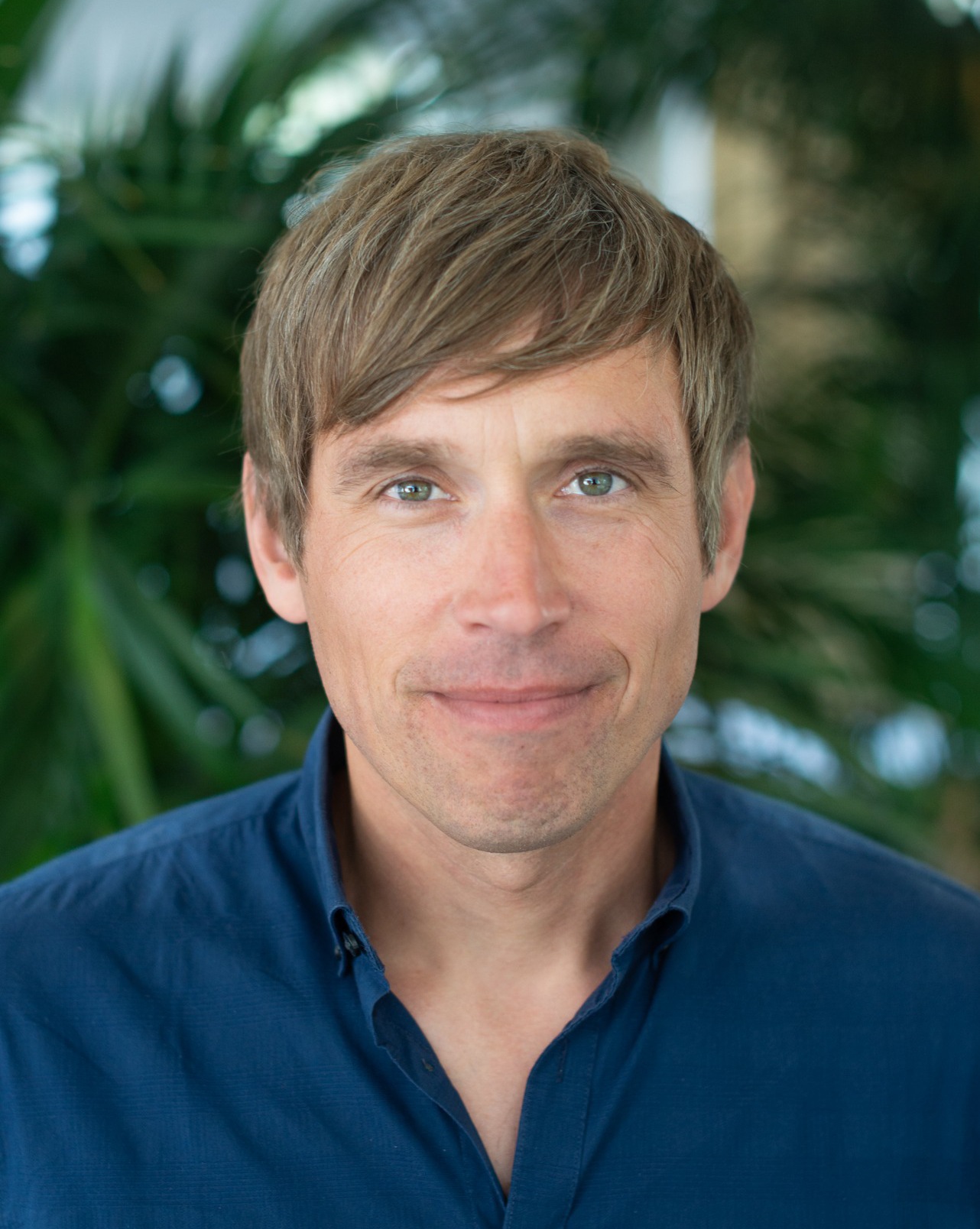
The Signal Peptide Whisperer
ProfileThere is a 20-amino-acid sequence at the front of every secreted protein. It tells the cell's machinery where to send the cargo - and then it gets clipped off and discarded, as if it never existed. For decades, the biotech industry treated that sequence as an afterthought. Tero-Pekka Alastalo decided it was actually everything.
Alastalo is the CEO and co-founder of Avenue Biosciences, a transatlantic protein engineering company headquartered in Palo Alto and Helsinki that has built the world's first platform to systematically engineer and measure those N-terminal signal peptides at scale. Not one or two variants. Thousands - simultaneously. The results in external validations: protein yields up to 500% higher than industry standards. The implication: every difficult-to-make biologic, from next-generation antibodies to AI-designed proteins, just got a new lever.
"The secretory pathway is one of the remaining black boxes in therapeutic protein production - our technology makes increasingly complex proteins more manufacturable."
- Tero-Pekka Alastalo, CEO, Avenue BiosciencesThe path to that statement runs through three continents and a career that most people would be proud to claim as a finale. Alastalo trained as a pediatric cardiologist in Finland, earned his MD and PhD from the University of Turku, and then landed a postdoctoral fellowship at Stanford University School of Medicine - spending years inside the molecular genetics of cardiovascular disease. He became an Adjunct Professor of Pediatrics at the University of Helsinki along the way. And then, in the manner of people who have absorbed enough of a field to see its edges, he started building companies.
His first was Blueprint Genetics. The year was 2012. Alastalo and two colleagues - Samuel Myllykangas and Juha Koskenvuo - returned from their American research stints and founded a clinical genetic testing laboratory focused on rare inherited diseases. In a world that was still learning what next-generation sequencing meant for diagnosis, Blueprint was building panels, mutation databases, and clinical interpretation tools. Quest Diagnostics, one of the world's largest laboratory companies, acquired Blueprint Genetics in 2020. Alastalo had his first exit.
"For the past 15 years, I have been an entrepreneur in life science during pivotal times."
- Tero-Pekka AlastaloHe was not done. During his postdoctoral years at Stanford and UCSF, Alastalo had become friends with Ville Paavilainen, a cell biologist who was quietly doing something extraordinary at the University of Helsinki's Institute of Biotechnology: mapping how cells actually process proteins through the secretory pathway. Most of that research stayed in the lab. Most of the biotech industry was not asking the right questions. When Alastalo looked at what Paavilainen had built, he recognized an industrial-scale opportunity wrapped in a fundamental biology paper.
Avenue Biosciences was incorporated in 2023. The founding team included Paavilainen as Research Director, Katja Rosti - a protein biologist with 20 years in academia and major biotech firms - as COO, and Juho Kellosalo as CSO. Helsinki University Funds backed them as founding investors. The company emerged from stealth in 2024, raised a $2.5M seed round led by Voima Ventures with Inventure and US angels, and within months of launching commercially had generated revenue. In January 2026, Balnord and Tesi co-led a $5.7M seed extension, bringing total funding to $8.2M.
"New, life-saving treatments must be brought to market faster and made more widely accessible to patients worldwide."
- Tero-Pekka AlastaloWhat Avenue has built is not a reagent optimization service. It is a platform that generates what Alastalo calls "industry-first datasets" - structured information on how specific signal peptides interact with their target proteins across thousands of conditions. Feed that data to machine learning models, and you start to get something the field has never had: a predictive map of the secretory pathway. Avenue's platform has been validated across antibodies, biosimilars, vaccines, mRNA therapy components, AI-designed proteins, and gene therapy vectors. The 5,500+ signal peptide library they analyze simultaneously is not a number you see in a competitor's data sheet, because there is no comparable competitor.
Alastalo speaks at BIO conventions and Innovation for Health summits. He runs a 21-person team split between Silicon Valley and Helsinki. His phone still has a Finnish country code. He has been doing this long enough to know that the most durable companies are built on biology that the field has not yet learned to respect - and that the window for getting there first is always shorter than it looks.