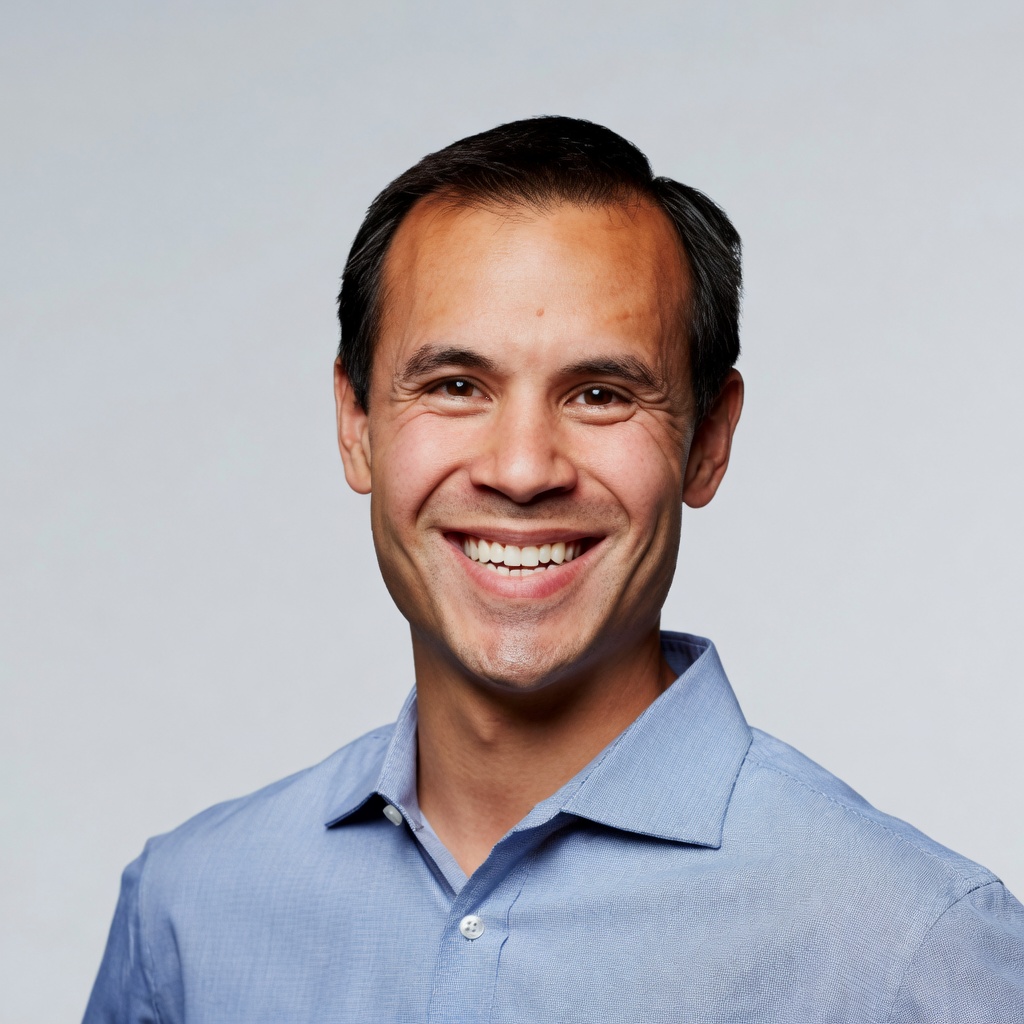
The Belgian Who Rewired Himself
His name is pronounced TAHN-ghee. It trips people up at first. But then again, so does everything about Tanguy Chau's story - right up until the moment it all clicks into place.
The son of a French dentist mother and a Vietnamese war-refugee father, Chau grew up in French-speaking Belgium with an attic, a chemistry kit, and a head for systems. He was already representing Belgium in international sailing competitions and chemistry olympiads before he turned 18. Then he moved to California - speaking zero English - with a plan so audacious that only someone who hadn't yet learned that it was improbable could attempt it.
He failed Berkeley's English language test on arrival. He enrolled at De Anza College in Cupertino. He self-taught Vietnamese. He learned Mandarin during a research stint at Tsinghua University. He graduated UC Berkeley two years later with a 4.0 GPA, a Departmental Citation in Chemical Engineering, and placement among the five finalists for the University Medal - Berkeley's highest graduating senior honor. Then he went to MIT and did it three times: a Master's in Chemical Engineering, a PhD in Chemical Engineering, and an MBA in Finance. All at once.
This is the kind of resume that gets you onto the MIT Corporation's Board of Trustees - which he joined in 2012, elected at a striking 28 years old. It also gets you mentored by Silicon Valley legends like Joe Lonsdale, Jim Kim, and Brian Koo at Formation 8.
Seven Years on the Other Side of the Table
Before Paxton, Chau spent seven years as a venture capitalist - first at Angeleno Group in Los Angeles running energy investments, then as a principal at Formation 8 in San Francisco (a $1 billion-plus venture firm), and then as a VC principal at Mayfield Fund in Menlo Park, betting on enterprise software. He was part of the Kauffman Fellows program, Class 20, a fellowship that sits at the intersection of venture capital and high-growth entrepreneurship.
Seven years watching founders pitch. Seven years thinking about which companies would win and why. And then, in 2022, he switched sides.
The question he kept coming back to was not "which startup will win?" but "why is the legal industry so broken?" 67% of in-house attorneys at fast-growth companies spend the majority of their time on low-value, repetitive work. Case law research that takes hours. Document review that takes days. Drafting that takes weeks. The tools hadn't changed much in a generation. The incumbents were expensive, slow, and built for BigLaw.
Chau teamed up with Mike Ulin, now Paxton's CTO, and they co-founded Paxton AI to fix it.
"Our mission is to make advanced legal tools accessible to firms of every size, leveling the playing field across the industry."
- Tanguy Chau, Co-Founder & CEO, Paxton AIWhat Paxton Actually Does
Paxton is not a chatbot. It is an AI legal assistant purpose-built for the specific cognitive labor that lawyers do every day: researching statutes and case law, drafting contracts and briefs, analyzing documents in bulk, and staying current with a legal landscape that updates continuously across every jurisdiction in the United States.
The accuracy problem is the first thing anyone in legal tech has to answer for. Generative AI hallucinates - it invents citations, makes up case names, fabricates precedents. Stanford researchers built a benchmark specifically to measure this. Paxton hit a 94% non-hallucination rate on that benchmark. That number matters in an industry where a wrong citation can sink a case.
Every output comes with a Confidence Indicator and source verification through an AI Citator - a tool that checks whether the cases Paxton cites actually say what Paxton says they say. For solo practitioners and small firms with no associates to double-check work, that's not a feature. That's the product.
The client base runs from solo practitioners all the way to several of the nation's 20 largest law firms. Bank of America is a client. The spread matters - it validates Chau's core thesis that you can build one platform that serves the whole market, not just the firms that can afford enterprise contracts.
"You don't need a lot of things to be happy in life. In reality, it's more about human contact."
- Tanguy Chau, UC Berkeley Profile, 2005The 10x Lawyer Thesis
Chau writes for Forbes Tech Council. He's spoken at TechCrunch Disrupt 2024 on a panel that thousands of attendees voted their must-see session: "How AI is supercharging tools for knowledge workers." His argument is consistent and specific.
The fear in the legal industry is that AI will replace lawyers. Chau says that's the wrong framing. The right question is: what does a lawyer do at their best? Not search for cases. Not format citation lists. Not re-read contracts for boilerplate. At their best, lawyers argue, advise, negotiate, protect, and build. The research, the drafting, the document review - that work can and should be augmented by AI. What comes out the other side is a lawyer who operates at ten times the capacity. A 10x lawyer.
It's a thesis that resonates differently depending on which side of the desk you sit on. For BigLaw associates, it can feel threatening. For solo practitioners and small-firm attorneys who've been competing at a structural disadvantage against firms with 10x the staffing, it sounds like the cavalry arriving.
That's why Paxton's growth curve looks the way it does: 8x growth in active customers and 14x growth in monthly recurring revenue, all in nine months. The people who've been waiting for this exact tool the longest are moving fastest.
MS, Chemical Engineering
MBA, Finance (Sloan)
4.0 GPA • Departmental Citation
University Medal Finalist
Arrived from Belgium with no English; built the foundation here
Still studying while running a venture-backed AI company
- ⚗️Belgian National Laureate in Chemistry (1999) - represented Belgium at the International Chemistry Olympiad
- ⛵Competed for Belgium's national sailing team at the European Sailing Championship
- 🏅UC Berkeley University Medal Finalist - one of five finalists for the highest graduating senior honor
- 🎓Triple MIT degrees: PhD + MS in Chemical Engineering + MBA in Finance simultaneously
- 🏛️Elected to MIT Corporation (Board of Trustees) in 2012 - the governing body of MIT
- 💼Kauffman Fellows Program, Class 20 - mentored by Formation 8's founding partners
- 📈Led Paxton AI to 14x MRR growth and 8x customer growth in nine months under his leadership
- 🎯94% non-hallucination rate on Stanford's Legal Hallucination Benchmark - among the highest in legal AI
- 🎤TechCrunch Disrupt 2024 Audience Choice winner for panel on AI and knowledge workers