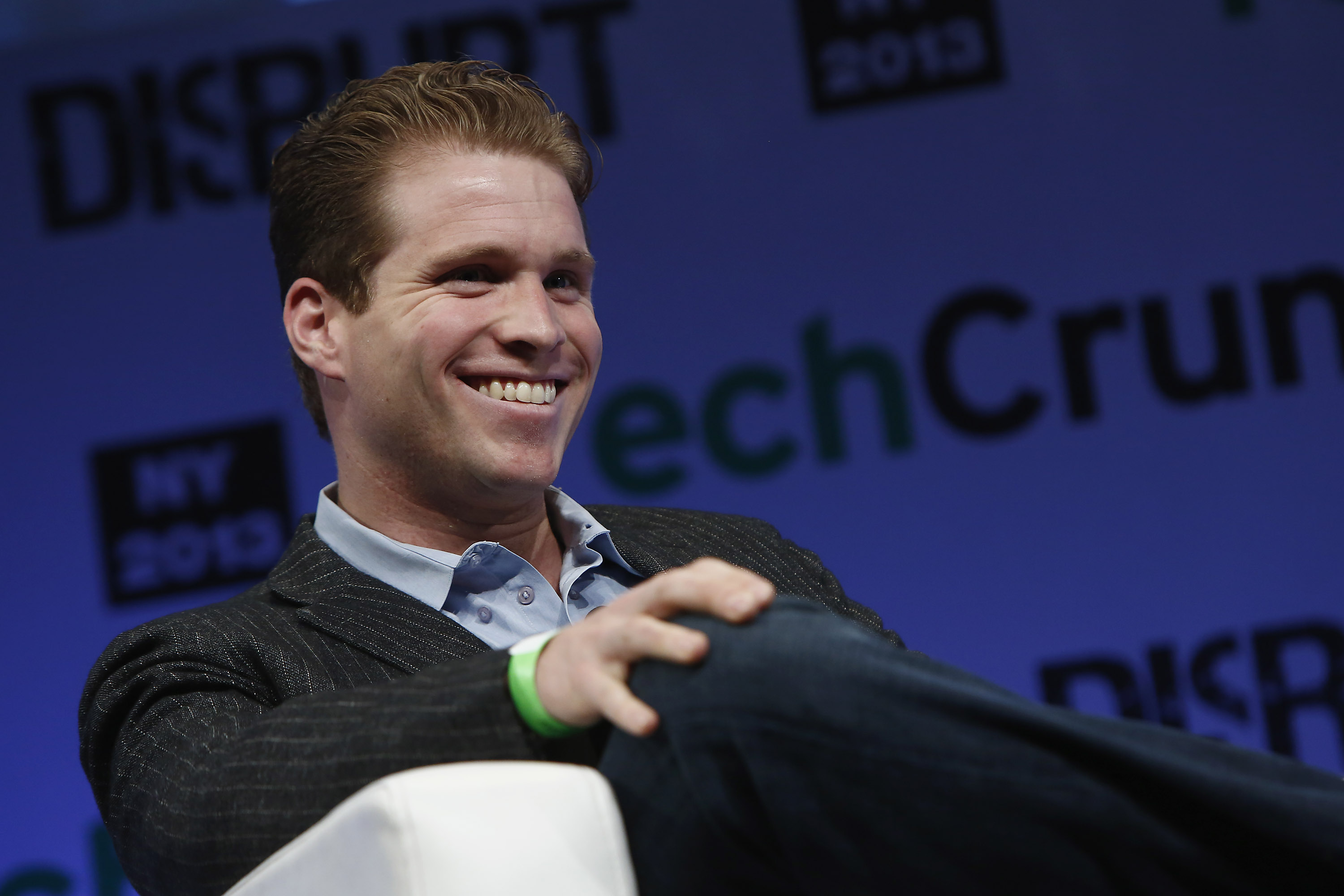
The Builder Who Won't Stop Building
Joe Lonsdale walked into PayPal as a Stanford sophomore and walked out with the mentor who would change his life. Peter Thiel handed him a blueprint - not in words, but in proof: that the right idea, the right timing, and a refusal to accept institutional limits can build something the world didn't know it needed. Lonsdale took that lesson and ran with it further than almost anyone in his generation.
By the time most venture capitalists are cutting their third fund, Lonsdale had already co-founded six companies worth billions, moved to Texas to rebuild American institutions from scratch, started a university, launched a think tank that passes laws in 30 states, and hosts a podcast that gets sitting OMB directors and NASA administrators to talk about things they won't say elsewhere. He is not, by any measure, a man in a hurry. He is a man who simply refuses to stop.
The press tends to file Lonsdale under "Palantir guy," as if what he did at 21 is still the defining act. It isn't. Palantir is the origin story. What came after is the actual biography.
Chess, PayPal, and the Thiel Effect
Fremont, California produced Joe Lonsdale - the son of a chess coach whose public elementary school team won the California state championship for two straight decades. That's not background noise; that's the operating system. His father taught young Joe that mastering the endgame requires seeing ten moves ahead, and that even the humblest school district can field a championship team if you build the right incentives and refuse to make excuses about resources.
By middle school, Lonsdale had won the California junior chess state championship twice. Then he stopped - not because he lost interest, but because he spotted a higher-leverage game. Computer science, sports, and building things took over. He arrived at Stanford in 1999 and found his way to The Stanford Review, the libertarian paper Peter Thiel co-founded, becoming editor-in-chief in 2002. He also found, eventually, his future wife Tayler Cox - who was editing the same paper without either of them initially knowing the other existed.
The PayPal internship was the catalyst. Watching Thiel and the early PayPal team apply fraud-detection algorithms to financial crime planted the seed for what would become Palantir. The idea: take the same big-data infrastructure PayPal used to catch fraud and apply it to terrorism, warfare, and intelligence. The CIA's venture arm, In-Q-Tel, was the first investor. The Defense Department became the anchor customer. Palantir now approaches a $400 billion valuation.
"If you think you have 2-5 reasons for doing something, what that means is you actually haven't figured it out."
Joe LonsdaleAfter Palantir: The Serial Founder's Playbook
Lonsdale left Palantir in 2009 - before it was worth much of anything - and began building the portfolio of companies that would define the next chapter. Not as an investor writing checks, but as a co-founder rolling up sleeves. His signature move: find a sector with structurally broken software, assemble a team of Palantir alumni and technical specialists, and build the infrastructure layer that incumbents can't or won't build.
Addepar: Fixing Wealth Management's Back Office
In 2009, the financial advisory industry was still running on spreadsheets and legacy software from the 1990s. Addepar was Lonsdale's answer - a portfolio analytics platform that now processes data for advisors managing between $5 and $7 trillion in assets. He transitioned to chairman in 2013 as the company scaled, but the architecture remains his. It's a quiet behemoth that most people outside finance have never heard of.
OpenGov: Government Software That Actually Works
In 2012, Lonsdale co-founded OpenGov with Zachary Bookman - cloud budgeting and financial management software for local and state governments. The thesis was brutal in its simplicity: government finance teams deserve software as good as what their private-sector counterparts use. Cox Enterprises acquired OpenGov in 2024 for approximately $1.8 billion. Another quiet exit. Another system rebuilt from the ground up.
8VC: The Firm That Builds What It Bets On
When Formation 8 fell apart in 2015, Lonsdale didn't regroup - he upgraded. 8VC launched with 15 veterans from the previous firm and a philosophy that separated it immediately from the rest of Sand Hill Road: dedicate 25-30% of every fund to co-founding companies from scratch. Not just backing founders - becoming one. Repeatedly.
The "Build" program recruits teams that look nothing like a typical startup founding team: Navy SEALs, Nobel laureates, Palantir alumni, domain specialists who've never touched a term sheet. Lonsdale assembles them, finances them, and helps run them. The result is a portfolio that reads less like a VC fund and more like a private industrial policy.
As of 2025, 8VC manages over $6 billion across six funds, with 36 unicorns, 16 IPOs, and 40 acquisitions in the portfolio's history. Fund VI, which closed in 2025 at $998 million, focuses on what Lonsdale calls "national capability" companies - businesses in defense, bioinfrastructure, and industrials that strengthen US strategic capacity. Anduril Industries - the defense hardware company backed by Palmer Luckey - raised $2.5 billion in June 2025 at a $30.5 billion valuation. 8VC was in from the beginning.
"History helps you build frameworks about how the world works, as well as how it could be working differently than it is now. To invest and build successfully you need to be able to think about how the world works, and what might come next."
Joe Lonsdale - On philosophy and investingBuilding Institutions, Not Just Companies
In 2016, Lonsdale co-founded the Cicero Institute - a conservative public policy think tank operating out of Austin. The policy pitch is practical rather than ideological in the traditional sense: fix criminal justice, homelessness, healthcare access, and housing with competitive markets and government accountability rather than expanded bureaucracy. By 2024, Cicero had helped pass 175 bills in nearly 30 states. That's a legislative record most policy shops spend decades chasing.
In 2021, Lonsdale went further. Together with journalist Bari Weiss, historian Niall Ferguson, and others, he co-founded the University of Austin - a new university explicitly designed to resist what its founders saw as ideological conformity in American higher education. The school raised $150 million, offered "Forbidden Courses" on topics including race, religion, gender, and science, and enrolled its first undergraduate cohort in fall 2024. Lonsdale serves on the Ronald Reagan Presidential Foundation Board of Trustees. He is not building a political career. He is building the infrastructure that shapes one.
Career Timeline
The American Optimist: A Philosophy in Practice
The podcast is called "American Optimist" and it is, deliberately, a provocation. Lonsdale hosts it from the premise that pessimism is intellectually lazy - that cynicism is the easiest pose and the least useful one. His guests aren't tech celebrities; they are the people building or governing the things that actually matter: NASA administrators talking moon timelines, OMB directors discussing budget math, biotech founders explaining why the FDA's approval process is slower than it needs to be.
At 149+ episodes, the podcast doubles as a foreign policy platform, a VC pipeline, and a window into how Lonsdale actually thinks. He is genuinely interested in philosophy - Stoic frameworks, Enlightenment thinkers - in a way that isn't performative. He reads history not as context but as toolkit. His investment thesis is built on it: the firms that shape nations are the ones worth betting on.
"Many of the companies that present the greatest economic opportunities also create the greatest value for society."
Joe Lonsdale - 8VC investment philosophyThe Record on the Record
Lonsdale is not a figure who avoids controversy. He tweets like someone who has made the calculation that attention is cheaper than silence. In December 2025, he responded to data on rising college disability accommodations with "Loser generation" - a single phrase that generated a news cycle. In early 2026, he characterized Minneapolis shooting protesters as an "organized illegal insurgency." His X account is not managed; it is inhabited.
There are also older, more serious matters. In 2013, a former Stanford mentee reported him for sexual assault and harassment. Stanford found he violated mentor-mentee relationship rules and banned him from mentoring for 10 years. She filed a civil suit in January 2015; both sides dropped their cases in November 2015. Stanford later lifted the campus ban citing new evidence. Lonsdale has denied the assault claim while acknowledging the rule violation. The record is what it is, and it belongs in any complete accounting of who he is.
His 2021 comment that men who take six months of paternity leave are "losers" made national headlines. His response to every backlash cycle is roughly the same: continue building, continue posting, refuse to modify the thesis.
"Success gives you a platform for further success, but success is also immensely challenging - it ultimately often creates pride, stubbornness, and sloppiness that beget failure."
Joe LonsdaleWhat Actually Makes Him Different
Most venture capitalists pick from the pile of companies that come to them. Lonsdale builds the pile. His firm's internal venture studio isn't a side project or a marketing gimmick - it's one-quarter of the firm's capital, deployed to start companies that wouldn't otherwise exist. That model requires a different kind of investor: one who is willing to be a founder again, repeatedly, in domains where failure is public and success takes a decade.
The chess background is not incidental. He has described the game as teaching him compound decision-making - the understanding that each choice constrains or expands the set of future choices. You can see that framework throughout his career: Palantir opened the door to government markets; Addepar opened wealth management; 8VC turned both into a platform for building more. Each move extends the reach of the previous one.
He still posts chess puzzles on X in his 40s. The game never left. It just scaled up.