supply-chain-automation
(16)
B2BE makes the paperwork move. The hard part is getting the rules right.
Orders arrive as PDFs. Suppliers want different formats. Finance wants to get paid. B2BE has built a business in the gaps between those demands - and its customer stories show why automation starts before the software.

Tim Brown Is Selling the Afterlife of Your Phone
The Apkudo revenue chief works in the unglamorous, consequential minutes after a phone is returned - when data, trust and a second life are all still up for grabs.

Aera Wants to Turn the Enterprise Dashboard Into an Autopilot
Most enterprise software tells you what already happened. Aera is betting that the valuable layer is what comes next: a governed machine that recommends, executes, and learns from thousands of operational decisions.

Magaya Put Freight Forwarders' Messy Back Offices in One Box - Then Learned the Hard Part Was Focus
A trio of Cuban founders wrote software for small freight forwarders from a family apartment. Twenty-five years, four acquisitions and 2,300-plus customers later, Magaya's useful lesson is not about adding features - it is about knowing which mess deserves one system.

Chooch Taught Cameras to Count - Now It Wants to Run the Hospital Supply Room
The decade-old vision-AI company has traded a sprawling menu of use cases for a sharper bet: hospital shelves that count themselves. The prize is fewer stockouts and less waste; the catch is that cameras, integrations and local reality still have to cooperate.

BinSentry Put a Fuel Gauge on the World’s Feed Bins - Then Walked Away From Farmers
A farmer asked a question that sounded like a quick Google search: how much feed is left in the bin? Nine years, tens of thousands of sensors and roughly $100 million in disclosed capital later, BinSentry has turned the answer into an enterprise logistics business.

Akash Gupta Is Teaching Warehouses to Think in Motion
He began with a humanoid, two suitcases of electronics and an impatience with theory. Now the GreyOrange co-founder is betting that the useful future of AI will be measured in shelves moved, orders shipped and decisions made on the warehouse floor.
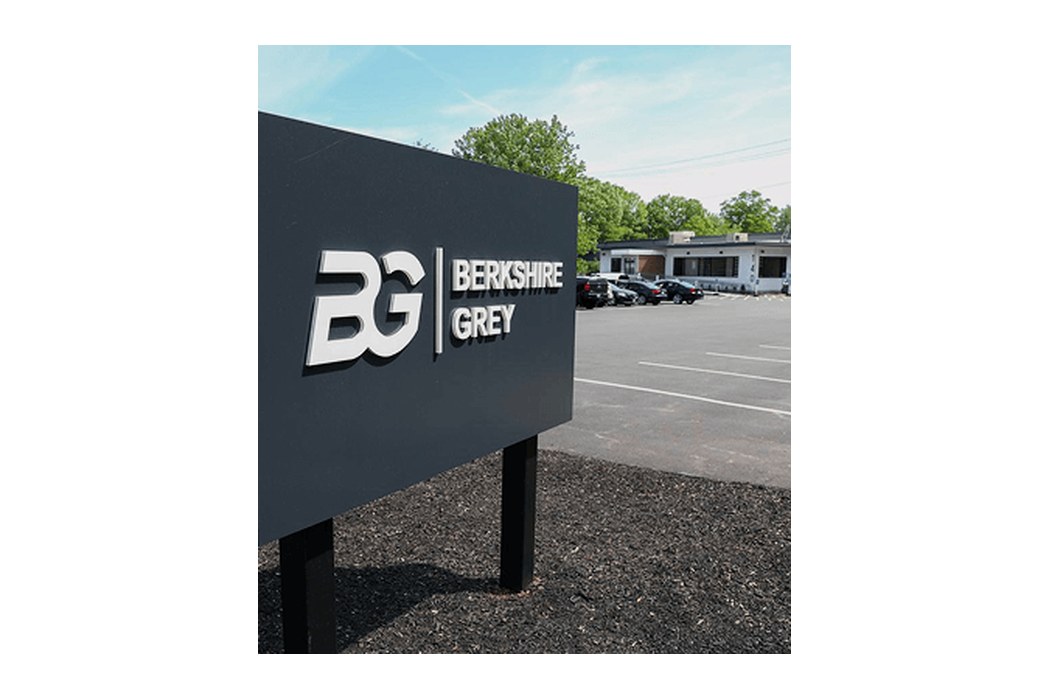
The Robots Taking the Warehouse's Hardest Shift
Berkshire Grey spent a decade teaching machines to pick the unpickable. Now its robots are moving from the tote to the sorter to the trailer door - chasing every stubborn bottleneck in the warehouse.

The Internet’s Checkout Counter Has a Back Room. TrueCommerce Runs the Paperwork.
TrueCommerce turns the purchase orders, invoices, inventory updates and shipping notices behind modern trade into an automated conversation - then keeps that conversation compliant when partners, systems and borders change.

Extensiv
Extensiv began when two warehouse operators built the software they could not buy. Twenty years and three acquisitions later, it is trying to turn the messy middle of ecommerce fulfillment into one connected operating system.
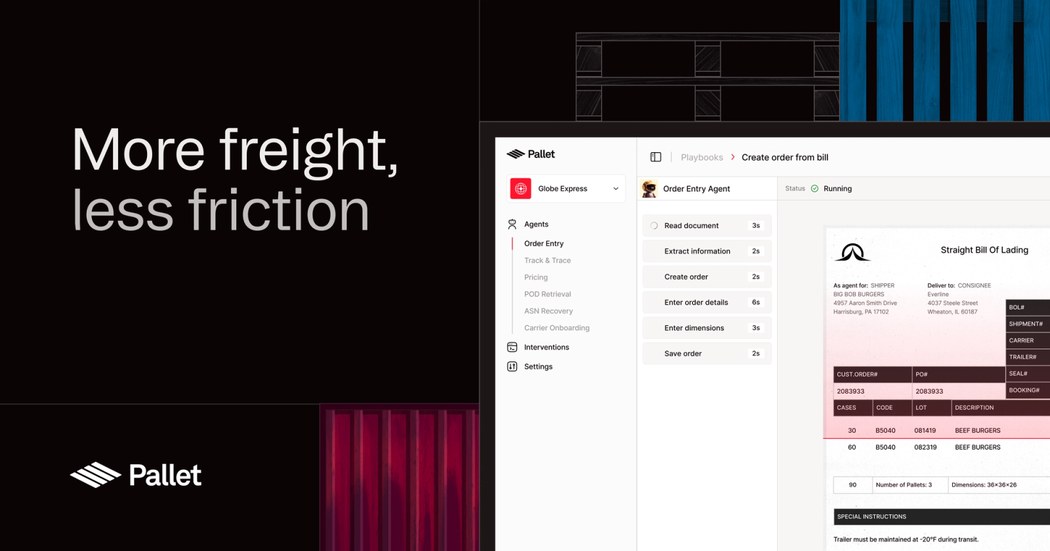
The Brokers Who Taught a Machine to Move Freight
Pallet builds an AI logistics workforce that automates the manual back-office work at the heart of freight brokerages. Its AI agents handle load entry, appointment scheduling, driver document processing, proof-of-delivery, and invoice auditing directly inside existing systems like McLeod and DAT, keeping humans in the loop for oversight and edge cases. The company says brokerages process loads up to 10x faster, cut processing errors by 30%, and save 50% on back-office labor. Founded in 2022 by former Retool engineers Sushanth Raman and Andrew Spencer, Pallet has raised $50 million to date, including a $27M Series B led by General Catalyst.

Grapevine Technologies
Grapevine Technologies is a healthcare procurement software company that acts as an intelligent purchasing agent for medical buyers. Founded in 2021 out of the University of Pennsylvania by Luka Yancopoulos and William Danon, Grapevine grew out of their pandemic-era supply venture and now helps specialty practices and physician groups compare vendors, cut ordering time, and reduce medical supply spend - in some categories by more than 50%.

Austin Oehlerking
Austin Oehlerking is the co-founder and CEO of Boxbot, an Alameda, California robotics company reinventing how parcels are stored, sorted, and sequenced inside the supply chain. A mechanical engineer trained at MIT with a Harvard MBA, he cut his teeth building electric vehicles at Arcimoto and Tesla before starting Boxbot in 2016 as a self-driving last-mile delivery venture. When customers proved more excited about the box-handling robot than the delivery van, Oehlerking pivoted the company toward AI-driven, high-density parcel storage, turning the flat conveyor belt into a three-dimensional machine. Boxbot has raised roughly $28-29.5M from Playground Global, Toyota Ventures, Maersk Growth, Pear Ventures, and Artiman Ventures.

Didero
Didero builds AI agents that automate enterprise procurement for manufacturers and distributors. Its platform sits as an agentic layer on top of existing ERP and procurement tools, reading the messy stream of emails, purchase orders, packing lists, and supplier messages, then executing the routine source-to-pay work - sourcing, quoting, PO lifecycle management, invoice reconciliation, and supplier communication - so supply chain teams can stop chasing exceptions and focus on strategic decisions.
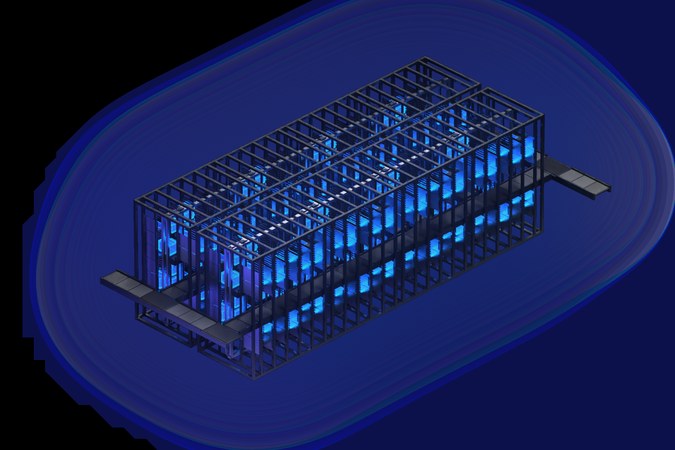
Boxbot
Boxbot is an Alameda, California robotics company building AI-enabled automated storage and parcel-handling systems for the supply chain. Its modular platform turns flat conveyors into three-dimensional, high-density storage that can store, sort, and sequence packages of varying sizes with minimal floor space. After pivoting from autonomous last-mile delivery vehicles, Boxbot now sells a hardware-and-software system aimed at last-mile delivery stations, 3PLs, air cargo, and cross-dock operations, promising faster vehicle loading and denser, more intelligent package flow at lower cost.

Cofactr
Cofactr is a New York-based software and logistics company that automates electronics procurement and supply chain operations for hardware manufacturers. Its cloud platform takes a team from bill of materials (BOM) to build by combining AI agents with ITAR-registered warehouses to handle sourcing, ordering, traceability, storage, kitting, and delivery. Cofactr is built for high-compliance, fast-moving industries such as aerospace, defense, robotics, and medical devices.