recruiting-software
(35)
Workable and the trouble with “just email it”
A shared inbox can hire your first employee. Workable built a business around what happens when it has to hire your fiftieth - and now wants to handle the work on both sides of the offer letter.
Jobvite and the art of getting out of the way
Hiring has a peculiar talent for turning a promising conversation into an administrative obstacle course. Jobvite has spent two decades selling companies a way to remove the obstacles.

Dover and the Recruiter Who Comes With a Dashboard
Startups hire in bursts; recruiters have bills every month. Dover pairs a free hiring system with on-demand specialists, then makes the cost of the human work unusually visible.

Adam Robinson Put the Job Interview on Trial
For more than two decades, the Hireology co-founder has argued that hiring should be a discipline rather than a hunch. The wager has carried him from a classroom business plan to a national recruiting platform - and into a new argument about what AI should leave to humans.

Jacob Miller Left the Job He Wanted - Then Discovered He Had Already Found It
Ashby's first go-to-market hire left in pursuit of another zero-to-one adventure. His return reveals a quieter truth about ambition: sometimes the next frontier is waiting inside the place you already know.
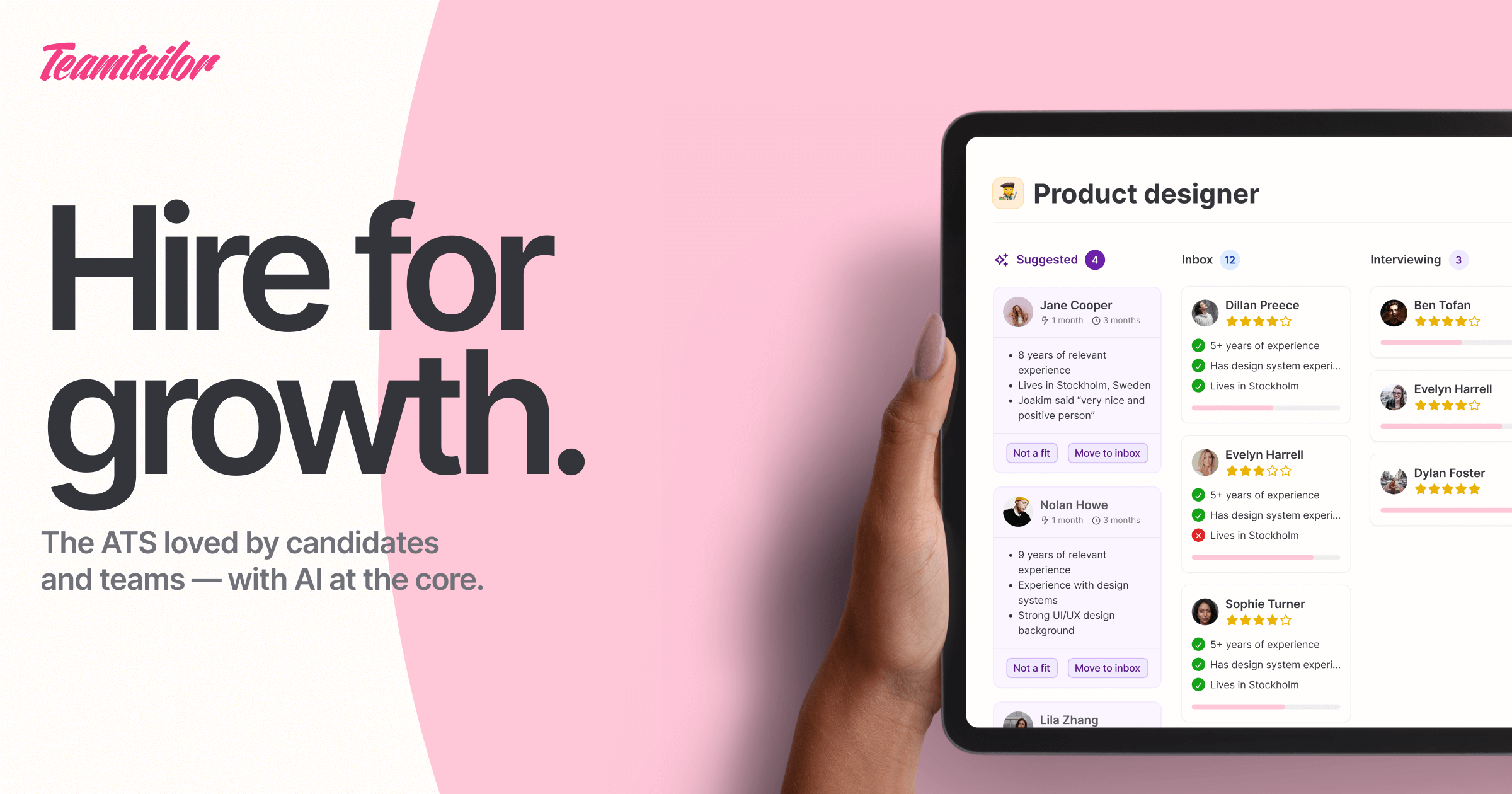
Teamtailor Makes Hiring Feel Less Like Filing
This Swedish ATS puts the career site and the candidate experience in the same room as the hiring pipeline. The result is unusually friendly recruiting software, with one grown-up catch: you have to ask what it costs.

Recruitee Makes Hiring Feel Like a Team Sport
A friendly applicant tracker for companies that have outgrown inbox archaeology. Recruitee gives every hiring manager a seat, then keeps the process from turning into a committee meeting.
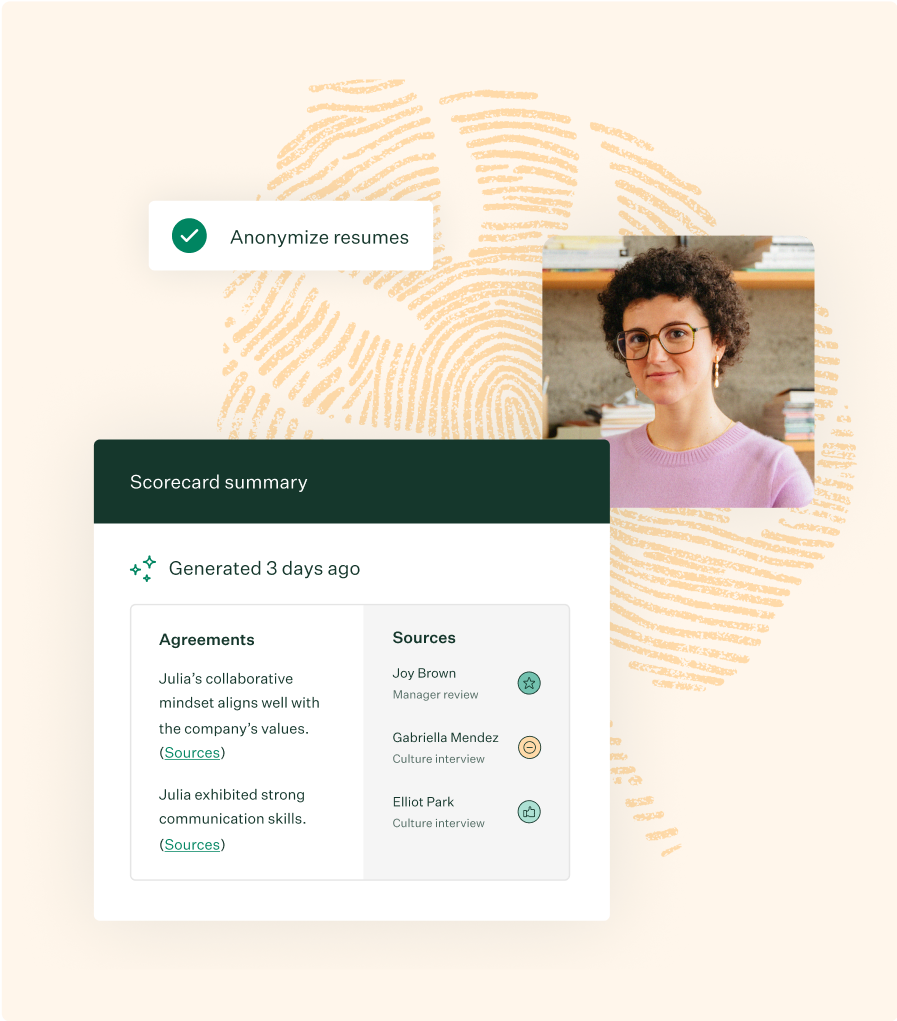
Greenhouse Turns Hiring Into a Team Sport
The hiring platform replaces interview improvisation with scorecards, shared evidence and a process the whole company can follow. It asks for more setup than a lightweight ATS, then pays that effort back when hiring gets busy.
Lever Wants Hiring to Feel Less Like Filing Cabinet Duty
Lever built its name by treating candidates as relationships, not paperwork. Its newest AI tools push that idea further - but the smartest buyers will test the reports before they fall for the tidy interface.

Screenloop Puts the Interview on the Record
Screenloop turns the hiring meeting everyone half-remembers into a searchable, shareable record. For growing talent teams, its real trick is connecting that record to the scorecard, the candidate experience and the eventual quality of hire.

The $97 Dental Staffing Bet: Let the Office and Hygienist Cut Out the Middleman
Cloud Dentistry turned the dental temp agency into a searchable marketplace. The clever part is not the app - it is who gets control, who pays, and which old fees disappear.

Arnab Bhattacharjee Has Spent a Career Finding the Signal
Before recruiting became an AI arms race, Arnab Bhattacharjee was building the machinery of web search. At Consider, he is applying the same patient obsession with relevance to a more human question: who should meet whom next?

Diane Smith Kept the Coach’s Whistle - Then Built the Recruiting Software She Wanted
Before Diane Smith built two recruiting-software companies with the same co-founder, she learned how to lose a roster spot, return, and make the team. Her career is a study in what happens when a coach’s eye meets a recruiter’s frustration.

Aaron Elder Turned a Recruiting Headache Into a 25,000-User Product
A visual-arts dropout taught himself to code, helped design Microsoft CRM, and learned that hiring was the stubborn problem hiding inside every growing company. Crelate is his attempt to turn that lived frustration into useful software.

The Recruiting Software Fight Nobody Warned You About
Ashby bets on real-time analytics and native scheduling for fast-moving teams. Greenhouse leans on structured-interview workflow and a deep enterprise install base. Here is how the two actually differ.

Choose Greenhouse or iCIMS by the Bottleneck You Cannot Ignore
Greenhouse turns interviews into a repeatable decision system. iCIMS is built to keep complex, high-volume enterprise hiring moving - and the right choice starts with knowing which failure costs you more.
Crelate Wants to Turn the Recruiting Database Into a Living Network
The Idaho software company spent years making the applicant-tracking system more flexible. Now it is betting that recruiters need a database that searches, refreshes and suggests - without taking the relationship out of their hands.

Dan Finnigan Has Spent a Career Fixing the Awkward Parts of Work
From newspaper classifieds to social recruiting, skills tests and employee onboarding, Dan Finnigan has kept returning to one question: how can technology make the first days of work feel more human?

Greenhouse vs Lever Is the Wrong Question
The better recruiting platform is the one that matches how your team actually hires. Greenhouse rewards process discipline; Lever puts candidate relationships and pipeline flow at the center.

Ashby or iCIMS Is Really a Bet on How You Hire
The fashionable ATS and the entrenched enterprise platform solve different kinds of recruiting pain. The right choice starts with your operating model, not a feature checklist.

The HR Rivals That Barely Compete
Insperity takes HR work off an owner’s desk. SmartRecruiters gives a global talent team a better desk. The useful comparison starts with who wants to keep control.

Your ATS Is Really a Bet on Its Owner
Greenhouse, Lever, Ashby, iCIMS and SmartRecruiters increasingly sell the same promise. The better buying question is who controls the roadmap - and what kind of hiring operation you actually run.
The internet's great résumé drawer has become a $19.8 billion market for work itself - part identity system, part hiring engine, part trade publication, and increasingly part AI assistant.
Moka
Moka (MokaHR) is an AI-native HR SaaS company founded in 2015 in Beijing that builds recruiting and human-capital-management software for mid-market and enterprise employers. Its platform combines an applicant tracking system, talent CRM, recruitment automation, analytics, and the Moka Eva AI assistant to speed up hiring and HR operations. Moka reached unicorn status after a $100M Series C led by Tiger Global in 2021 and serves 2,000-3,000+ brands, including roughly 30% of the Fortune 500, with a growing presence in Singapore and Southeast Asia.

Daniel Chait
Daniel Chait is the co-founder and CEO of Greenhouse Software, the New York-based recruiting platform he started with Jon Stross in 2012 to help companies make hiring a competitive advantage. A University of Michigan computer engineer who spent more than a decade as a software consultant and previously co-founded the investment-banking tech firm Lab49, Chait built Greenhouse around the idea of 'structured hiring.' He is co-author of the book Talent Makers, a frequent conference speaker, and a vocal commentator on how AI is reshaping recruiting - including his warning about an 'AI doom loop' flooding both job seekers and employers.

Greenhouse Software
Greenhouse Software is a New York-based hiring platform that helps companies run structured, data-driven recruiting. Founded in 2012 by Daniel Chait and Jon Stross, it centralizes applicant tracking, interview scorecards, candidate sourcing, onboarding and reporting into one system used by more than 7,500 organizations. Rather than pushing automation for its own sake, Greenhouse pitches 'structured hiring' - a consistent, comparable process for evaluating candidates - and has layered in AI tools and fraud detection to keep that process reliable as application volumes surge.

Joonko
Joonko was an Israeli-founded, AI-powered diversity recruiting platform that promised talent-acquisition teams automated access to pre-vetted candidates from underrepresented groups - women, people of color, and veterans. Founded in 2016 by Ilit Raz and named after Everest pioneer Junko Tabei, the company graduated from Techstars Atlanta and the Salesforce Incubator, and raised roughly $30 million from investors including Insight Partners, Target Global, Kapor Capital, and Vertex Ventures Israel. In 2023 the story collapsed: an investor confronted Raz over inconsistencies, she admitted to fabricating customer contracts, bank statements, revenue, and candidate counts, and she resigned. The SEC charged her in 2024 with a $21 million 'AI washing' securities fraud, and Joonko filed for Chapter 11 bankruptcy after shutting down and laying off all staff.

Kombo
Kombo is a unified API that lets B2B software companies connect to hundreds of HR, payroll, recruiting (ATS), and learning systems through a single integration. Instead of building and maintaining separate connectors to systems like Personio, BambooHR, Workday, Greenhouse, and Paychex, customers integrate Kombo once and gain access to a normalized data model and authentication layer across 300+ HR and ATS tools. Founded in 2022 and based in Berlin and New York, Kombo positions itself as the infrastructure layer for people data - from hire to retire.

Hirey AI
Hirey is an AI-first recruiting platform built around a chat-based hiring app and an AI agent named Rey that sources candidates, screens them, checks availability, and books interviews automatically. Founded in 2021 by Walter Wu and headquartered in Tempe, Arizona, Hirey focuses on high-volume, fast-turnover hiring in sales, caregiving, and healthcare staffing, where speed matters more than paperwork. The company says it has helped 500,000+ job seekers and is trusted by 10,000+ hiring companies, and it has raised roughly $14M through a Series A led in part by DST Global.

JobPixel
JobPixel is a San Francisco enterprise video platform that helps talent-acquisition and marketing teams collect, edit, brand, and distribute authentic user-generated video from employees, candidates, and customers. Founded in 2020 by Omar Khateeb and Anthony Duerr, it aims to humanize hiring by moving beyond the resume - letting companies build employer brand and screen candidates with short-form video at enterprise scale.