At Samtec, a maker of electronic connectors, posting a job once meant entering the requisition twice. Michael Townsend, its compliance coordinator and ATS administrator, described a task that took 20 to 30 minutes. Managers struggled with the old recruiting system; work returned to the hiring team. The software had become another person to look after.
- Jobvite connects recruiting work, from attracting candidates to onboarding hires.
- Its sweet spot is employers with complicated hiring processes and several teams to coordinate.
- The commercial offer starts with an ATS, then adds modules through a tailored quote.
- The useful test is whether it removes work from your actual process.
Samtec adopted Jobvite across its locations in 2017. Townsend’s explanation was wonderfully plain: “We didn’t want to design our process around a system.” The appeal was configuration and a shared place to work. In Jobvite’s published account, he reported more manager use in three months than in three years with the previous system.
That is a revealing way to judge recruiting technology. A sophisticated database can still fail if the people who must update it would rather send an email. The grand business of finding talent can depend on an unglamorous question: how much trouble is it to do the next thing?
The résumé is only the beginning
Jobvite is recruiting software for employers. Its applicant tracking system, or ATS, holds the applications, workflows and candidate history around a hiring decision. Recruiters and managers can coordinate schedules, feedback and offers. Around that core sit career sites, candidate relationship management, recruitment marketing, messaging, referrals, analytics and onboarding.
The breadth matters because recruiting begins well before an application arrives. Someone may read an employee story, join a talent network, respond to a message and apply months later. After an offer, another set of tasks begins. A database built solely for applicants catches only the middle of that relationship.
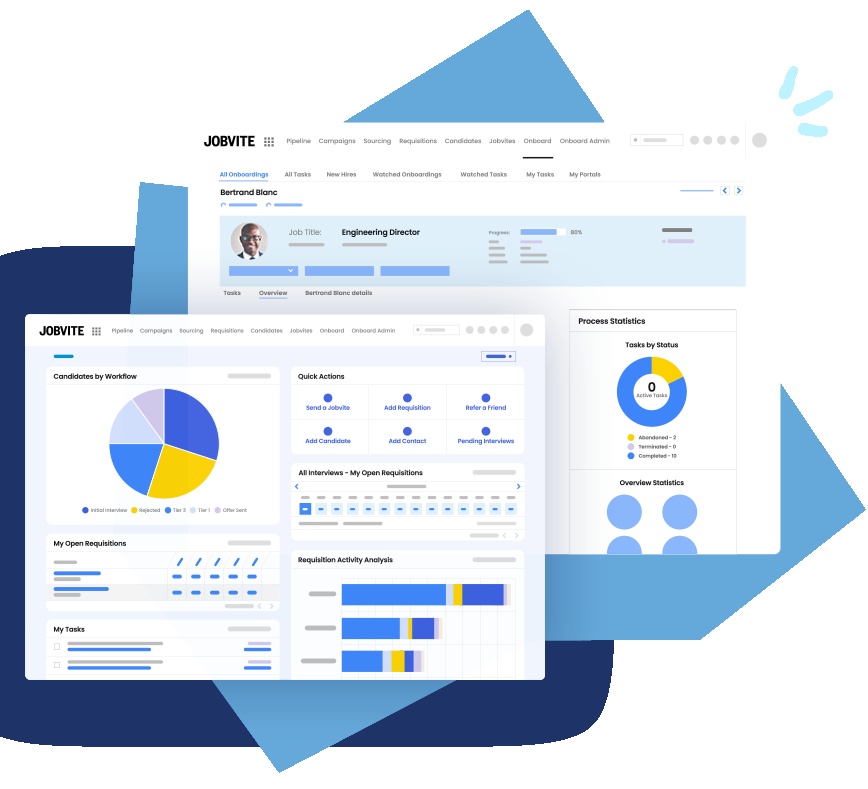
Its expertise lies in that sequence of work. Configurable workflows accommodate different roles, departments and locations. A hiring manager app provides schedules, alerts and messaging. These are features for an awkward organizational fact: recruiters hire all the time, while managers often hire between doing everything else.
Three acquisitions, three missing pieces
Jobvite’s founders are Jesper Schultz and Hans Larsen. Its familiar company history dates to 2006, with a predecessor going back to 2003. By 2014, it was describing recruiting as marketing and had announced a $25 million Series D led by Catalyst Investors. Its ambitions already extended beyond keeping applications in order.
In February 2019, K1 Investment Management announced a majority investment and three acquisitions. Talemetry brought recruitment marketing. RolePoint brought employee referrals and internal mobility. Canvas brought text-based conversational recruiting. The set of investments totalled more than $200 million across the combination; that figure should not be mistaken for Jobvite’s valuation.
The acquisitions provide a compact history of the recruiting department’s expanding job description. It must advertise like a marketer, maintain relationships like a salesperson, and preserve a record like an administrator. Each specialty can produce useful software. Each additional system also creates another handoff.
Jobvite’s strategic answer was to bring more of those specialties together. In 2021 it joined forces with JazzHR and NXTThing RPO in a K1-backed combination. Today it sits within Employ, alongside JazzHR and Lever. Those sibling brands are a reminder that enterprise hiring and a small company’s first recruiting system are different purchases.
A candidate database with a memory
Consider the applicant who is good, but wrong for the vacancy at hand. Without a deliberate process, that person becomes a record someone might find again. Jobvite’s Source & CRM lets teams segment talent pools, run outreach campaigns and track engagement across email, text, web and social channels.
Its advertised talent rediscovery feature uses AI to identify people already in the CRM who may suit new openings and invite them to apply. The practical attraction is easy to understand: the next search need not start from zero. That is particularly useful when an employer repeatedly recruits similar skills across locations or brands.
Career Sites handles a different moment: the visit before the relationship. Employers can publish branded content, manage several languages and brands, and help visitors search for relevant roles. Jobvite says these sites can integrate with more than 25 applicant tracking systems. Buying into the product family therefore does not necessarily mean replacing every existing component at once.
Messaging supplies another route through the process. Recruiters can organize text conversations, use scheduled campaigns and send screening forms. Audit trails keep those exchanges visible. An employer’s conversation with a candidate becomes less dependent on which recruiter happens to have the message on a personal phone.
“Being able to text message my candidate is gold.”Violetta A., Utah Transit Authority recruiter, quoted by Jobvite
The crowded middle of the market
Jobvite positions itself for enterprise, medium-sized and high-growth employers with complex workflows. Its public customer library includes GroupM, Jackson Family Wines and ServiceMaster Brands. This is a market where hiring can involve different businesses, different locations and several people who all need to see the same information.
The obvious alternatives include Greenhouse, iCIMS and SmartRecruiters, all named on Jobvite’s own comparison pages. Buyers may also consider recruiting inside a broader HR platform or assemble specialist tools. Jobvite’s case rests on depth in talent acquisition, configurable processes and connections to the employer’s existing systems.
It advertises more than 300 technology integrations and names ADP, UKG and Infor as strategic HCM partners. That is a sensible position for a specialist: the employer still needs HR and payroll infrastructure after the hire. Recruiting software has to hand information over without making someone type the story again.
Its business model follows this modular approach. Customers can start with the ATS and add capabilities such as onboarding, recruitment marketing and AI Interview Companion. Pricing comes through a tailored quote. For a buyer, the meaningful number is the cost of the selected configuration, together with the work required to make it useful.
The dashboard needs an owner
Jobvite’s analytics offer includes more than 60 standard reports, custom reporting, peer benchmarking and access to raw recruiting data for external business intelligence tools. These can help a team see where candidates leave the process and how hiring performance compares with similar organizations.
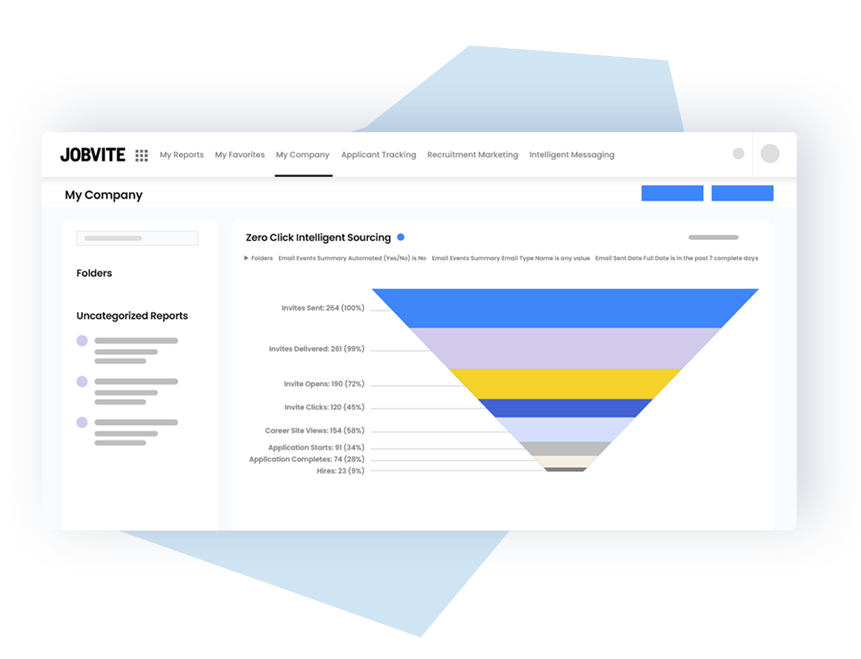
A chart of a stalled interview stage is a starting point. Someone still has to change a schedule, chase feedback or clarify a decision. The reader can copy a useful habit here without buying anything: measure the wait between stages, assign someone to each handoff, and check whether that person has the information needed to act.
The same reasoning sets the limits of the product. If hiring managers will not participate, if job requirements are confused, or if nobody owns the process, configuration alone will accomplish little. For an employer with a handful of uncomplicated vacancies, the breadth may also cost more attention than it returns. These are buying judgments, rather than claims of documented Jobvite failures.
The future includes the correct start date
Employ acquired Pillar, an AI interview intelligence platform, in March 2025. Its announcement reported more than 23,000 customers across JazzHR, Lever and Jobvite combined. The distinction matters: the parent’s reach is not a standalone Jobvite customer count. The deal gave Employ control over more of its interview technology roadmap.
Jobvite’s Winter 2026 release notes tell a quieter story alongside the AI expansion. They describe a move from quarterly releases to ongoing updates, forecasting in analytics and single sign-on for onboarding. They also mention new-hire communications displaying the correct start date and an update to meet LinkedIn integration requirements.
The start date deserves a little respect. A candidate experiences a hiring process through particulars: a reply, an interview time, a form, an instruction about Monday morning. Those particulars are where a large software promise meets an actual person. Jobvite’s business depends on making them easier for employers to get right.