The awkward thing about hiring a recruiter is timing. A startup may need three engineers this quarter and nobody at all in the next. A permanent employee needs a permanent job; a traditional agency tends to appear for a single vacancy and depart with the fee. Dover has spent seven years trying to occupy the gap between those two arrangements. Its current proposition is almost disarmingly plain: give the company a free place to run hiring, then let it bring a specialist into that same place for as long as the work lasts.
- Dover’s free applicant tracking system holds jobs, candidates, interviews and feedback.
- A marketplace lets startups hire vetted fractional recruiters who work inside that shared workflow.
- The Premium ATS is listed at $199 a month; marketplace recruiters set their own rates.
- The interesting test is continuity: can the company keep its hiring memory after the outside recruiter leaves?
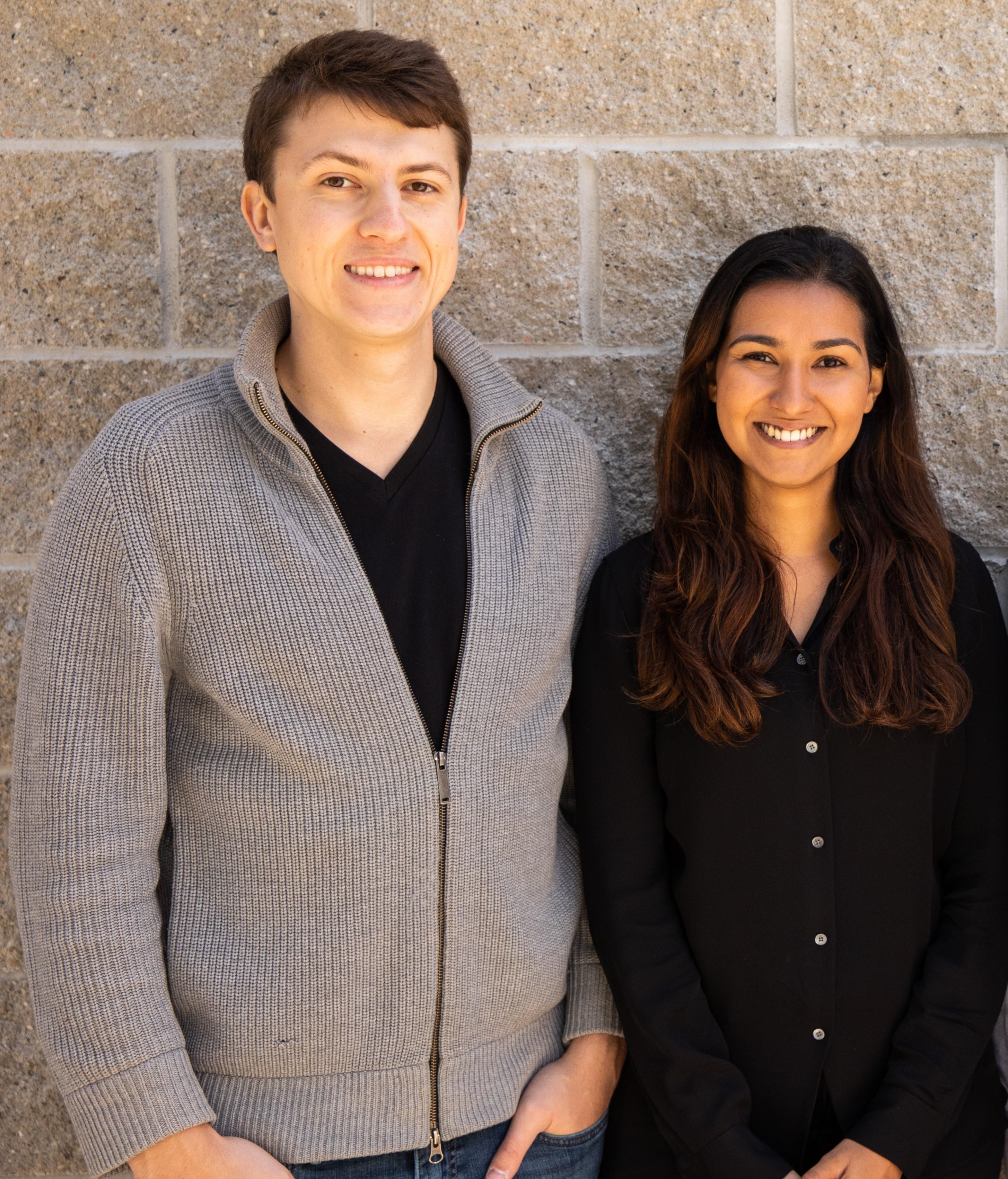
Dover was founded in 2019 by Max Kolysh, Anvisha Pai and George Carollo, three people who had felt the inconvenience from the employer’s side. In announcing a $20 million Series A in 2021, Kolysh wrote that only 20% of their recruiting time had been strategic. The rest went to operations: stitching tools together, sending messages, scheduling and keeping track. The original answer was a recruiting orchestration platform, designed to automate much of that administrative labor.
A useful detail survives from those early days. George came back from a trip to England with the name Dover, lifted from a street sign. The company then had to file the paperwork to call itself that. It is a nice miniature of startup life: a grand idea often begins with a surprisingly ordinary form.
The work that refused to become a button
Software can sort applicants, remember a conversation and nudge an interviewer for feedback. It cannot always decide whether a promising person with the wrong résumé deserves a call. It cannot make a reluctant engineering lead clarify what “senior” means. Nor can it sell a half-built company to a candidate who already has safer choices. Dover’s product history reads like a long negotiation with that boundary.
The market supplied its own critique of any fixed recruiting plan. Pai later recalled that when COVID arrived, hiring stopped so abruptly that the founders considered a pivot. Demand then accelerated. In 2022, another wave of startup layoffs forced Dover to make painful cuts. A service built for hiring has to survive seasons when customers stop hiring. The later move toward free software and flexible recruiting capacity addressed that uneven demand from the customer’s side.
In 2024 the company launched its Recruiting Partners marketplace. Startups could find experienced recruiters for a fraction of a full-time schedule, while Dover’s free ATS gave both sides the same candidate record. Its free tools also expanded to include a sourcing extension, referrals, an agency portal and a careers page. Dover said customers made more than 1,400 hires that year. By February 2026, the company reported a choice of more than 50 fractional recruiters on the marketplace.
“Recruiting needs are inherently volatile.”Max Kolysh, writing about fractional recruiting in 2024
That volatility is the heart of the offer. A company hiring at a steady pace may justify its own recruiting department. A young company may need an expert in hardware one month and someone who knows sales leadership the next. Dover’s marketplace gives it a way to buy those skills without pretending the demand is constant. Recruiters can handle sourcing, coordination or a full search. The client still has to define the job, give timely feedback and make the final decision.
A marketplace with a memory
Dover has an unusually important reason to keep the ATS free. The software is the shared table at which the company and its outside recruiter sit. The hiring manager can see the same pipeline, interview plan and candidate history. When the recruiter’s engagement ends, those records stay with the company. That matters because the next good hire may have applied for the last job, not this one.
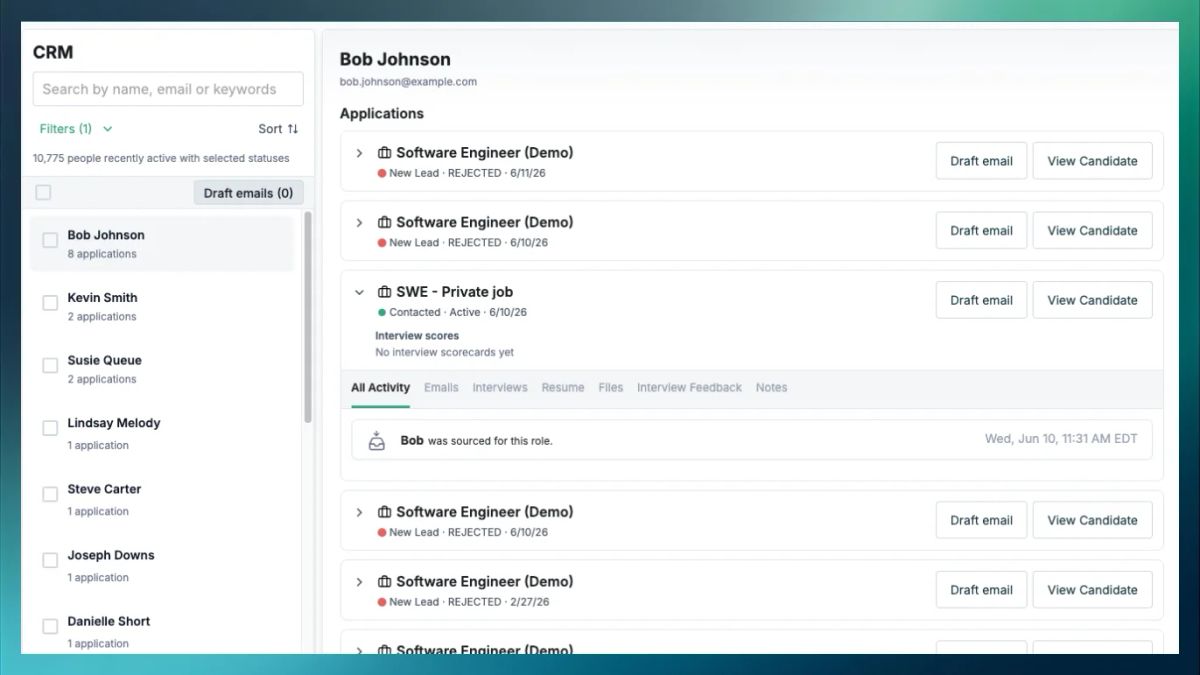
The August 2026 product update pushed that idea further with a CRM view spanning all roles. A hiring team can search, filter and email people across previous applications rather than reopening each job to look for them. The same update added configurable application questions, including knockouts, and reporting on interviewer activity. These are prosaic features. Recruiting, however, is made of prosaic failures: an applicant marooned under the wrong requisition, a candidate waiting while a manager debates, an interview team unaware that it has spent twenty hours on one role.
The software also gives Dover a commercial route. The free tier lists unlimited users and jobs, candidate tracking, Gmail and Outlook connections and more than 100 job board integrations. Premium ATS adds features such as AI applicant scoring, AI note taking and expanded posting options for $199 a month. Dover also sells Sourcing Autopilot. On the service side, recruiters set their prices; Dover says its marketplace earns a revenue share. An $800 refundable deposit opens marketplace access, then recruiter hours draw down the balance under the hourly arrangement. In 2026 Dover added retained and contingency options as well.
The employer still owns the hiring decision and the candidate relationship.
The price of trust
The most distinctive part of Dover’s pitch is not the word “AI,” which now adorns nearly every hiring tool. It is the attempt to show what the human service costs. Dover publishes recruiter cost-per-hire figures and says customers can view rates and logged time. Its marketplace essays describe further rules: the lead recruiter remains accountable for junior help, a dissatisfied client can affect a partner’s future economics, and flexible hours make a bad match easier to end. Those are Dover’s own mechanisms, not a guarantee that every search will succeed. They do make the commercial relationship easier to inspect.
George Carollo has framed the problem as one of trust. In an ordinary one-off agency search, a founder may send an incomplete job description to several firms, while recruiters ration their time among clients who may never hire. Dover wants a repeat relationship in which recruiter performance is visible and the company has a reason to respond quickly. Its published marketplace data puts many hires in the $2,000 to $8,000 range, though any particular bill depends on the role, rate and hours. An agency fee based on salary can be much larger. The comparison is useful only if the searches are equally difficult and the employer counts its own time honestly.
This is where a founder can copy the idea without buying anything: write down the actual hiring task, decide what a successful shortlist looks like, keep candidate records in a system the company controls, and review the cost of each search alongside its result. A specialist becomes more effective when the hiring team gives precise feedback after every interview. A dashboard does not manufacture that discipline; it merely makes the absence of it hard to hide.
Who is this for?
Dover’s case studies span software, security, robotics, biotech and logistics. Its archive describes Vanta’s sales team expansion, WorkOS’s engineering hires and niche searches for other startups. Those examples make the target clear: growing companies that cannot afford to leave hard roles open, yet may not have enough continuous hiring to employ every specialist they need. A company with dozens of predictable vacancies every month may prefer an internal recruiting team. A company with one simple opening and a warm referral network may manage with the free software alone.
There is a broader lesson in Dover’s evolution. Its founders started by noticing how much time recruiting wasted on administration. The marketplace acknowledges another fact: the valuable twenty percent of work still needs someone to do it. Dover’s answer is to let that person arrive with a visible record, work in the company’s own pipeline and leave without taking the history away. The dashboard is not the recruiter. It is the place where the relationship can finally be checked.