The first useful thing to know about Diane Smith is that she once received the sort of answer athletes hate: not this time. She had trained for the U.S. field hockey team, survived the long winnowing and reached the final group. Then came the room, the decision and the absence of her name from the roster. Smith was competitive enough to be devastated and practical enough to return. The following year, she made the team.
She later compressed the episode into six words: “Your beginning is not your end.” It is a clean sentence, almost suspiciously clean, until you look at the rest of her career. It contains championships, coaching, nine years of recruiting, one software company bought by ADP and a second company built with the same partner. Smith has spent decades making second moves.
Today she is the CEO and co-founder of GR8 People, the Yardley, Pennsylvania company that sells a unified talent acquisition platform. At the company, she is also called its “head coach,” a title that sounds ornamental until her résumé begins to explain it. Smith does not use sports as a decorative metaphor. She played at a level where selection is merciless, then worked at a level where selection was her job.
Long before the software, there was a midfield
At Trenton State College, now The College of New Jersey, Smith played midfield on teams that won the NCAA Division III field hockey championships in 1981 and 1983. She earned All-American honors in 1982, 1983 and 1984, made the NCAA all-tournament team twice and became a Broderick Award nominee. In 2005, the NCAA named her to its Division III Field Hockey 25th Anniversary Team.
1981 and 1983
1982 to 1984
Midfield is an apt position for the career that followed. It rewards vision, stamina and the ability to connect separate phases of play. Smith moved into Division I women’s basketball coaching at Princeton and Towson. She was already responsible for other people’s preparation as well as her own, learning to turn a plan into coordinated motion while the clock kept moving.
The transition from coach to recruiter was less of a leap than it appears. Both jobs require a judgment about potential under imperfect information. Both require persuasion. Both can be ruined by confusing an impressive individual with the right member of a team. Smith spent nine years recruiting, close enough to the work to discover an aggravating truth: the people doing the hiring had changed how they worked, while much of their technology had not.
The recruiter meets the engineer
Smith met Jayne Kettles, a software engineer and product leader who shared her frustration with recruiting technology. Their skills fit with unusual tidiness. Smith knew the recruiter’s day, the customer conversation and the commercial problem. Kettles knew how the product should behave. In the late 1990s they co-founded VirtualEdge, with Smith as CEO and Kettles as the technical leader.
VirtualEdge built software for what it called the talent lifecycle: professional and high-volume recruiting, candidate interactions and talent pools on a common system. In October 2006, ADP acquired the company. The purchase added recruiting capabilities to ADP’s broader human-resources services and placed VirtualEdge’s talent lifecycle software inside a much larger operation.
An acquisition can provide a satisfying full stop. Smith and Kettles treated theirs more like a semicolon. In 2015, they founded GR8 People around a problem that had become more annoying with time. Recruiters had acquired more tools, but the tools often lived in separate silos. Each promised efficiency. Together they could create extra logins, extra handoffs and extra opportunities for candidate information to lose context.
GR8 People’s answer was a single platform joining applicant tracking, talent CRM, sourcing and career-site capabilities. The thesis is less about collecting features than preserving a workflow. Candidates do not experience an organizational chart or a software category. They experience whether messages arrive, interviews get scheduled and one stage remembers what happened in the stage before it.
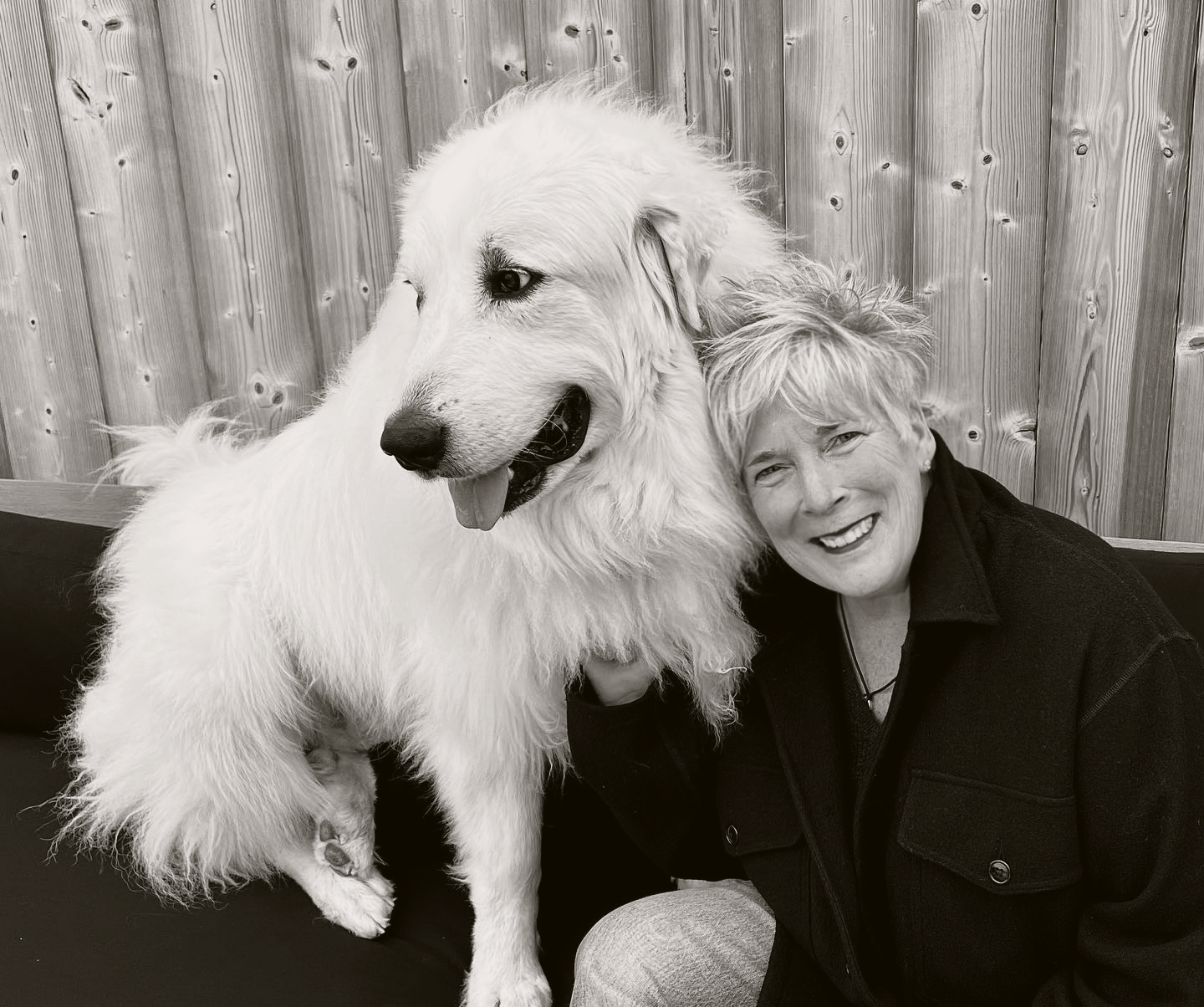
A partnership durable enough for a sequel
The overlooked asset in this story may be the Smith-Kettles partnership itself. Two founders working together through one company is ordinary. Reuniting around a second company after an acquisition is evidence of something sturdier: complementary judgment, shared standards and enough trust to enter the difficult middle again.
Their division of labor has remained legible. Smith is the strategic and cultural coach; Kettles is the technological visionary. The descriptions risk sounding neat, but their public comments show a common language. Both talk about customer value, collective work and giving employees room to put their thumbprint on the result. Their differences appear to have a shared destination.
When asked about being women entrepreneurs in a field where the imbalance was visible, Smith recalled early capital-raising events where the ratio made her and Kettles easy for investors to spot in a crowd. The wit is dry; the point underneath it is not. She acknowledges the barriers while resisting the idea that women leading technology companies should be treated as an oddity. Her advice to women starting now is brief enough to print on a practice card.
- Go for it.
- Find great mentors.
- Focus, focus, focus.
Leading from behind, without disappearing
Smith’s preferred phrase for management is “lead from behind.” This is not an abdication. Coaches who stand behind a team still choose the system, set expectations and make the difficult roster calls. The distinction is about where credit travels. Smith has said the spotlight does not belong to a few and that exceptional software takes a smart, talented team.
At GR8 People, that principle is tied to product development. The company encourages employees beyond the most vocal people to express ideas. Smith argues that a broader field of contributors makes the innovation pipeline quicker and more nimble. It is both a cultural position and an operating mechanism: more useful information reaches the decision.
She applies the same instinct to customers. Smith routinely redirects motivation away from personal recognition and toward what customers achieve: shorter time-to-fill, a candidate relationship program built from scratch, a hiring workflow that behaves as a whole. Even accepting a 2021 TAtech recognition, she spoke about the team’s work for hiring organizations rather than polishing an individual legend.
There is a pleasing loop here. An athlete learns that one player cannot cover the field. A coach learns that talent requires a system. A recruiter learns that selection is only one stage of a longer relationship. A founder learns that software works when those stages connect. Each chapter gave Smith a different view of the same problem: how people move through a team.
The practical lesson in possibility
Smith says, “I believe in possibility.” The phrase might float away in less grounded company. Here it comes with scar tissue. Possibility meant returning after a failed trial. It meant raising money when female founders were conspicuous in the room. It meant starting a second company in a category she already knew could be stubborn.
The stealable lesson is not to imitate her résumé. Few software founders need an NCAA medal or a whistle. The useful pattern is to remain close to the work, choose a partner whose abilities fill your blanks and treat setbacks as drafts. Smith built from experience rather than trend reports. She kept the user’s workflow in view. She gave a second company the benefit of the first company’s mistakes and relationships.
Her career also offers a small correction to the cult of the solo founder. The protagonist can be a partnership. The leader can distribute the light. The product can win by making the customer’s day less fragmented rather than more futuristic. None of this is loud, which may be why it lasts.
There is discipline in that restraint. Recruiting technology sits between corporate ambition and a person hoping for a reply. Every clever feature eventually meets that ordinary human moment. Smith’s platform thesis asks the machinery to remember the person moving through it, and asks the team building the machinery to remember one another.
A roster says who made it today. Smith’s story is interested in what happens next: who returns, who learns the system, who makes a teammate better, who builds the missing tool. The coach’s eye never really left. It simply found a new field.