Before Adam Robinson became a software founder, he was a history major with a recruiting problem. Managers were making one of the most consequential decisions in business - who gets invited inside - with less method than many people bring to buying a used car. Interviews wandered. Impressions hardened. A charming candidate could become a costly employee by Tuesday. Robinson thought the whole ritual needed a scorecard.
That conviction has proved unusually durable. It survived his first company, the arrival of software-as-a-service, a venture capital cycle, a book, a podcast, several labor shortages and now the recruitment industry's eager embrace of artificial intelligence. Technologies changed their names. The central complaint did not. Too many employers still begin interviewing before they have agreed what success in the job should look like.
Robinson built Hireology to impose an order of operations. Define the role. Find candidates. Evaluate them against evidence. Verify what matters. Make the decision. It is almost comically sensible, which may explain why it had commercial room to grow.
The business plan in the classroom
Robinson graduated from the University of Illinois Urbana-Champaign in 1998 with a bachelor's degree in history. He later described arriving at DePaul University without a single accounting or business course behind him. The MBA program gave him finance, certainly, but also something more useful to a first-time founder: a room full of working adults who could challenge a plan with lived experience.
In a new venture formation class taught by Harold Welsch, Robinson developed the business plan for Illuma, a company that provided high-volume recruitment outsourcing. He ran it for six years and created the Ionix Hiring System. The first venture supplied the fieldwork for the second. By the time Hireology was founded in Chicago in 2010, Robinson had watched enough hiring decisions to know that bad outcomes were rarely mysterious. The process had often been casual from the start.
Graduates from Illinois with a BA in History.
Completes a DePaul MBA; his Illuma plan takes shape in class.
Co-founds Hireology in Chicago.
Publishes The Best Team Wins.
Closes a $27 million Series D.
The name Hireology carried a wink and a thesis: hiring could be studied. The early product organized the process for businesses that rarely had a recruiting department worthy of the name. Franchises, auto dealerships and other multi-location employers relied on local managers whose principal job was running the operation. Asking them to become expert interviewers on command was optimistic. Giving them a repeatable workflow was more realistic.
Growth, measured in people and pressure
Hireology's climb was visible. Bain Capital Ventures joined a $10 million Series B in 2014. Two years later, the company had reached 100 employees, raised a $12 million Series C and appeared at No. 94 on the Inc. 500. It ranked No. 332 the following year. In 2019, a $27 million Series D brought announced capital raised to $60.5 million. At that point Hireology reported more than 6,500 customers and 200 employees.
Growth gave Robinson a laboratory close to home. Hireology employees described a chief executive who interviewed every candidate, kept an open door and made small gestures that traveled surprisingly far through an office. One employee remembered Robinson pausing with his coffee so they could walk upstairs together. Another recalled that when weeks of heavy calling failed to produce sales, Robinson and a colleague praised the effort instead of delivering a scolding. Results arrived soon after.
These are modest anecdotes, and that is their charm. Culture is announced in handsome nouns and revealed in corridors. Robinson's public advice often lands on the manager rather than the applicant. If strong candidates are scarce, a company must explain why its job deserves to be chosen. If turnover is high, the interview script is an inadequate alibi. A manager may be the product people decline.
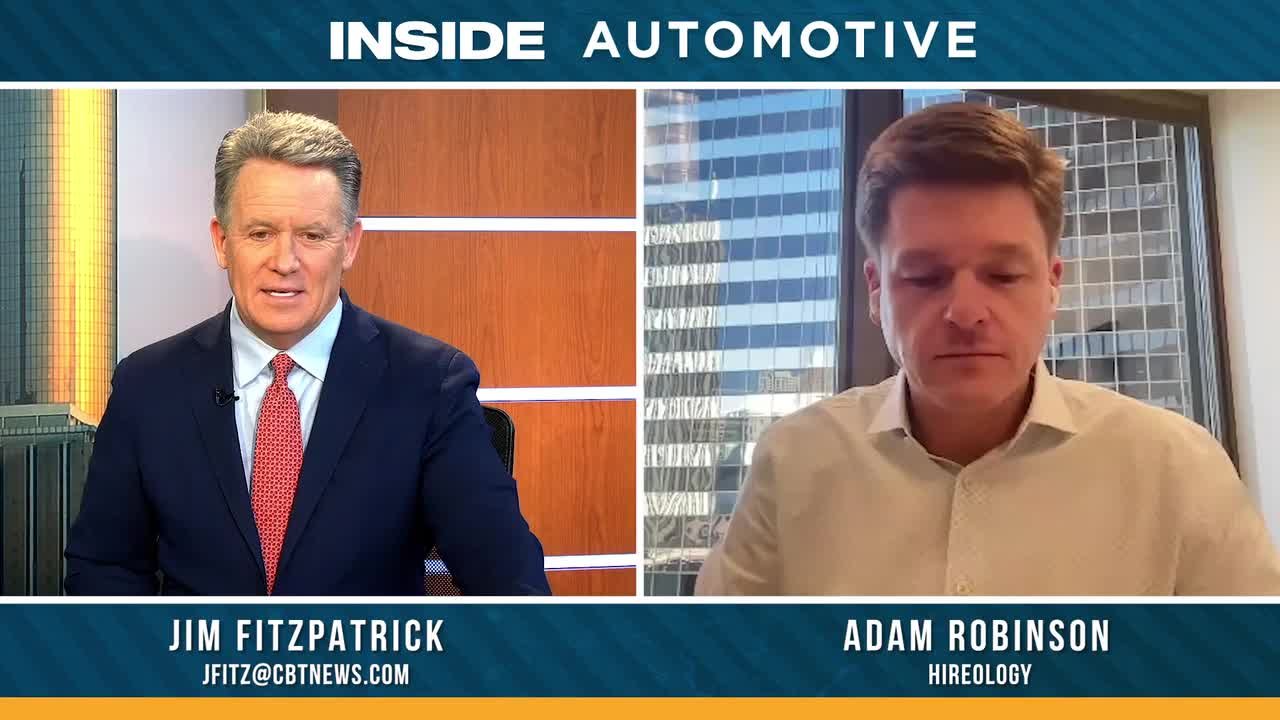
The candidate becomes the customer
Robinson's most useful reframing is borrowed from sales. Recruiting, he argues, is a sales process rather than an administrative one. The employer is selling an opportunity. The candidate is comparing it with other offers, judging the speed of the reply, the clarity of the pitch and the behavior of every person encountered. An application left untouched for ten days does not demonstrate gravitas. It demonstrates that another employer may answer first.
That logic fits the markets Hireology chose. In a dealership, the absence of a technician has a visible price. In a hotel, the product is inseparable from the people delivering the stay. In healthcare, slow hiring compounds an already difficult staffing problem. Robinson has urged dealership leaders to attempt their own mobile job application, a small piece of executive theater with a sharp point: friction feels different when the boss has to tap through it.
His 2017 book, The Best Team Wins, turned the argument into a manual. Build a data-driven job profile. Use a candidate scorecard. Ask questions that test for the outcomes already defined. Robinson also launched a weekly podcast under the same title in 2016, speaking with entrepreneurs and business leaders about hiring, retention and culture. It reached its hundredth episode in early 2019. A founder selling process had sensibly created two ways to teach it.
There is also a civic streak. Robinson has held leadership roles with Entrepreneurs' Organization and helped develop programs teaching core business skills to early-stage founders. His phrasing on mentorship is particularly good: looking back is insufficient; one must reach back. It sounds like advice from somebody who remembers the classroom where a plan first acquired numbers.
AI enters the interview room
The latest version of the argument concerns artificial intelligence. Hireology now promotes tools that summarize candidates, match applicants to role-specific criteria and support interviews. Robinson's case is that industry context matters. The evidence that qualifies an automotive technician differs from the evidence that qualifies a nurse or a hotel employee. A generic keyword layer can notice a word while missing the credential that gives the word meaning.
He has paired that product pitch with references to fairness monitoring, transcripts and human oversight. The manager still makes the decision. Software should make the queue legible, show why somebody matched and rescue qualified applicants from an inbox that a busy manager never finishes. It is the founder's old scorecard wearing a newer suit.
That continuity helps explain Robinson better than a list of awards, though he has those too: two EY Entrepreneur of the Year finalist appearances, recognition in Chicago's technology community and a Workforce magazine nod as an HR industry game changer under 40. The more revealing achievement is persistence. For sixteen years at Hireology, he has kept pointing at the same unglamorous seam between intention and execution.
He can also, according to his company biography, sing the McDonald's Menu Song from memory after learning it at age nine. This may be the ideal party trick for a hiring technologist: a flawlessly retained script about standardized choices. Somewhere between the Big Mac and the candidate scorecard sits a lifelong appreciation for systems that tell people what comes next.
What the machine should leave alone
In a 2026 conversation about hotels, Robinson insisted that hospitality would continue to depend on human beings delivering an experience. Technology cannot smile at a tired traveler in the lobby. It can, however, keep the employer from losing the person who might. This boundary is the most interesting part of his current work. Automation earns its place by removing delay and clerical fog, not by pretending judgment has become obsolete.
The job interview will probably never become a clean science. People are gloriously resistant to laboratory conditions. They learn, bluff, surprise, disappoint and occasionally outperform the scorecard. Robinson's career rests on a narrower and more defensible claim: uncertainty is no excuse for disorder. Decide what matters. Gather comparable evidence. Treat the applicant as a person with choices. Then accept responsibility for the call.
It is not a grand theory of human nature. It is a way to keep a busy manager from mistaking a pleasant conversation for a forecast. After two companies, a book, a hundred-plus podcast episodes and several generations of recruiting technology, Adam Robinson is still asking employers to do their homework before somebody walks through the door. The machines may be listening now. The assignment remains ours, along with the consequences when a confident hunch goes wrong.