local-government
(20)
Sunil Rajaraman and the business of paying attention
He turned screenwriters into a writing marketplace and helped bring The Bold Italic back to life. After losing a city council race, Sunil Rajaraman found his next business in the meetings most people skip.
Datacom makes the everyday work
A payday rescue, a council’s dog registrations and a sprawling cloud bill reveal the business behind Datacom: making complicated systems behave.
HdL Companies finds the money cities missed
A former city manager turned a neglected spreadsheet problem into a national business. HdL’s proposition is wonderfully practical: check the revenue you are already owed before asking for more.
BS&A and the Town Hall That Stopped Passing Paper
A Michigan software company found a durable business in the least glamorous corner of government: helping the people who collect taxes, pay staff and issue permits work from the same set of facts.

The Consulting Firm That Turned a Stormwater Tax Into a Day at the Park
Shockey Consulting sells something city halls badly need and cannot manufacture on command: a credible conversation. Its best work begins where the engineering ends and the public questions start.
The Grant Is Won Before the Application Opens
TFG built a Washington business around a deceptively practical idea: towns should shape projects for federal money long before a deadline turns strategy into paperwork.

FM3 Research and the expensive difference between liking and voting
A public can love your mission and still reject your tax. FM3 Research makes a business of finding that gap before a campaign has to.

Polaris Software and the business of getting paperwork out of the way
From pavement permits to police armouries, Polaris sells software for the work behind public services. Its growth rests on a practical bet: joining up the paperwork can be worth more than another app.
REEN UK wants your bin crew to make fewer stops
Derby reported 53% fewer visits to trial street bins after adding fill-level sensors. REEN’s bigger proposition is to turn the humble rubbish bin into a better instruction for the people collecting it.

Beam stopped passing the hat. Now it sells time back.
The company that crowdfunded routes out of homelessness now sells AI tools to frontline services. Its wager: less paperwork can buy more time for people.

Arcus Global Put the Town Hall in the Cloud - Then Met the Mess in the Filing Cabinet
The Cambridge software maker sells councils one cloud platform for planning, licensing, waste and citizen service. Its growth explains the appeal - and its hardest migrations explain the risk.

Cloudpermit Turned a Government Side Project Into the Software Behind 1,450 Town Halls
The first version looked like a wireframe and swapped integrations for hand work. Thirteen years later, Cloudpermit is selling local governments a practical escape from paper files, phone tag, and the lonely spreadsheet that somehow runs city hall.
OpenGov’s $1.8 Billion Bet: Make City Hall Software Less Painful
OpenGov started by making municipal budgets readable. Fourteen years, ten acquisitions and a $1.8 billion deal later, it is trying to become the operating system behind the permit, purchase order and pothole.

Zencity
Zencity is a govtech company that builds the leading platform for community trust, purpose-built for local government. It combines AI-driven social listening, statistically representative resident surveys, and communication tools to help cities, counties, and public safety agencies understand what residents think and turn that input into decisions, budgets, and policy. Founded in 2016 and headquartered in New York and Tel Aviv, Zencity works with more than 600 government agencies and has raised roughly $93M in venture funding.

Eyal Feder-Levy
Eyal Feder-Levy is the co-founder and CEO of Zencity, a govtech company that uses AI to turn millions of resident interactions into actionable insight for local governments. An urban planner by training who came up through nonprofit community work in South Tel Aviv, he started Zencity in 2015 to give cities a routine 'finger on the pulse' of their communities. Under his leadership the company has raised roughly $93M, works across six countries, and serves hundreds of government agencies reaching hundreds of millions of residents.

Marketplace.city
Marketplace.city is a Chicago-based govtech company that helps state and local governments source, validate, and procure technology. Its Clearbox platform turns a repository of historical vendor, contract, and pricing data into managed procurement services (Clearbox Procure) and a research subscription (Clearbox Source), aiming to compress technology buying cycles that once ran months or years down to roughly 100 days. Founded out of a 2016 collaboration with New York City's Mayor's Office of Technology and Innovation, the company has supported over 200 governments.
GovWell
GovWell builds an AI-native software platform for state and local governments, replacing legacy permitting, licensing, inspections, planning and code enforcement systems with a single configurable, cloud-based product. Founded in 2023 and based in New York, the company says it cuts permit and license processing time by up to 95% and serves well over 100 municipalities and counties across more than 30 states. In May 2026 it raised a $25M Series A led by Insight Partners.
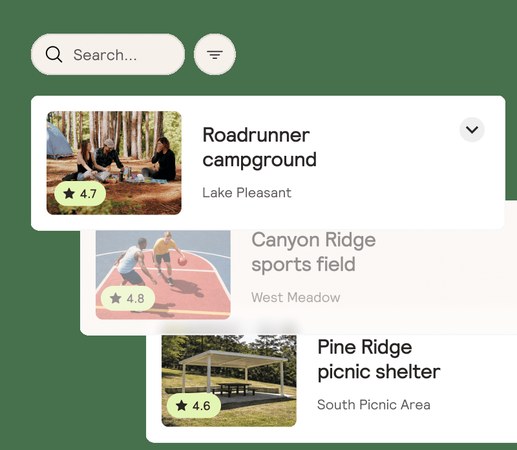
Kaizen
Kaizen (Kaizen Labs) is a New York-based civic technology company building modern, people-first software for America's essential public services. Its AI-native, highly configurable SaaS platform replaces aging legacy systems across permitting, parks and recreation, licensing, transit, payments, and resident engagement. Founded by Nikhil Reddy and KJ Shah, Kaizen partners with local, state, and federal agencies to give residents consumer-grade digital experiences - from reserving a campsite to renewing a license - while restoring public trust in government services.

Troy LeCaire
Troy LeCaire is the co-founder and CEO of GovWell, a New York startup building an AI operating system for local government - the permits, licenses, and inspections that quietly run a town. Before writing a line of code, he and CTO Ben Cohen cold-called hundreds of municipalities and lined up five paying customers. By 2026 GovWell served 130+ municipalities across 34 states and raised a $25M Series A led by Insight Partners, with zero churn on live customers and processing times cut by up to 95%.

Just Appraised
Just Appraised builds AI-powered software for local governments - starting with county assessors and clerks. Founded in 2017 at Stanford, the Palo Alto company now serves 300+ counties across 30 states, turning paper-bound deed processing, exemptions, appeals, and constituent services into modern digital workflows.