The awkward moment in public opinion research comes after people say they like you. In 2025, StopWaste, the Alameda County waste-reduction agency, had reason to feel encouraged: voters responded positively to its work. Then came the question about a tax.
FM3 Research surveyed 770 registered voters that July. Support for the agency’s mission did not resolve their division over paying for it. In September, staff recommended against pursuing a countywide tax at that time, citing the findings, uncertainty and expense. A regulatory-fee proposal was being developed separately. The board memo records a useful distinction: a good reception is not a funding plan.
For anyone accustomed to polling as an election-night prediction contest, this is a different sort of result. Nothing needs to win for the research to matter. A decision can become more informed because someone has acquired a reason to hesitate.
The business of the second question
Fairbank, Maslin, Maullin, Metz & Associates, usually shortened to FM3 Research, sells commissioned opinion research and strategic advice. Its territory includes the moments when an institution has to move from an attractive intention to a specific public choice. How should a city prioritize services? Which argument makes sense to an audience? How much support survives when a proposal becomes concrete?
The firm began in 1981 with candidate and ballot-measure surveys, later extending its work to government, nonprofit and business clients. Its own account remains admirably plain about the center of gravity:
“While our bread and butter is still political campaigns”
FM3 Research · About Us
That history matters. Campaign research must contend with choices, opponents and deadlines. Those habits can be useful to a public agency whose technically sensible proposal still needs people to understand it. The firm describes assignments led by partners, supported by its own data-analysis and graphics resources. The purchase includes experienced people who can discuss what the findings mean.
Eighteen minutes, $28,250
A municipal proposal gives this otherwise abstract business a price tag. In March 2025, Palos Verdes Estates staff recommended an FM3 engagement to investigate service satisfaction, budget priorities and revenue options. The proposed 18-minute baseline survey cost $28,250 for 300 registered voters, using telephone and online responses. An optional 12-minute follow-up added $24,250 at the same sample size. These were proposed project prices, not a published tariff for every client.
The sticker price is easier to understand when the work is unpacked. FM3’s 2024 proposal for Orange bundled questionnaire design, sample preparation, recruitment invitations, interviewing, translation, data analysis and reporting. It also specified a results presentation and availability for further consultation. Depending on duration and sample, that proposal ranged from $33,250 to $50,000.
This is a services business with a scope of work. A buyer is paying for the construction and interpretation of evidence, including the unglamorous tasks required before the first chart can exist. The practical comparison is between complete assignments: who gets reached, in which languages, with what questions, followed by what explanation.
A campaign firm with a much wider address book
FM3 explicitly identifies Democratic campaigns and independent expenditures among its clients. Its political identity belongs in an account of its market position. So does the work that takes place outside candidate contests: public agencies, foundations, advocacy groups and selected private businesses all appear in its client description.
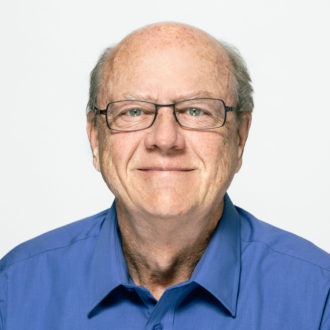
Founding partner John Fairbank’s client history stretches from Patty Murray and Jerry Brown to Disney, NBC/Universal and Airbnb. His biography also describes polling for the Los Angeles Community College District’s successful $5.3 billion bond measure in 2022. That figure is the bond’s value, not FM3’s fee, and the research was one contribution to a larger effort.
President David Metz joined in 1998. His portfolio includes conservation funding, drug-policy measures and local finance campaigns. These subjects require familiarity with arguments that recur in different places: what should be protected, which institution can be trusted, and who should bear a cost. Experience does not answer a new questionnaire. It can help a researcher recognize what deserves a question.
Who never makes it into your meeting?
The most revealing line in a research specification can be the description of the audience. Oakland Unified’s 2026 FM3 agreement set out a survey of 1,000 parents. The target included 750 parents of enrolled or prospective students and 250 Oakland parents whose children did not attend district schools. The ratified agreement specified English, Spanish, Chinese and Arabic, telephone and online methods, and a ceiling of $81,000.
There is a lesson in that design for almost any organization. People already using your service can explain their experience. People outside it can raise different questions. An institution that only listens to its existing participants risks confusing familiarity with a complete account of its audience. Oakland’s specification makes the missing group an explicit part of the assignment.
FM3’s methods menu includes surveys, small-group discussions, individual interviews and online discussion boards. It also combines collection methods and conducts multilingual studies. The choice should follow the problem: estimating how widespread an opinion is asks something different of a research design than exploring the reasons behind it.
The experience has to survive the bid
FM3 operates in a competitive consulting market. In Signal Hill’s evaluation, the city considered proposals from FM3, Great Blue Research, Maroon Society, Probolsky Research and True North. True North scored above FM3 in both evaluation stages. The comparison included experience, methodology, scope and cost. A long client list did not settle the procurement.
FM3’s position is therefore more specific than “a company that does surveys.” It combines policy subject knowledge, campaign experience and advice from senior researchers. Its February 2026 Visalia proposal made a further argument: repeated work in the city since the early 2000s had built familiarity with the electorate. Local memory can be part of the offer, provided the next study still earns its conclusions.
The same practical mindset applies to smaller assignments. In an ICMA discussion of police research, Richard Bernard and fellow researcher Bryan Godbe recommended clear goals and sound sampling. Targeted questions in an existing community survey can help smaller agencies learn about trust without commissioning an entirely separate, comprehensive study.
Decide what would change your mind
The reader can copy a habit from this work before hiring anybody: write down the decision the research is meant to inform. Then specify the result that would cause you to revise it. That is an editorial lesson from these examples, rather than a proprietary FM3 formula.
The approach loses its value when the organization has no room to respond. If every answer leads to the same action, the research has become decoration. And an answer to one proposed choice should not silently become a forecast about a different choice, audience or date.
A useful brief leaves space for an inconvenient finding. It gives the researchers something more consequential to deliver than reassurance. Before asking whether the public likes the idea, ask what you actually need the public to do.
Keep asking
Explore FM3’s approach, its research in the news, LinkedIn profile and contact page.
Watch Startup Tri-Valley’s conversation with David Metz and colleagues about decarbonization and regional workforce research, or read the episode transcript.