Sunil Rajaraman lost an election and acquired a reading problem. In 2022, he ran for city council in Orinda, California. The campaign ended without a seat. The questions continued: how had the town reached its decisions, who had argued for them, and where could an ordinary resident find the explanation? City hall had produced plenty of material. Getting through it was another matter.
Rajaraman began working on summaries of local meetings. He had spent years helping people produce words and find audiences for them. Here was a town generating its own long-running serial, complete with recurring characters, disputes and unresolved business. The episodes were public. The audience had other things to do.
The venture that followed, Hamlet, brought together parts of his career that might otherwise look unrelated: a screenwriting service, a marketplace for freelance writers, a San Francisco magazine and executive jobs in marketing. Each had involved the same practical difficulty. Having information somewhere is a beginning. Getting it to the person who needs it takes work.
The election that left him with a question
Orinda was a personal setting for the experiment. Rajaraman’s candidate statement described a Bay Area upbringing and public schooling in Cupertino. He pointed to his experience starting businesses and teaching as an adjunct at UCLA. Small businesses and public education were among the concerns he wanted to bring to the council.
Those were the credentials of someone accustomed to explaining what he could contribute. The campaign also required him to learn how the place operated. By June 2023, when he publicly introduced Hamlet, the election had become the origin of a different project. He wanted to improve the way people talked about local issues.
His launch announcement worried about polarizing online conversations, the difficulty of agreeing on facts and the weakening of local newspapers. Hamlet would use AI to uncover information scattered around the internet and make it useful. The ambition began close to home, with the kind of civic knowledge a resident might need before having an opinion.
A newsletter gave the idea somewhere to live. Summaries could be read, shared and tested against what people actually wanted. It was an appropriately modest starting point for a founder whose earlier businesses had taught him that the first description of a product rarely survives every encounter with its customers.
Before city hall, a room full of screenwriters
The earlier lesson began with Scripped, the online screenwriting service launched in January 2008. Rajaraman worked with Ryan Buckley and Zak Freer. The software helped people write scripts in the required format. The hoped-for connection was between writers and producers: create the work, get it noticed, move it toward the screen.
A community accumulated. It also contained a more immediate request. Writers wanted paid work, and businesses needed people who could write. Scripted emerged in 2011 to connect those two groups. The change made use of something the founders already had: people with writing ability and interests beyond the screenplay on their desks.
There is a pleasingly practical quality to that turn. A writer can care about a film and still accept an assignment about a business. Expertise has more than one use. Scripted vetted writers by subject and matched them with customers who needed content. A community built around one creative ambition became the basis of a working marketplace.
At the start, some of the system was Rajaraman himself. He has described writing or editing assignments when a suitable writer was unavailable, and using Excel to make matches manually. A small order mattered. The founder had to understand the job well enough to finish it before the product could take more of that work over.
Three measures of the same marketplace: output, earnings and capital.
By November 2014, Scripted reported more than 50,000 paid jobs had passed through its marketplace. A $9 million Series B led by Storm Ventures, with existing investors Crosslink Capital and Redpoint Ventures participating, would support product and team growth. The work had moved well beyond the founder personally filling a gap.
That year also supplied a smaller, revealing detail. Scripted introduced a program offering eligible nonprofits $500 in credit and a discount on subsequent writing services. The reasoning was straightforward: an organization could have a worthwhile mission and still lack the time or staff to explain it. The ability to tell a story was a resource the company could share.
Keeping San Francisco in print
In 2015, Rajaraman moved from supplying writing to keeping a publication alive. Gannett had closed The Bold Italic in April. He and technology writer Sonia Arrison bought it, with plans to preserve the archives and resume publishing. They consulted people who had worked there before deciding how to carry it forward.
The project came with a recognizable voice and a less settled financial future. Its immediate aim was sustainability. Events and other revenue experiments were possibilities; expansion to other cities was a longer-term thought. The publication’s existing relationship with San Francisco was the thing they first needed to keep intact.
By 2016, Rajaraman described an operation supported by contractors rather than full-time staff. Moving to Medium’s publishing tools offered help with the machinery of running a site. A piece he had written on Medium had attracted attention and opened a conversation with its business-development team. His writing had become an introduction for the publication he owned.
Medium acquired The Bold Italic in February 2019. Its editorial staff continued on contract, and the acquisition offered more resources for contributors. For Rajaraman, the magazine had been an extended encounter with a problem software alone could not settle: people return to a publication because of what it notices and how it sounds.
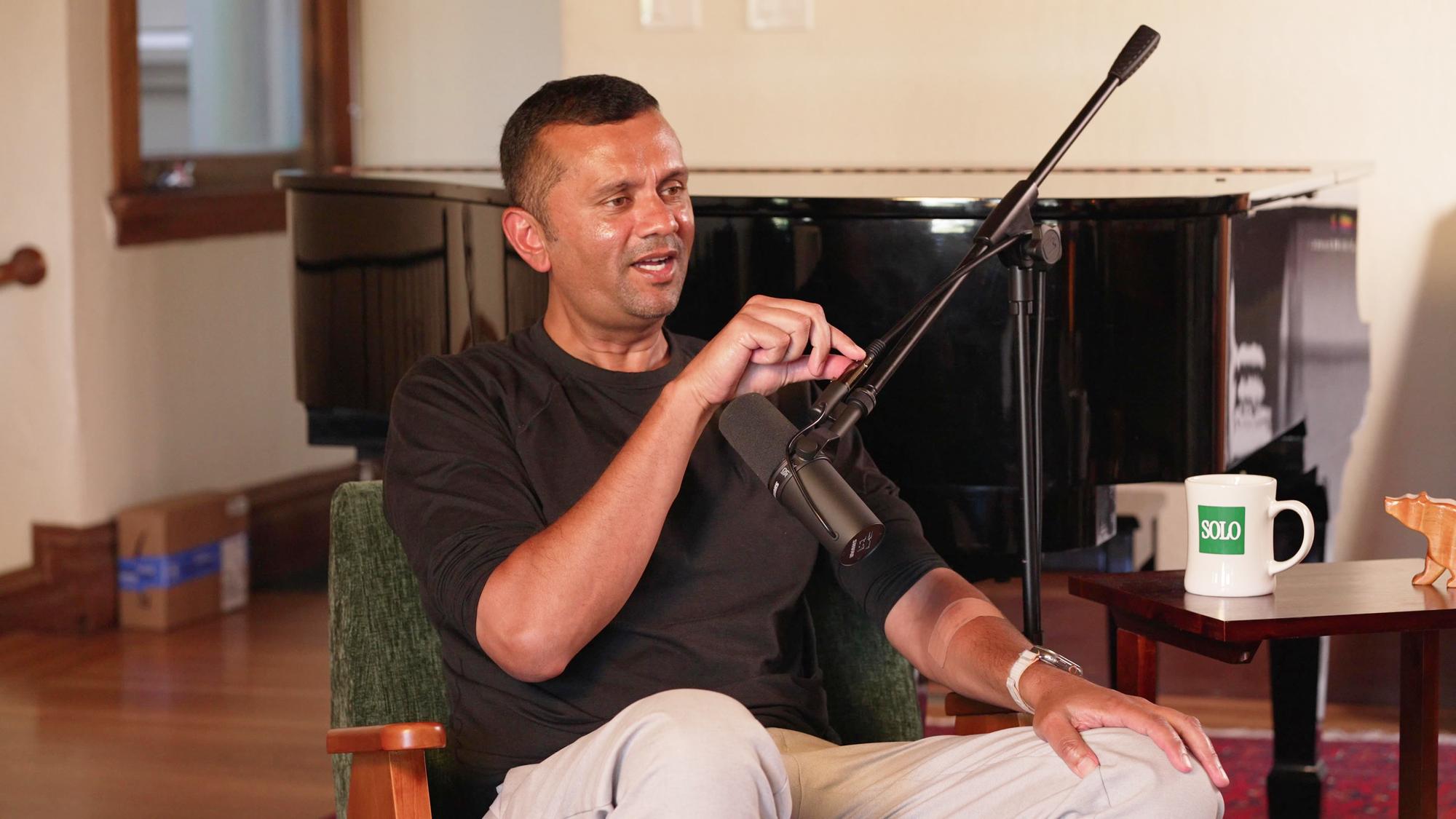
His career meanwhile included marketing leadership at Replicon and Metromile, work with Radiance, and a role at GoodRx. In an interview at Replicon, he discussed the different demands of a larger company selling to enterprise customers. The customer, the sales process and the organization around them could all change together.
Who pays to understand a meeting?
Hamlet gave those operating lessons a new setting. Rajaraman initially imagined a media business for residents. Developers began asking whether the same approach could help them understand planning commissions and development requirements. Public decisions created private consequences, and companies had a reason to pay for clearer information about them.
The commercial opportunity did not require local meetings to become any shorter. It required a way to follow them without repeatedly starting at the beginning. A company considering a project could care about earlier votes, a discussion of a competitor, an upcoming agenda item or the language surrounding a proposal.
These are questions with locations and histories attached. A general account of a city will not answer them. The useful record is specific enough to show when something was said and to let the reader return to that moment. Hamlet’s search connects users with meeting material rather than merely handing them a conclusion.
- 01Public meetingsVideo, transcripts, agendas
- 02Searchable momentsFind the discussion in context
- 03Useful informationBusinesses, residents, researchers
The company combines AI with human expertise. Its paying audience and its civic ambition exist beside each other. Developers need information for decisions about building; residents need information about decisions affecting where they live. Giving each group something useful creates choices about which products to build first and how access should work.
By August 2025, Rajaraman was writing openly about his shift toward selling local-governance information to private companies. He also kept considering a public channel. The earlier newsletter had not disappeared from the reasoning behind the business. It had shown him an audience he still wanted to reach, even as another audience supplied revenue.
Democracy, with a sense of humor
In December 2025, he announced Hamlet TV on Apple TV and social platforms, alongside a $5 million financing round led by Slow Ventures. The channel selected unusual, funny and recognizably human moments from public meetings. A business organized around civic records had found another use for its material.
One early clip featured a Corpus Christi resident addressing the council in a cockroach costume. Public comment has its own wardrobe department, apparently. The joke was attached to a real complaint, delivered in a room where officials had to listen. Watching such a moment could make the council chamber feel less remote.
The choice fits a founder who has spent time working with both writers and readers. A procedural recording asks for attention before offering much reason to give it. A comic moment can reverse that order. The experiment is whether curiosity survives the clip and carries someone toward the decisions happening around it.
There is editorial work involved. People review the selections; humor cannot be established by a keyword alone. The goal is to mix enjoyable moments with matters that deserve closer attention. Getting somebody to watch once is one problem. Helping that person understand what they have watched is the next.
The next thing worth reading
In January 2026, Rajaraman proposed indices comparing how cities handle decisions, drawing on a large body of meeting text. He described himself as a sports fan and framed the idea as a set of rankings for American cities. An interest in public records had acquired a familiar sporting question: how do these places compare?
By October 2026, Hamlet’s website described an index of more than 103,000 meeting transcripts across more than 7,900 governing bodies in all 50 states and Washington, DC. Search sat alongside an intelligence service and an API. The collection had become material that customers could read in several different ways.
“If you don’t have an original insight, don’t work on it.”Sunil Rajaraman / Solo Founders, April 2026
The remark gives his varied career a useful test. A marketplace needs a reason for writers and customers to meet there. A revived magazine needs a reason for readers to return. A civic product needs to show that a public record can answer a question someone actually has.
Rajaraman has kept changing the form: software, assignments, articles, summaries, clips, search. The work still depends on noticing what somebody is trying to understand. After Orinda, he had a question close enough to follow every day. He built around it. The meeting was already happening; he wanted to make it easier to pay attention.