In Lenexa, Kansas, the history of modern stormwater policy includes paddle boats, cane-pole fishing, a duck pond and an environmental Elvis called “Green E.” This is not how infrastructure usually introduces itself. Infrastructure arrives as a diagram in a fluorescent meeting room. It speaks in acronyms. It asks citizens to admire a culvert. Sheila Shockey understood that the city was asking for something harder than admiration: voters would have to approve a one-eighth-cent sales-tax increase to help pay for a new watershed program.
So the policy became a festival. Waterfest put families beside the water and environmental groups behind interactive booths. It made flooding, water quality and recreation parts of the same afternoon. In August 2000, voters approved the funding measure with 78% support. The festival became annual. A piece of technical policy acquired a public memory.
That episode explains Shockey Consulting Services better than a services menu can. Founded by Shockey in 1998, the woman-owned firm works with governments on strategic plans, comprehensive plans, street projects, wastewater plants and organizational performance. The documents matter. But the recurring problem is human: a technically correct answer can still be publicly impossible.
The first thing that failed was the old metaphor
Before Rain to Recreation, Lenexa treated stormwater the conventional way: collect it and move it away through gutters, pipes, boxes and culverts. In places, that produced localized flooding, erosion and expensive stream damage. Then came the severe metropolitan flood of October 1998 and new federal clean-water requirements. The city’s mental model changed. Rain was no longer merely waste to dispatch. It could be a resource around which to build wetlands, lakes, trails, parks and education.
Shockey spent a little more than a year working on-site with the team developing the program. Her communications problem was deliciously awkward. Residents had to understand both watershed management and a tax proposal. Business groups, developers, churches, PTAs, neighborhood associations and editorial boards all required different doors into the same idea. Waterfest was one of those doors. Existing city events helped with promotion; businesses contributed food and supplies; environmental groups supplied the expertise. What changed minds was not a slogan alone. It was the chance to see the public benefit before being asked to finance it.
A consultancy for the room after the engineers leave
Shockey occupies a narrow but valuable place in the market. Large engineering and design firms can calculate capacity, drainage and geometry. City staff know the politics and the institutional history. Communications agencies know how to distribute a message. Shockey combines planning, facilitation, outreach and implementation, often as the connective tissue among all three.
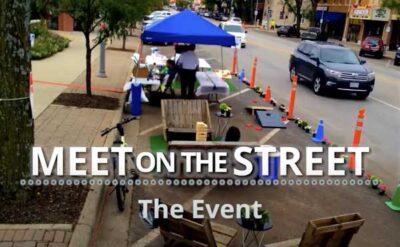
On North Kansas City’s Armour Road Complete Streets Plan, the firm worked under WSP and led stakeholder identification, walking tours, focus groups and public meetings. A “Meeting-in-a-Box” let discussions travel beyond city hall. A pop-up demonstration allowed people to encounter the proposed street rather than decode it. The project won a Missouri Cities Innovation Award.
At Johnson County’s Tomahawk Creek wastewater facility, the assignment was different but the translation problem was the same. Four years of construction involved nine miles of underground utilities, 50,000 cubic yards of concrete and nearly 800 drilled shafts. Working alongside Black & Veatch and HDR, Shockey organized property-owner notices, public meetings and a project website, then coordinated communications among the county, cities, construction teams and engineers. No one needs a wastewater plant to be charming. They do need disruption to be legible.
What does the work cost?
Public contracts · different scopes, shown for scale
The public record makes the business model unusually visible. Great Rivers Greenway considered a not-to-exceed fee of $25,660 for 2024 engagement on one Centennial Greenway segment. Naperville awarded a $124,520 strategic-planning contract in 2020 after eight firms submitted proposals. Merriam approved $292,000 in 2026 for a downtown master plan, including $109,500 for engagement alone. Those prices are not a rate card; the scopes range from a defined engagement package to months of planning, surveys and design work. They show what Shockey sells: professional time arranged around a public decision.
The meeting is a channel, not the audience
Traditional participation tends to reward the person with a free Tuesday evening, a car and comfort at a microphone. Shockey’s method multiplies the entrances: open houses, stakeholder interviews, online maps, surveys, focus groups, pop-ups, door knocking, project websites and steering committees. The point is not novelty. Different formats find different people.
Turn an abstract choice into an event, demonstration, map or scenario people can inspect.
Use several participation formats instead of treating one evening meeting as “the public.”
Pair aspirations with fiscal, operational and physical consequences.
Keep a visible record of what people said, what changed and what happens next.
The pandemic tested that logic. In Lindsborg, Kansas, planned in-person events disappeared just as the city was building both a short-term strategic plan and a 20-year comprehensive plan. The team moved to an online platform with surveys, mapping tools, idea forums and quick polls. More than 384 residents participated - about 11% of the population - and the company says the group was broader and more diverse than in previous conventional processes. Losing the room did not end engagement. It forced the firm to separate the purpose from the format.
The copyable lesson is not “hold a festival.” It is to match the medium to the decision. A temporary street belongs on a street. A watershed belongs near water. A long-range plan needs several ways to enter and enough follow-through to prove the invitation was real.
A kitchen table becomes an operating system
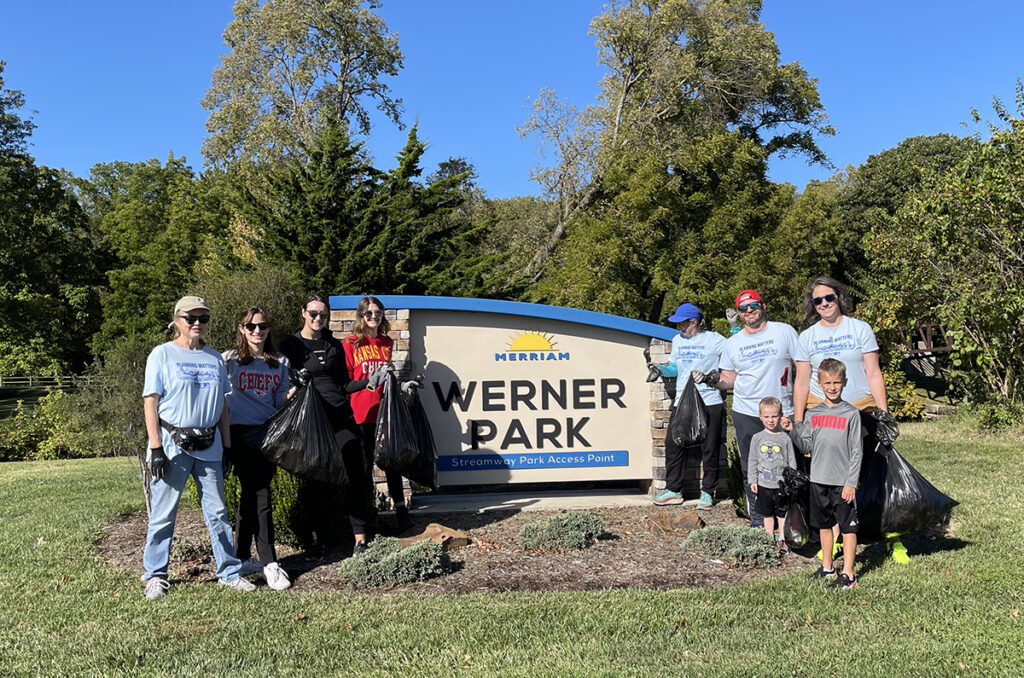
Shockey started the firm at her kitchen table with a baby on her lap. Its first project meeting came four days after her son was born. The detail could be polished into founder mythology; the more useful reading is organizational. She says she wanted the sort of company she had imagined working for - one built around public service, varied viewpoints and work-family balance. In 2018, the firm received Healthy KC recognition for workplace health and wellness. Its current roster reaches beyond conventional planners to infrastructure specialists, an organizational-performance leader, a creative strategist, and audio/video production. The staff page also lists an Australian Shepherd named Bodhi Blue as Director of Greetings.
The hybrid roster reflects how the product has expanded. The firm now offers comprehensive and master planning, economic development, mapping, education, management consulting, performance measurement and future-oriented workshops. On Lee’s Summit’s Ignite! plan, it paired public participation with a fiscal-impact model comparing the capital and operating costs of land-use scenarios. In the Kansas City region’s safety work, it coordinates outreach, listening sessions and advisory groups so resident experience can enter a technical transportation framework.
This also marks the boundary of the model. Participation cannot rescue a decision whose outcome is secretly fixed, and ten channels do not help if no one can explain how input affected the result. A client must be willing to share information, allow time for response and accept that residents may complicate the brief. Where urgency or confidentiality makes those conditions impossible, direct expert advice may be the more honest product.
The future, with minutes attached
In 2026, Shockey’s pipeline shows the same formula at larger civic scale. Merriam hired the firm for an eight-month downtown master-plan process. Council Bluffs began a 2050 comprehensive plan and downtown plan with Shockey leading the work. In the St. Louis region, the firm has continued greenway engagement and contributed to a county comprehensive plan centered on equity, sustainability and implementation.
Shockey calls herself a futurist, a title that can sound airy until one notices the artifacts: an agenda, a cost model, a door-knocking route, a workshop, a plan that somebody has to adopt. Her firm’s version of the future is procedural. First make the issue graspable. Then give people a real entrance. Then write down what happens next.
Continue exploring