At 3:17 on a hot Phoenix afternoon, a freeway incident is not yet a story. It is a set of unfinished facts: a lane closed, perhaps an injury, traffic beginning to bunch at the edges. The engineering team has one problem. The public has several thousand versions of it. Somewhere between those two realities sits Brock Barnhart's company, looking at the clock.
The crisis plan for the I-10 Broadway Curve Improvement Project specified a brisk choreography. The project team would collect the essential facts and deliver them to the Arizona Department of Transportation within 30 minutes. If the event qualified as an emergency, information would move through the project's public channels within an hour. After 24 hours, bilingual printed material could join the website, app, social feeds, news media and door-to-door notices.
This is public relations with a hard hat and a stopwatch. The Barnhart Company is a Phoenix-based, bilingual public engagement firm founded in 1997. It is legally Gunn Communications, Inc., a name that remained on procurement documents after the business adopted The Barnhart Company identity in 2023. The firm says it has worked on more than 500 projects for over 200 clients, mainly government agencies, public initiatives and the architecture, engineering and construction teams that build things in front of everybody.
“A project won't move until the community moves with it.”The Barnhart Company
The 30-minute company
The usual picture of PR is a person polishing a message. Barnhart's portfolio suggests something more mechanical. There are stakeholder databases, detour maps, survey reports, hotline scripts, newsletters, community presentations and lists of faith groups or business associations that should hear an update before a concrete pour rearranges their morning.
On the 11-mile Broadway Curve reconstruction, Barnhart developed a public involvement plan from a community assessment, then folded crisis and reputation management into it. The team produced monthly and quarterly newsletters, more than 100 traffic alerts, detour animations, progress videos, presentations and twice-yearly surveys. It maintained the website, answered stakeholder questions and pursued 24 community events or presentations a year.
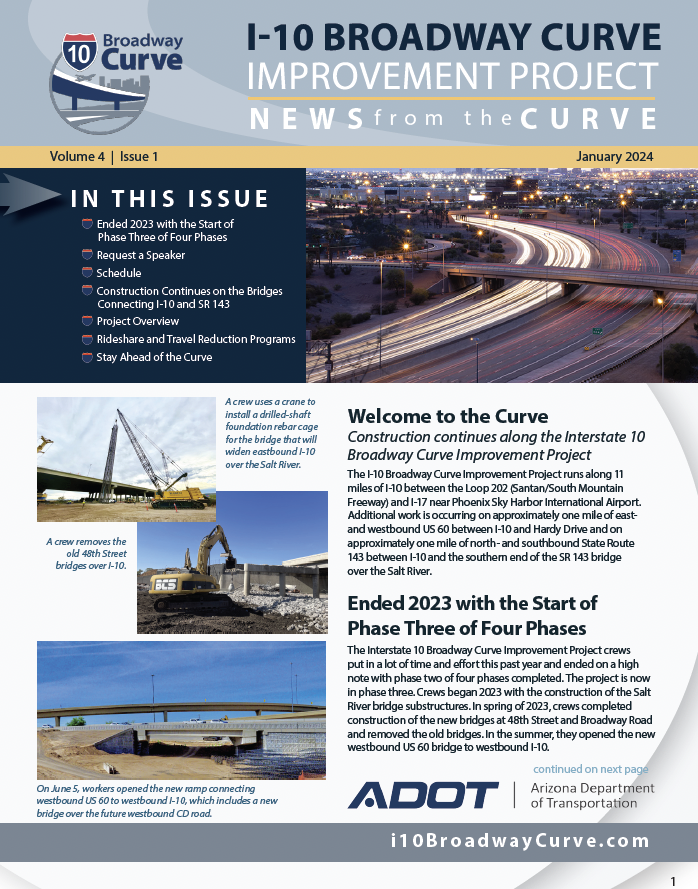
Those outputs sound mundane until one imagines their absence. A late alert is not merely late copy. It is a missed appointment, a delivery truck in the wrong lane or a rumor that acquires a constituency. The first thing to fail on a complex public project is often not the structure. It is the shared account of what is happening.
A survey is a piece of infrastructure
The City of Phoenix Parks Master Plan began with its own false start. The city had not completed a comprehensive parks plan since 1988. Officials began moving toward one in 2020, then the pandemic and work on a bond program delayed it. In 2023, the city re-engaged consultants and, with Barnhart, launched a standalone website, a project identity, English and Spanish videos, meeting information, a park finder, a hotline and a bilingual survey.
That change in approach matters. The plan covers 188 parks, 33 community and recreation centers, eight golf courses and 29 public pools. A meeting room could never contain its constituency. Barnhart made the survey work on a phone, computer or tablet, promoted it through events and targeted email, and collected nearly 5,700 responses in the first half of the 36-month project. The team attended more than 20 community events; bilingual staff covered roughly half of them.
The old reflex
Schedule a meeting. Present the plan. Record whoever arrives. Call the requirement complete.
The copyable move
Map the community first, remove device and language friction, go where people already gather, then report what their input changed.
The same logic appeared in the Verde Valley Master Transportation Plan. The coverage area was geographically large, so the firm combined a multilingual website, survey, virtual meeting, three open houses, four community events, paid and organic social posts, radio, newspapers and earned media. Different channels did not compete for the title of strategy. Together, they were the strategy.
What the client is really buying
Barnhart sells professional services through direct project engagements, municipal vendor rosters and roles inside larger AEC teams. Public fee schedules are not posted. One 2025 City of Phoenix award put the company in a five-year qualified pool for public outreach and community engagement. The pool carried an aggregate ceiling of $6 million across more than 20 selected vendors - useful context for the market, but not a Barnhart price tag.
The honest cost answer: the firm's individual fees are private. Public records show how government buys the work - scoped contracts and on-call pools - while the portfolio shows what fills the scope: labor-intensive outreach, creative production, digital tools, translation, reporting and rapid response.
The deeper purchase is coordination. A civil engineer can explain a lane closure. A city planner can explain a policy. A designer can make the map. A translator can render the copy in Spanish. Barnhart's niche is making those acts happen in sequence, with one accountable memory of who heard what and when.

That also explains the company's difference from a conventional media-relations shop. Its five advertised service lines - public engagement, reporting, web development, graphic design and event production - are not a menu so much as a loop. Outreach creates data. Reporting makes the data usable. Design makes it understandable. Websites keep it available. Events return it to the people who supplied it.
The part worth copying
The Barnhart method can be reduced to a useful discipline. Assess the community before choosing the channel. Decide response times before the crisis. Translate participation, not just words. Pair every announcement with a way to ask a question. Treat comments as operational data. Close the loop by showing what changed.
It works best when the client has real room to adapt and gives the communications team access to decisions early. It works poorly when engagement begins after the plan is fixed, when officials want attendance without dissent, or when translation is added at the end. Under those conditions, the tools still produce activity - a meeting, a site, a stack of postcards - but not trust.
Barnhart's line about a community deserving “a seat at the table, not a checkbox” risks sounding like agency copy. The operational details rescue it. Thirty minutes. One hour. Twenty-four events a year. A survey that fits in a pocket. Trust is an abstract noun until somebody gives it a deadline, a database and a phone number.