Eight is a very small number of tickets. It is a respectable dinner reservation, a crowded minivan, a slightly awkward birthday party. It is not a music festival. Yet a few weeks before the first Jazz in the Gardens in 2006, eight was the number that confronted Suzan McDowell and the new city of Miami Gardens. The mayor had an idea, a field and almost no audience. McDowell remembers passing out free tickets and pleading with people to come. By showtime, roughly 1,000 did.
The next year, attendance quadrupled. By 2011, more than 45,000 people came through. A 2023 account put an average year near 60,000, with the concert expanded into days of music, parties, poetry and a women's luncheon. The origin is easy to romanticize. The useful part is more ordinary: someone had to change the artwork, call the radio station, persuade the press, find the right community messenger, answer the phone and then do all of it again next year.
The columns show the sequence, not a linear scale. The first figure is advance sales weeks before the event; the others are attendance.
The client who changed the plan
Circle of One Marketing exists because another client noticed something first. In 2001, McDowell was a senior account executive at Miami's HOT 105. The money was good. The work had become, in her phrase, “uncomfortably comfortable.” Sadie McBean, then the owner of Ginger Bay Cafe, told her she could handle all the marketing for a reggae block party. McDowell thought the idea was nuts. Then she formed a company in 48 hours, kept her radio job and took the assignment. Thousands attended.
The original plan was modest: become a media company, because media sales was the skill McDowell already knew. Clients pulled the firm elsewhere. Events required publicity. Publicity required a story. The story needed design, community outreach and a place to land. Circle of One became full-service less through a grand corporate blueprint than through the accumulating demands of the job.
“Part of marketing is when somebody in this room is in another room that I'm not in and somebody brings up my name.”Suzan McDowell, at a 2025 Miami Herald business event
This is also the agency's market position in one sentence. It does not merely purchase attention. It works on the conditions under which people repeat a name. That is especially valuable for a city trying to fill a festival, a bank trying to make financial literacy culturally relevant, or a nonprofit asking a community to change behavior.
A full-service agency, itemized
“Full service” can be a foggy phrase. Circle of One's public contracts make it concrete. A 2019 agreement with North Miami covered press releases and pitching, media responses, newsletters, bus benches, billboards, brochures, shirts, promotional items, media research and buying, talking points, venue scouting, RSVP management and social media. The fee was $7,500 a month for the year. In 2025, the same city agreed to pay $25,000 for a shorter sprint supporting NoMi Tech Month and a Senior Tech Luncheon, including public relations, promotion, event management and video production.
Those are examples, not a rate card. But they reveal the business model: retainers for continuing communications, fixed fees for bounded projects, and a network of collaborators when the job becomes larger than one shop. Jazz in the Gardens, for example, is produced by a coalition. City staff, sponsorship specialists, social-media partners, volunteer managers and vendor teams each own a piece. Circle of One's value is partly the ability to keep marketing connected to that operational machine.
Culture is not a targeting menu
The agency describes expertise with African American, Caribbean, Hispanic and Creole consumers. The distinction is not the ability to select a demographic in an ad platform. It is lived familiarity with the jokes, radio habits, civic institutions, local personalities and reasons for skepticism inside a community. McDowell, who is Jamaican-American, has described inhabiting both sides of that identity as a commercial strength.
That knowledge travels through the client list: OneUnited Bank, the City of Miami Gardens, the University of Miami, FIU, The Children's Trust, Planned Parenthood, arts organizations, restaurants and political campaigns. The common problem is rarely “make an ad.” It is “make this matter to these particular people.” The agency's answer mixes paid media with earned coverage, face-to-face experience and community credibility.
The sharpest demonstration came under pressure. In 2016, McDowell said Circle of One was brought into Harry Belafonte's Many Rivers to Cross Festival 30 days before showtime, with fewer than 2,000 tickets sold despite a major lineup. The team revamped the creative, shifted the media plan, increased social activity, pursued college and millennial audiences and negotiated media partnerships. McDowell reported that sales approached 30,000. The first thing that had failed was not the product - the bill already included Carlos Santana, Dave Matthews, Common and Chris Rock. It was the bridge between the product and its public.
The question before the brainstorm
Circle of One's published seven-step process begins with an unfashionable question: why did the previous campaign fail? Then come stakeholder interviews, audience definition, research, a creative brief, positioning, an integrated communications plan, implementation and evaluation. If the available evidence is thin, the agency recommends primary research such as focus groups or surveys. The creative idea is deliberately downstream of diagnosis.
Four things a smaller team can copy tomorrow
- Write down the behavior you need, not merely the attention you want.
- Ask what failed last time before proposing a new channel.
- Choose a messenger the audience already trusts, then give that person a story worth repeating.
- Plan distribution and measurement while the creative is still being made.
There are conditions attached. Cultural fluency cannot rescue a weak offer forever. A publicity team cannot compensate for an unsafe or poorly run event. Slow approvals can break the chain because one delayed element affects several others. And the relationship-heavy approach is difficult to copy from a distance; its advantage comes from years of answering calls, showing up and being useful in the same community.
The reputation loop
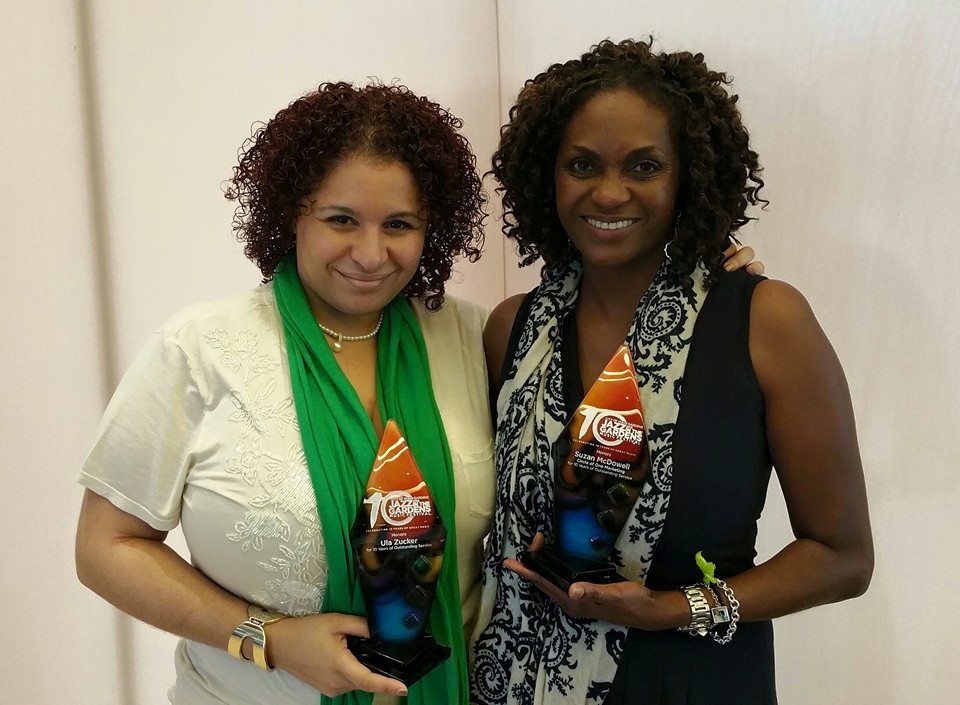
In 2026, Circle of One was recognized as the 2025 Business of the Year at the Best of Jamaica Awards. The honor suited a firm that has made identity part of its practical advantage, not just its biography. The company's website, meanwhile, went into a refresh with a plain promise on the temporary page: “We make brands popular.” It is almost suspiciously simple.
But after 25 years, simple may be earned. Popularity, in the Circle's version, is not a viral spike. It is the long loop between a clear story, a known messenger, a good experience and the next person who mentions your name when you are not there. Sometimes the loop starts with eight tickets. The work is making sure it does not end there.
Continue the conversation