There is a small joke tucked inside the name EGAMI: it is “image” spelled backwards. This is appropriate because the New York communications agency has spent much of its life asking brands to look behind the image - behind the focus-group shorthand, the census category and the flattering campaign brief - at what people actually say to one another when the cameras are off.
The best example begins with a familiar assignment. In 2016, Procter & Gamble asked EGAMI to help make its My Black Is Beautiful platform more relevant. A safer agency might have refreshed the styling, found an ambassador and declared the work modern. EGAMI and its creative partner BBDO listened to Black mothers. The discussion moved away from beauty products and toward a different kind of inheritance: the warnings Black parents give their children about racial bias.
The resulting film, “The Talk,” follows those conversations through generations. One mother prepares a newly licensed daughter for a police stop. Another explains why a racial insult is not a reflection of the child receiving it. The film was specific enough to make some viewers angry, which was part of the risk and evidence of the buried tension. P&G did not retreat. It bought national airtime, extended the idea into an episode of Black-ish and kept the message in public.
“We had the freedom to push the envelope, and the client was committed to stay the course.”Teneshia Jackson Warner, on “The Talk”
The film produced 1.86 billion earned-media impressions, appeared in more than 900 outlets, won a Cannes Lions Film Grand Prix and then the Emmy for Outstanding Commercial. EGAMI became the first multicultural and Black woman-owned agency to win that Cannes honor. The achievement matters. The working method matters more.
The brief beneath the brief
EGAMI sells integrated communications: audience research, brand strategy, advertising, public relations, social and digital work, influencer programs, sponsorships and community engagement. Its customers are usually large institutions with scale and a cultural problem to solve - P&G, McDonald’s, Medtronic, U.S. Bank, PepsiCo, Gillette, Mielle, Verizon and the CDC Foundation among them.
The agency’s difference is not that it knows a secret list of multicultural preferences. It is that it distrusts the list. Its strategists search for a contradiction with emotional weight. A brand wants relevance, but the audience wants recognition. A product wants national reach, but its meaning belongs to a local community. A treatment can improve a patient’s life, but embarrassment prevents the patient from asking about it. The commercial problem is hiding inside the human one.
- Find the live tensionAsk what the audience is already discussing, avoiding or protecting - not merely what the brand wants to announce.
- Put lived experience in the roomBring community stakeholders and cultural partners in before production, when they can still alter the idea.
- Give the story a human costTranslate an abstract issue into a moment someone can recognize: a warning, a missed dinner, a disputed recipe.
- Measure actionTrack leads, appointments, traffic and sales alongside impressions. Cultural fluency still has to do a business job.
A sauce packet with ancestors
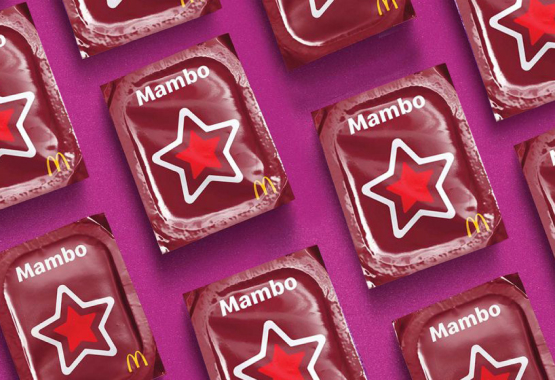
Consider Mambo Sauce. In 2023, McDonald’s prepared a national version of the sweet, tangy condiment long associated with Black communities in Washington, D.C., and Chicago. The obvious failure mode was appropriation by packet: a multinational chain borrows local flavor, buys media and takes the credit.
EGAMI put “Mambo heroes” at the center - chefs and cultural champions with standing in the communities that had made the sauce meaningful. Their stories became a documentary, social activations and an appearance at Black Entrepreneurs Day at the Apollo Theater. The launch drew more than 1,000 earned-media placements and over 8,000 social shares. The useful lesson is not “hire an influencer.” It is to share authorship with people who have something to lose if the campaign gets the culture wrong.
This approach has conditions. It works when the brand accepts correction, gives the agency access to decision-makers and intends to remain after launch day. It weakens when community consultation is ceremonial, when the media plan arrives before the insight, or when legal caution sands every sentence into mush. “Authenticity” is not an aesthetic EGAMI can bolt on at the end. It is a production expense paid in time, access, specificity and the possibility that someone in the room will say no.
When embarrassment is the competitor
The Medtronic assignment looked entirely different. Overactive bladder affects one in six adults over 55, yet many people quietly treat it as an unavoidable part of aging. The obstacle was not a rival medical device. It was stigma, resignation and the unpleasantness of the subject itself.
EGAMI’s “Missing Moments” campaign avoided a lecture about symptoms. It showed people vanishing from ordinary occasions - the seat suddenly empty, the gathering continuing without them. Television, radio, search, social, influencers, earned media, email and text messages carried the same metaphor toward Medtronic’s InterStim therapy.

Daily leads rose more than fourfold in pilot markets; weekly lead volume increased 358 percent. Brand lift came in at more than three times the expectation, including a 12-point rise in aided awareness and a 10-point rise in recall. Nearly 70 percent of landing-page traffic was influenced by traditional media. The figures make a tidy argument for EGAMI’s model: an emotionally exact top-of-funnel idea can produce lower-funnel behavior.
The death of “general market”
For years, multicultural agencies were often invited late. A general-market agency made the big idea; a specialist adapted it for everyone the original room had overlooked. Warner has argued for the reverse: culturally fluent agencies should be general-market agencies, because the supposed general market no longer resembles a single coherent audience.
In 2026 EGAMI gave that argument a new name, “multidimensional.” Its See Me More research reported that 89 percent of consumers trust a brand more when marketing recognizes multiple parts of their identity. Nearly half wanted brands to consider dimensions beyond race and gender - interests, faith, personality and, particularly for younger adults, sexual orientation.
Alongside the study came MDM, or MultiDimensional Mindset, an in-house AI-enabled platform. EGAMI says it maps audiences beyond standard demographics, predicts emotional resonance and virality, simulates cultural focus groups, and helps optimize campaigns across contexts. The company has moved, at least in part, from selling only expert hours to packaging expertise as a repeatable intelligence product.
The temptation is obvious: use a machine to turn a complicated person into an even more detailed target. EGAMI’s stated ambition is more humane - to use data without flattening identity. Whether MDM fulfills that promise will depend on the quality of its data, the humans interpreting its output and whether simulated response supplements real community relationships rather than replacing them. The technology is new. The test is the same one that governed Mambo Sauce and “The Talk”: who gets to shape the story before the story shapes them?
The price of staying independent
Warner’s origin story has the compressed confidence of a good advertisement. After leaving a secure technology job, she moved to New York and accepted an unpaid communications internship. When an employer offered her a staff role, she countered: hire my company instead. The company did not yet exist. She incorporated it while the client was away. Earlier, after meeting Russell Simmons, she had reportedly faxed him her résumé for 30 consecutive days. Subtlety was never the founding strategy.

Scale created a different problem. In 2021, Zeno Group made a strategic investment in EGAMI. The amount was not disclosed. Both agencies remained independent and created an “Agency Allyship” that shares talent, mentoring and client expertise. For EGAMI, it meant resources without absorption; for Zeno, deeper cultural capability without pretending to have invented it internally.
By 2024, EGAMI reported 24 percent year-over-year revenue growth, a 79 percent increase in organic client growth and a 21 percent rise in new-business wins. PRovoke Media named it a top U.S. agency in 2025. Its 27-person staff at the time was 72 percent Black women. Great Place to Work later reported that 75 percent of surveyed employees described EGAMI as a great workplace, with every respondent saying new hires were made to feel welcome.
Those numbers describe a small independent agency, not a global holding company. That scale is part of the offer: senior attention, cultural specialization and the ability to build an integrated team around a problem. It is also the constraint. The method depends on clients who value depth over sheer staffing volume and who will invite the agency upstream, before the important decisions harden.
The thing anyone can copy
Most companies cannot copy EGAMI’s relationships, its accumulated cultural fluency or the authority of its team. They can copy one habit: refuse the first description of the problem. A beauty brief may be about safety. A condiment launch may be about ownership. A medical campaign may be competing with shame. A demographic may be a person asking not to be divided for administrative convenience.
That habit costs attention before it costs money. It requires interviews that can overturn a deck, partners who are allowed to disagree and leaders willing to stay visible when the campaign becomes uncomfortable. Under those conditions, the work can do something advertising rarely manages: make a large brand sound more specific, not less, as its audience grows.
The backward spelling in EGAMI’s name turns out to be a useful instruction. Reverse the usual order. Do not begin with the image the brand wants to project. Begin with the life the audience is already living. Then earn the image.