At the table are two things an advertising brief might keep in separate boxes: Korean food and Tennessee whiskey. For Lunar New Year in 2025, ES Advertising brought them together, working with Korean American chef Kevin Lee on a Jack Daniel's Single Barrel promotion. Food gave the bottle an occasion. The occasion gave the campaign something more useful than a demographic label: a situation in which the product could belong.
That is a revealing way into this Los Angeles agency. A marketer can write “Asian American consumers” on a slide and feel the audience has been identified. But what should the next slide say? Which consumers? In which setting? With what reason to pay attention? The interesting work begins where the label runs out.
ES Advertising sells help with those decisions, along with the machinery needed to turn them into ads. Its work spans creative, media, public relations and events. The distinguishing feature is the audience around which those services are assembled.
A market with several front doors
The agency's industry-association profile lists Asian Indian, Chinese, Filipino, Hispanic, Japanese, Korean and Vietnamese audiences. That list matters. It makes the assignment harder to mistake for a single translation exercise. A shared label on a media plan does not establish shared language preferences, habits or buying occasions.
Its Agency Spotter profile adds another useful distinction: acculturated Asian Americans and international tourists both appear among its target audiences. Consider the difference between a resident choosing a household service and a visitor choosing where to spend an afternoon. Geography alone would put them in the same market. Their decisions would demand very different briefs.
For a buyer, this suggests an early test of the agency relationship. Can the team explain whom it means without retreating to a census category? A useful answer should connect an audience to a decision, then connect that decision to a message. Otherwise the brief risks getting more detailed without getting more precise.
- 01AudienceWho is deciding?
- 02OccasionWhy now?
- 03MessageWhat matters?
- 04ChannelWhere will it land?
The beer can has a uniform
One image in ES's portfolio performs this exercise with delightful economy. Two Hite beer cans wear Dodgers uniforms. The artwork identifies a 2018 special edition. Its visual joke is immediate: the package has dressed for the game.
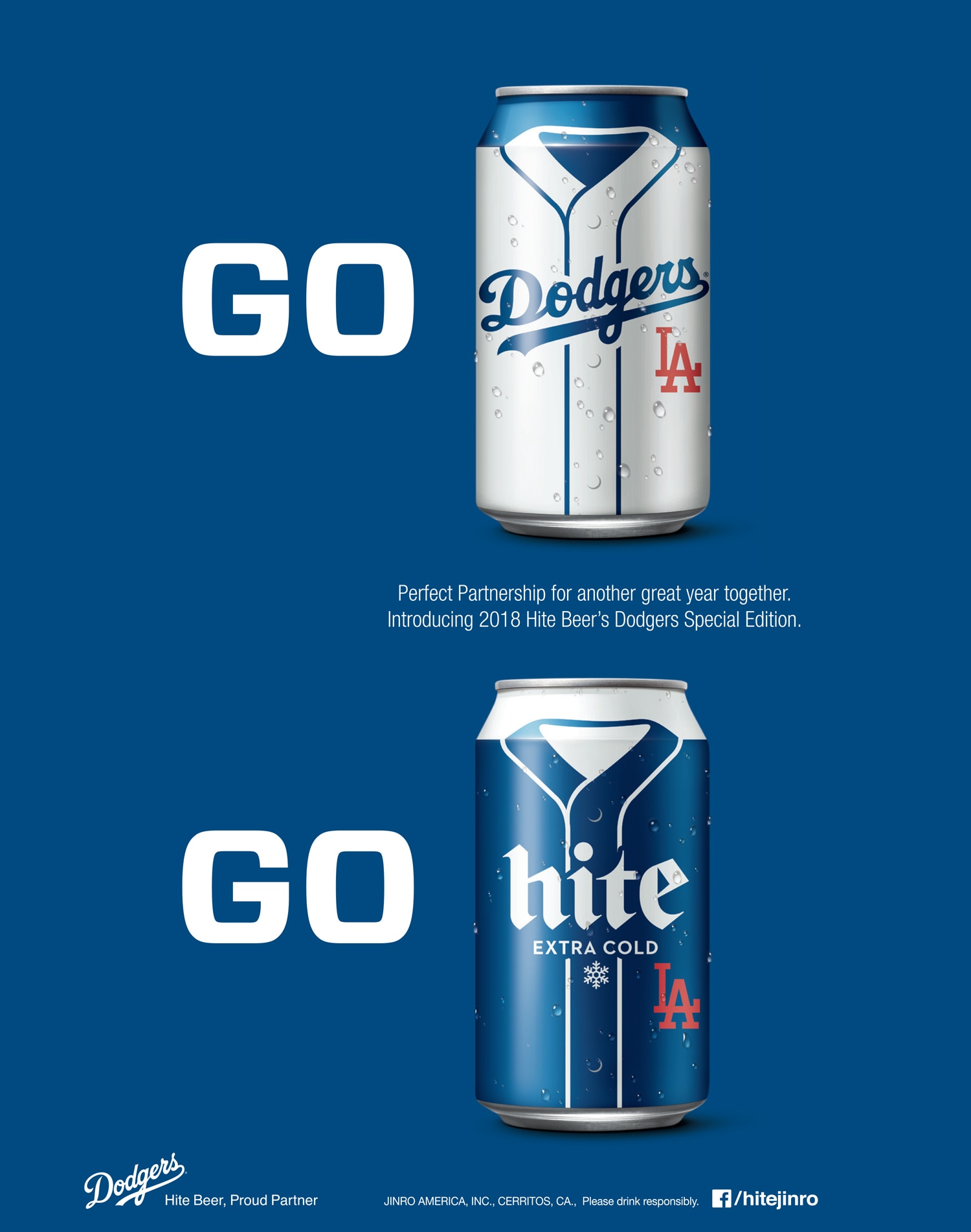
As a piece of visual communication, it gives the viewer a familiar object and changes just enough to make them look again. The connection can be understood before the smaller copy is read. The useful thing to borrow is that economy: choose a recognizable context, and let the product participate in it.
The Jack Daniel's work makes a related move through a meal. These examples suggest a way of thinking about relevance that is accessible to a brand manager in almost any category. Start by finding the situation in which the offering makes sense. Then ask which collaborator or creative device can make that situation visible.
Before the whiskey, there was cable
ES's history includes a very practical category: getting people interested in television service. In 2010, NAMIC's Excellence in Multicultural Marketing Awards credited the agency with a first-place print entry for Time Warner Cable Los Angeles's Filipino package launch. The specificity is right there in the campaign title: a particular package for a particular audience.
Three years later, NAMIC credited ES with a second-place television entry for Time Warner Cable's Chinese-market “Cooking Show” spot. Read together, those titles show a specialist practice already operating across audiences and formats. They also make the work easier to understand than an abstract promise to build connections.
2010 / Filipino package launch
First place, print
2013 / Chinese “Cooking Show”
Second place, television
An award documents recognition within its competition. A buyer should still decide what evidence the next assignment requires. For an acquisition campaign, that could mean completed orders. For an awareness assignment, it could mean a defined change in recognition. The distinction matters because an attractive piece of creative and a successful business outcome answer different questions.
What the client is actually buying
The portfolio reaches beyond consumer goods. Kia Motors America, Cedars-Sinai and Jack Daniel's appear among its examples. Banking, broadband and health-plan work also feature on the company website. These are categories with different purchase cycles, different stakes and different reasons for a customer to hesitate.
The service menu covers six areas: strategy, production, events, media, public relations and social media. A client can use that range to connect research with execution. The same assignment might need an audience insight, a video, a media plan and someone to manage the conversations it starts. Coordinating those pieces is part of the value an integrated agency is offering.
ES sits in the specialist agency market alongside alternatives such as L3 Advertising, which also has an established Asian American focus. Other options include a general-market agency, separate creative and media suppliers, or an internal team. The sensible comparison is the fit between the assignment and the team: audience knowledge, relevant work, execution capacity and a clear definition of success.
Clutch lists ES projects at $5,000 and above, with hourly rates of $100-$149. Treat those directory figures as an initial sizing clue. A prospective client still needs a proposal stating deliverables, rounds of revision, production requirements and the treatment of media spending.
Minimum project listed by Clutch.
Directory estimate; scope and current fees require a proposal.
A useful budget separates making the campaign from distributing it. It also specifies what happens after launch: reporting, adjustments, community responses and the next creative round. Those questions can expose a mismatch before it becomes an invoice dispute.
The founder watches the ads

Sandra Lee founded ES Advertising in 1999. Her Ad Age event biography describes an agency serving Fortune 500 brands and government entities. Her industry involvement is equally concrete: the Asian American Advertising Federation lists her as its treasurer.
There is a smaller detail worth keeping beside those credentials. In a 2025 interview, Lee described studying digital trends and seeking younger colleagues' perspectives. She also admitted to a habit that might horrify anyone impatiently hovering over the skip button.
“I never skip YouTube ads.”
Sandra Lee · The Korea Daily · February 2025
That is a wonderfully occupational confession. Most viewers are waiting for the advertisement to end. An advertising executive can use the same seconds to inspect the opening, the promise and the point at which attention drifts. Curiosity has a very ordinary setting: the thing interrupting the thing you wanted to watch.
The agency's recent public activity includes recruiting for a paid fall 2026 creative internship involving social content and video editing. That is a modest but concrete view of its working priorities. The formats keep moving; someone still has to make the material.
Put a decision in the brief
The most portable lesson from ES's work is a question to ask before commissioning anything: what is this audience being invited to do, and why would that invitation make sense in their life? A chef, a sports uniform and a cable package each make that question easier to answer than “increase engagement.”
For a brand considering ES, bring a product, a specific audience hypothesis and an action worth measuring. Ask which parts of that hypothesis need testing. Agree on what evidence would justify changing the message or the media mix. That turns cultural knowledge into a working part of the assignment.
This breadth of service makes less sense when the entire job is a short, one-off translation. And even a well-judged campaign depends on what happens next: an available product, a usable purchase path and an experience that delivers on the promise. Advertising can arrange the invitation. The business still has to be ready when someone accepts.
Keep looking
Explore the agency's work, follow its public updates, or read more about its founder.