There is a peculiar moment in the life of a public project when the drawings are finished enough to alarm everyone. A road line crosses a familiar route. An airport terminal closes. A park arrives with a price tag. The engineers have measurements; the city has a schedule; the neighbors have questions. Between them sits a folding table, a microphone and, if things are going well, somebody who can translate.
That somebody is often the least visible member of the project team. In North Texas, it may be K Strategies Group, the Dallas firm Katrina Keyes founded in 2002. The company calls itself a marketing and public relations agency, which is accurate in the way that calling an airport a building is accurate. Its work includes campaigns, branding, social media and press events. But its more interesting product is legibility: making a complicated civic undertaking understandable to passengers, residents, vendors, reporters and public officials at the same time.
The client list gives the game away. Dallas Love Field. DFW International Airport. TxDOT. DART. Fair Park. Parkland Hospital. Dallas and Fort Worth. The National Juneteenth Museum. These are not impulse purchases or cheerful lifestyle brands. They are institutions whose plans change how people move, work and remember. A catchy slogan is useful. A room that trusts the people holding the microphone is better.
The communications department with a hard hat
Keyes brought public-affairs, procurement and minority- and women-owned business program experience into a firm that now combines three practices most competitors keep in separate boxes. There is conventional marketing and PR: media relations, launches, branding, graphic design, websites, video and social content. There is public engagement: listening sessions, focus groups, multilingual surveys, open houses, crisis communication and meeting production. Then there is supplier diversity: finding qualified businesses, running outreach and tracking participation in public and private contracts.
Together, they form a useful circuit. A major project needs to explain itself to the public. It also needs credible local participation and a way for smaller firms to find the door. The same relationships that make outreach believable can make procurement more accessible. The same creative team that designs a campaign can turn engineering prose into a map a resident will actually study.
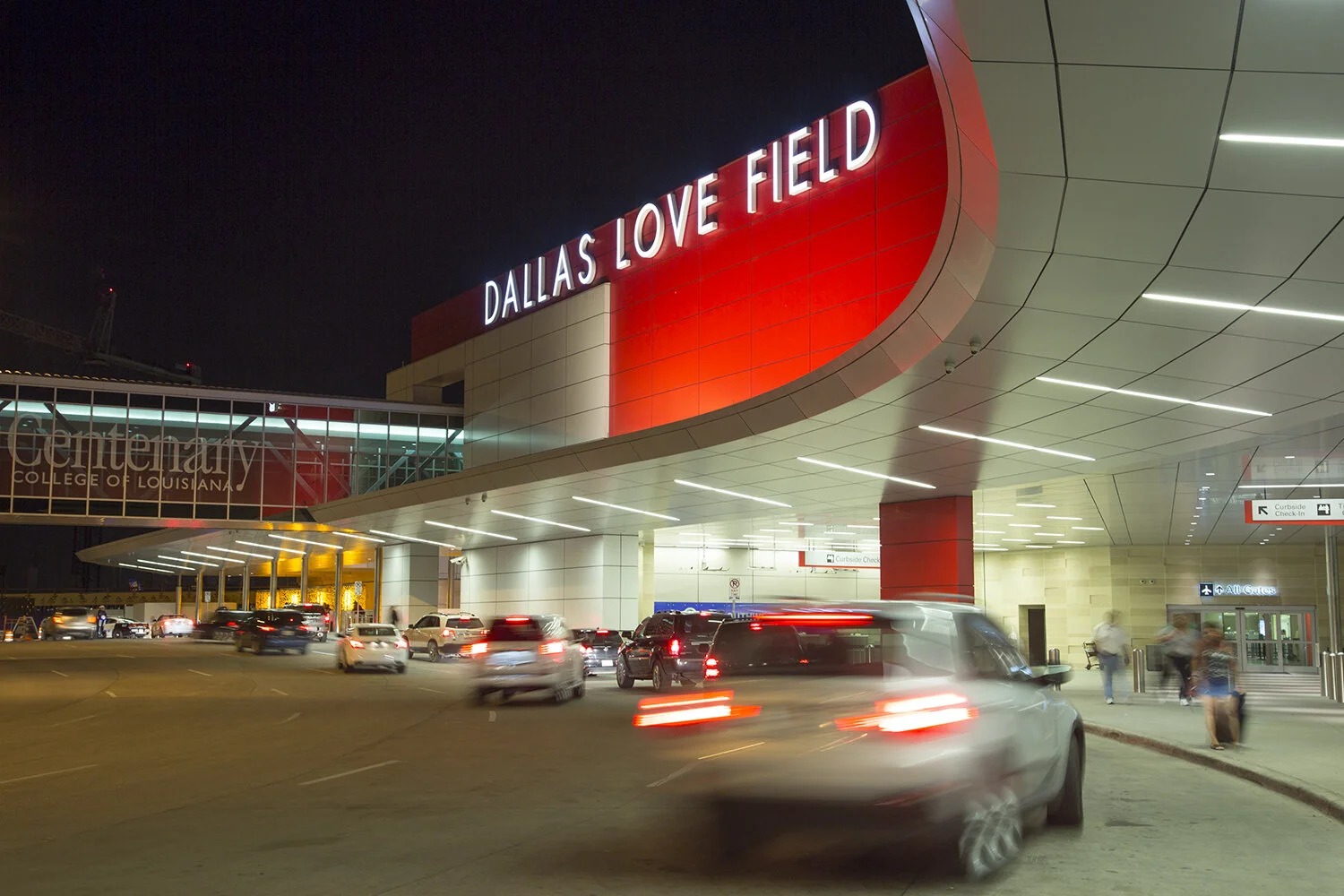
On the $798 million Dallas Horseshoe highway project, Keyes directed a public-information program through years of downtown construction. At Love Field, the firm handled communication campaigns, media relations and events during an eight-year modernization. For Dallas County's Open Spaces Master Plan, the team facilitated stakeholder sessions, ran public meetings and then made a revealing adjustment: it converted the meeting material into an online survey in English and Spanish. The room had acquired a second door.
The firm’s real product is not attention. It is a lower-friction passage from “Here is the plan” to “I understand what happens next.”
The launch is month six
A public proposal from K Strategies lays out its method with unusual candor. Month one starts with a kickoff, platform access and a communications audit. Month two is market research and objectives. Month three produces audience personas. Month four is planning. Month five makes the collateral. Month six delivers the plans and launches with a media moment.
Audit
Measure
Personas
Review
Produce
Launch
This order is the company’s most copyable idea. Many organizations begin with the artifact - a brochure, a campaign, a public meeting scheduled for Thursday at 6. K Strategies begins by asking who the audience is, what they already believe, which channels they use and how success will be counted. Only then does it make the thing. The sequence is not glamorous, but it prevents the expensive discovery that a beautiful message was built for the wrong room.
It also explains what would fail first. If an organization arrives after the consequential decisions are locked, treats feedback as theater or refuses to share useful information, no amount of design can manufacture trust. The method depends on access, time and a client willing to let what it hears affect the plan. It is poorly suited to a trivial one-off promotion, and it cannot make an unpopular policy popular merely by changing the typeface.
What public trust costs by the hour
Agency pricing usually hides behind the phrase “contact us.” K Strategies' 2023 bid for a Texas cooperative contract did not. The listed hourly rates ran from $125 for a public-engagement specialist to $250 for a marketing and PR vice president. Graphic design was listed at $127 to $138; diversity-program leadership at $170 to $178. Those are proposal rates, not universal retail prices, but they reveal the machinery beneath the campaign.
Selected public rate card · dollars per hour
Published in the firm's December 2023 TxShare proposal. Actual scopes and contracts can differ.
The business model is correspondingly pragmatic. K Strategies works directly for institutions and also joins bigger engineering, planning and program-management teams as the engagement specialist. DART documents, for example, listed the firm for $956,250 of public involvement on an AECOM-led planning contract. In October 2025, DFW Airport approved K Strategies for an as-needed, five-year event-planning contract capped at $5 million. “Capped” matters: the airport has no obligation to spend the full amount. A ceiling is capacity, not revenue.
That distinction captures the sober side of this market. Public work is won through proposals, certifications, relationships and performance over years. It can be lumpy. The company’s range - PR, creative, engagement, events and supplier diversity - lets one client problem lead naturally to another without pretending every assignment is the same.
A bank, a museum and the value of the right door
Keyes has said that mentorship and access to capital helped her launch the firm, and that switching to a smaller bank made the difference. It is an almost comically ordinary turning point. Not a grand pivot. Not a venture round. A different bank - one with a relationship the founder could use.
That experience rhymes with the company she built. K Strategies is often in the business of finding the right door: the survey for a resident who cannot attend the meeting, the procurement networker for a small contractor, the media story that makes a museum visible beyond Fort Worth. For the National Juneteenth Museum campaign, the firm reported more than 600 news-source mentions, 2,500 tweets, an estimated five billion people reached and $22 million in founding donations. Reach is an imprecise advertising metric, and donations have many causes, but the campaign illustrates the scale on which a local firm can operate when the story travels.
Audit before you announce. Map people before platforms. Give the public more than one door into the conversation. Save the launch for last.
K Strategies now has more than two decades of accumulated local knowledge, more than 20 employees in its public proposal and a leadership team that includes President Wil Murphy and Vice President of Operations Veronica Murphy. Its published values - Service First, Visionary Leader, Humbly Confident, Problem Solver and Intentionally Accountable - read like hiring filters because that is what they are. Public engagement rewards people who can be warm without being vague, organized without being brittle and calm when the microphone produces an unexpected opinion.
The market is crowded with ad agencies, public-involvement consultants, event producers and engineering firms with communications departments. K Strategies lives in their overlap. Its advantage is strongest when the assignment is public, complicated, culturally varied and attached to a physical change people will notice. If the job is simply to buy clicks, specialists elsewhere may be faster. If the job is to explain why the street is closed, collect what the neighborhood thinks, bring qualified local businesses into the project and stage the ribbon cutting when it is finally done, the strange combination begins to look less strange.
The bulldozer and the neighborhood will never speak the same language. One moves dirt; the other remembers what was there. K Strategies has made a business out of standing between them, holding the plan in one hand and the microphone in the other.