The easiest way to misunderstand Garth Solutions is to look at what it makes. There are websites, videos, fact sheets, social posts, public meetings and photographs of construction sites. Seen separately, these are ordinary things. Put them beside an airport noise study, a school renovation program or a $4 billion real-estate development, however, and their purpose changes. They become the small hinges on which very large promises swing.
A public project arrives with two lives. One is official: budgets, engineers, procurement schedules and renderings populated by suspiciously happy pedestrians. The other is lived: the shop owner wondering whether roadwork will block the door, the contractor trying to qualify for a bid, the parent asking why a school project is late, the resident hearing that jobs are coming but not knowing where to apply. Garth Solutions works between those versions.
Founded by Yvonne Garth in 2003 and headquartered in Davie, Florida, the company combines management consulting with public outreach, supplier-diversity programs, project administration, marketing and creative production. Its clients include government agencies, schools, airports, developers and construction teams. The connective tissue is not a particular medium. It is the difficult business of getting institutions and communities to understand one another early enough to alter an outcome.
The invisible deliverable
Garth Solutions says the diverse-business programs it has developed and managed have helped clients award more than $400 million in contracts to minority-, woman-owned and small businesses. That figure is a company claim, but it reveals how the firm wants its work judged: not by how many people opened an email, but by who found a route into the economy surrounding a project.
The distinction matters. Plenty of outreach is theater with a sign-in sheet. A meeting is held. A slide deck is shown. Everyone goes home. The box marked “community engagement” is checked, while the people supposedly being engaged remain no closer to a contract or a job.
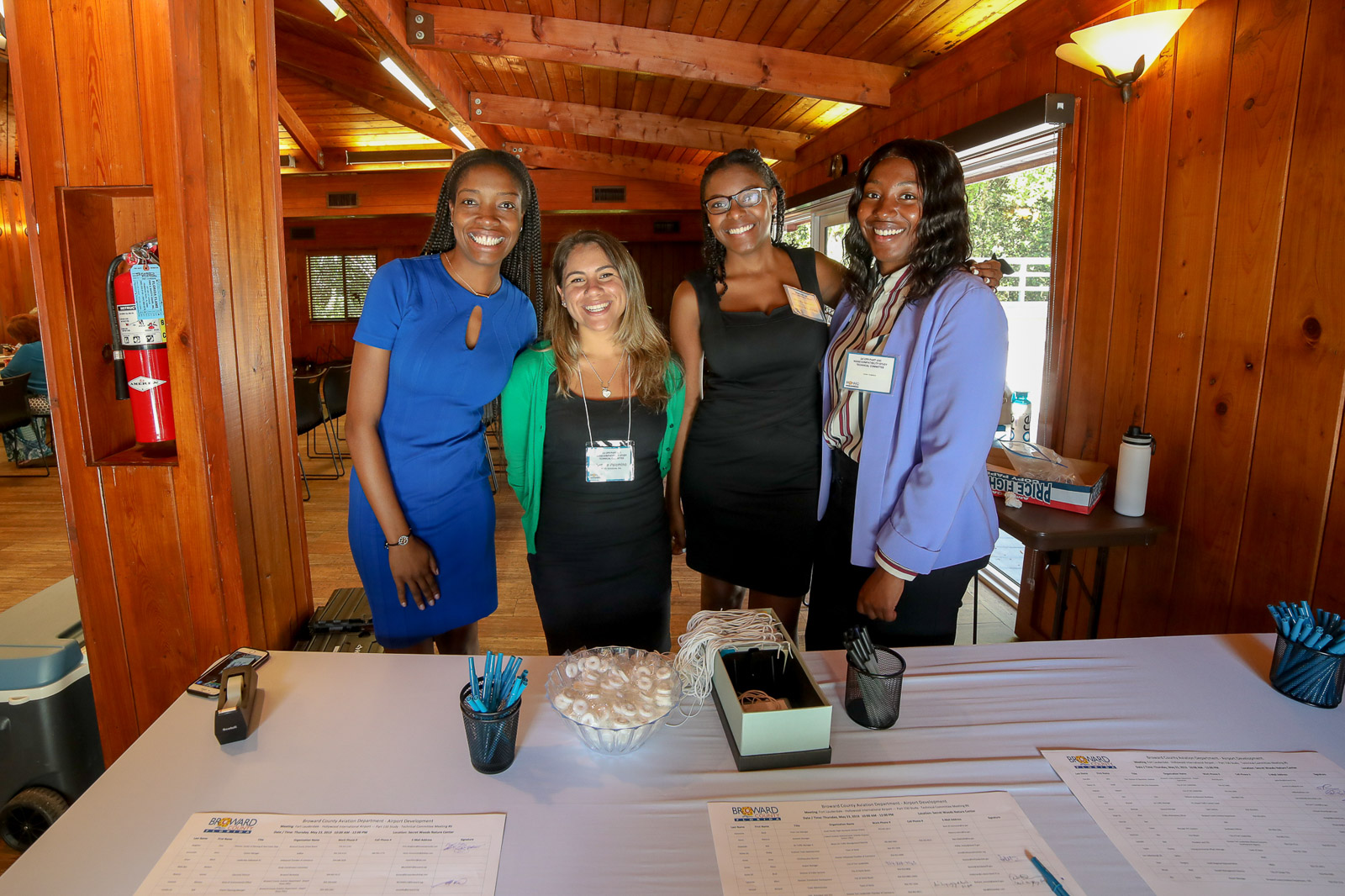
Garth's portfolio suggests a more practical definition. For Fort Lauderdale-Hollywood International Airport's Part 150 noise study, the work included event planning, logistics, hosting, presentation design and collateral. For Broward schools, it included construction photography, drone footage, campaign planning, testimonials and social advertising. For Delray Beach's Pompey Park project, it included a website, virtual polling and analytics. One job gets residents into a room; another makes a construction program visible; another gives people a way to respond when the room has emptied.
“If you anticipate the project needs and think strategically, you won't end up in reaction mode.”Yvonne Garth, President and CEO
Train first, break ground second
The clearest example comes from SoLe Mia, the $4 billion mixed-use development in North Miami. Local hiring sounds simple until the hiring begins. Outreach can generate interest, but interest is not certification, experience or a place on a contractor's payroll. Garth told Project Management Institute that the effort had little value if residents lacked the skills required to succeed.
So the developer, Oleta Partners, set aside $2.5 million for vocational training. A scholarship-based program began in March 2016, before the construction phase. By the time PMI reported on it, more than 100 students had graduated. The timing is the revealing part. Training did not wait for jobs to appear. It was scheduled so talent would be ready when the project broke ground.
The useful sequence
Then came the first snag: some contractors hesitated to put unproven workers on payroll, especially for short assignments. This is where a grand policy goal met a mundane operational fear. Garth Solutions responded by building alliances with staffing companies and local labor agencies. Contractors could try workers without immediately taking on the same full-time risk.
The copyable idea is not “do more outreach.” It is to work backward from the employer's objection, start training before demand arrives and create a lower-risk first transaction.
That playbook depends on real conditions: enough lead time, a budget for training, credible demand and employers willing to participate. Without those, a graduation certificate can become another polished promise. The program's honesty is that graduates still had to apply. It improved readiness; it did not pretend to guarantee employment.
A consultancy with a camera bag
The firm occupies an odd and useful market position. A conventional public-relations agency can develop the message. A program manager can control the schedule. A supplier-diversity consultant can recruit vendors. Garth Solutions tries to keep those functions close enough that information from one changes the others.
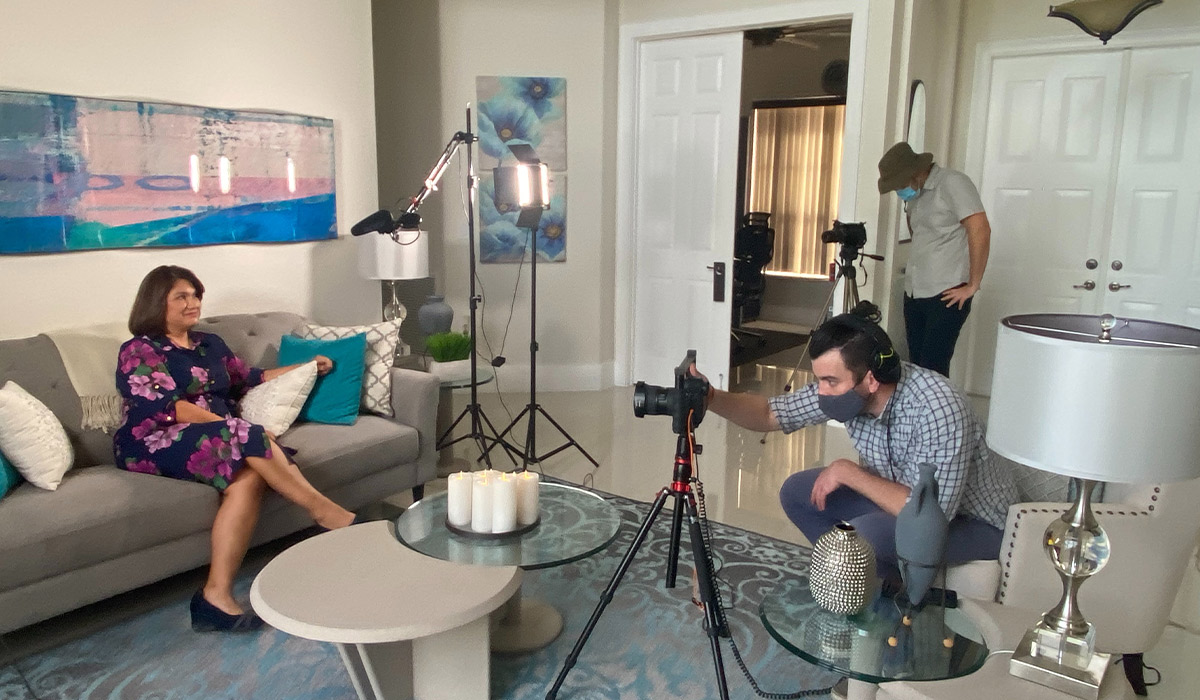
That is why the service list ranges from project management and public relations to photography, web design and drone footage. These are not unrelated side hustles if the assignment is to make a sprawling capital program intelligible. The camera documents progress. The website organizes updates. The meeting surfaces opposition. The supplier program turns a policy target into eligible bidders. The project manager carries what was learned back into delivery.
The company points to assignments connected with the $1.4 billion MetLife Stadium, the $800 million Broward County Public Schools SMART program and SoLe Mia. Its website also shows smaller, more tactile outputs: school fact sheets, event invitations, a virtual walking tour, City of St. Petersburg Vision 2050 materials. The scale changes. The translation problem does not.
What the work costs
Private project fees are not published. Government procurement offers one useful window. Garth Solutions' Florida Department of Management Services term contract for public-relations services, effective from December 2024 through December 2027 under its terms, lists an hourly ceiling of $150 for both the initial and renewal periods. Agencies can buy against the contract with their own scopes, deliverables and budgets.
Hourly ceiling shown in Florida's statewide public-relations term contract. It is not a universal company price list.
Another public record puts Garth Solutions at approximately $270,000 as an Aon subcontractor over the initial five-year term of a Miami-Dade County Public Schools employee-benefits consulting award. Those numbers are different kinds of evidence - one is a ceiling rate, the other an allocated subcontract amount - but together they show a services business sold through scoped engagements and public procurement, not a standard package with a checkout button.
The advantage of being in the middle
In 2022, Naples Airport Authority ranked Garth Solutions first among three respondents for public-relations and marketing services. The win hints at the firm's differentiation. It is not trying to be the largest ad agency or construction manager. It is useful precisely where those categories blur, on projects with many stakeholders, public accountability and a local economic promise attached.
The company's dozen certifications matter here. They include Florida transportation DBE and ACDBE credentials, county and school small-business certifications, and state minority- and woman-owned status. Certifications do not prove quality, but in public procurement they are more than wall decorations. They are access credentials, compliance tools and signals that the firm understands the administrative maze its smaller-business clients must navigate.
There is a quiet lesson in Garth Solutions' range. Community trust is rarely created by a single stirring message. It accumulates through correct addresses, answered questions, usable bid information, a meeting held at a sensible hour and evidence that yesterday's promise moved an inch today. The work can look small because its artifacts are small. Then the school reopens, the contractor wins, the resident gets trained, and the blueprint begins to resemble the block.
Open a few useful tabs
See the company in its own words, browse the work, or inspect the public records behind the numbers.