The strangest thing about a new arena is how quickly it becomes inevitable. First there is a rendering: glass, light, happy pedestrians. Then there is a construction fence. Then, somehow, there it is. What disappears in that magic trick are the thousands of smaller decisions about who gets called, who gets trained, who wins a subcontract, who logs the hours, and who can prove any of it happened.
Prism Technical Management & Marketing Services, LLC lives inside that disappearing act. The Milwaukee consultancy does not sell concrete or draw the skyline. It builds the machinery that turns a public promise - local workers will benefit, diverse businesses will participate, affected neighbors will be heard - into a sequence of calls, plans, payroll checks, meetings and reports. It is the infrastructure beneath the infrastructure.
Randy Crump, an engineer who had worked at Eaton, founded Prism in 1995. The company says its assignments have since touched more than $6 billion in construction and directed $1.7 billion toward diverse businesses. Those are the large numbers. The revealing numbers are smaller: 40% of workforce hours, 25% of construction spending, 18% of professional-service spending. Those were targets Prism monitored on Milwaukee City Hall work. A percentage on a page becomes a management problem on Monday morning.
“What gets measured gets done.”Prism Technical's operating maxim
A promise is not yet a program
Prism occupies an awkward and valuable middle. On one side are cities, counties, developers and institutions announcing community-benefit goals. On another are general contractors trying to deliver complicated projects on time. On a third are small firms and workers who may be qualified but outside the usual channels. The easy mistake is to treat an inclusion target as a finish line. It is only the starting gun.
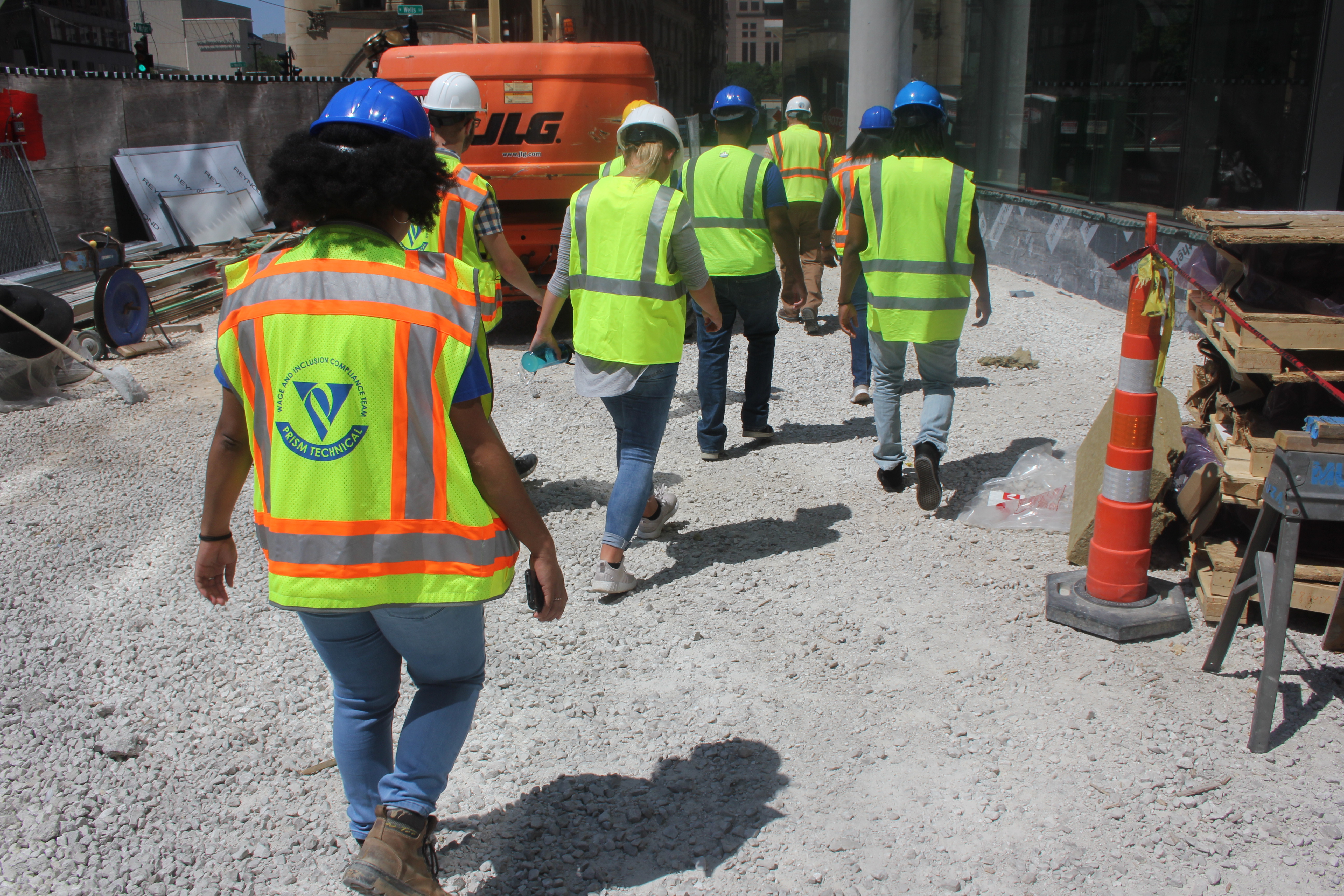
The work begins by defining who qualifies and what counts. It continues through contractor outreach, matchmaking, workforce plans, certified payroll, affidavits, payment verification and the inevitable missing document. Prism also handles the human layer: community meetings, internship pipelines, pre-apprenticeship programs and the translation of technical rules into ordinary language. Its current service menu calls this social-impact consulting. In practice, it is equal parts compliance desk, field operation and diplomatic mission.
Map the community, project history, contractors and obligations before prescribing an outreach plan.
Turn broad commitments into definitions, targets, documentation rules and small milestones.
Recruit, convene, train, verify and follow up while the project is still able to change course.
Make performance visible in spreadsheets, public reports, interviews and stories people can inspect.
The tower had a second blueprint
Northwestern Mutual's Tower and Commons offers the cleanest view of the model. The institution committed to use Milwaukee small businesses for 25% of project costs and city residents for 40% of labor hours. Prism's early quarterly reporting showed resident labor near 44%, already above goal. By the end, small businesses had received $127.1 million in contracts - 31.4% of the total - while eligible Milwaukee residents logged 43.5% of construction hours.
The important phrase is “by the end.” An inclusion result is not produced by auditing the wreckage after the cranes leave. Northwestern Mutual and its project team held information sessions, matchmaking events and outreach through more than 100 community organizations. More than 300 businesses and organizations attended the early sessions. Reporting mattered because it arrived while the project still had contracts to award and hours to work.
What the counting costs
This work is often described as though it were a moral accessory to construction. The contracts show otherwise. For the Milwaukee Bucks arena, Prism was slated to receive $760,350 to monitor the city-resident workforce effort, plus $63,505 for the parking structure. Cross Management Services, its partner on the development, handled minority- and small-business inclusion. Together, the firms were part of a roughly $4 million group of professional-services contracts on the arena, with nearly another $500,000 tied to the parking structure.
The disclosed price of workforce monitoring
Arena assignment plus associated parking-structure work. Project-specific, not a general Prism rate card.
That price buys more than arithmetic. On a long project, the first thing likely to fail is not the stated ambition but the information chain: a subcontractor files late, a worker's eligibility is unclear, an outreach promise is not connected to procurement, or a quarterly total arrives too late to fix. Prism's other maxim - “The best surprise is no surprise” - is less charming than it is operational. Break the large public target into micro-goals. Watch them early. Make someone responsible.
Different because it speaks both languages
A national program-management firm can build a dashboard. A community organization can fill a room. A payroll auditor can catch an error. Prism's distinction is the combination. Its leaders include compliance, financial-management and certified-payroll expertise alongside public engagement and event facilitation. The company can move from a contractor's workforce profile to a resident's concern at a public meeting, then make both legible to the owner.
That combination explains the apparently miscellaneous name. “Prism” is diversity of people and perspectives. “Technical” is the insistence on systems and data. “Management” is the micro-goal discipline. “Marketing” is the belief that results should be made visible - sometimes in a spreadsheet, sometimes through photographs and participant interviews. The name reads like a list because the work is a chain, and a weak link changes the outcome.
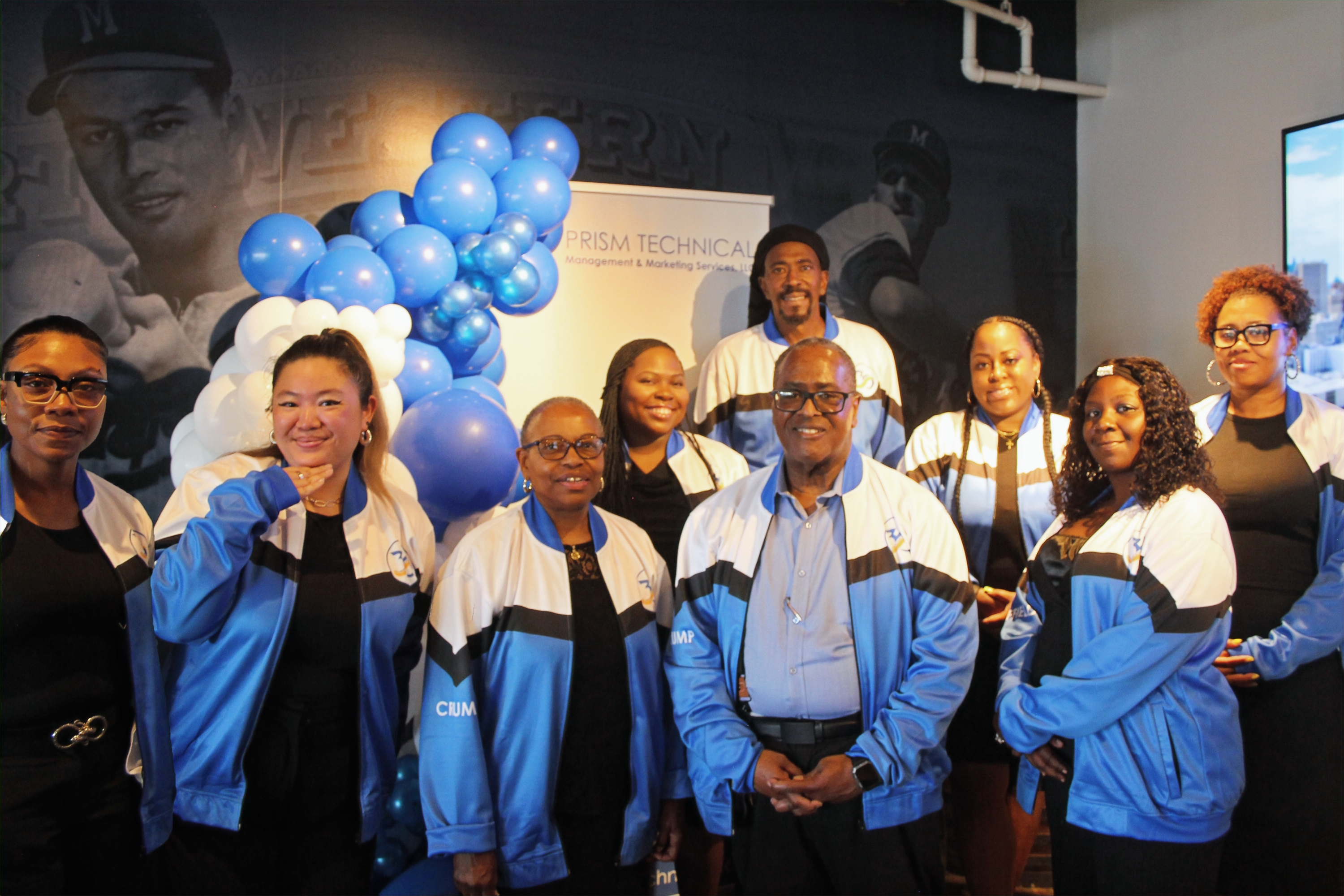
The same logic now reaches beyond construction compliance. Prism runs public involvement and outreach, strategic events, business development and talent programs. RISE, operated with the Milwaukee Metropolitan Sewerage District, joins education with on-the-job experience. The company has also worked on American Rescue Plan community engagement for Milwaukee. These are adjacent products with the same underlying proposition: good intentions need an operating system.
The copyable part is gloriously unglamorous
Organizations tempted to copy Prism do not need to begin with a sophisticated platform. They need four habits. Define the beneficiary precisely. Establish a baseline before announcing the target. Report often enough that a miss can still be corrected. Pair the data with people empowered to recruit, convene and enforce. A dashboard without outreach merely describes the same old network; outreach without documentation cannot prove the network changed.
The conditions matter. This approach depends on access to reliable payroll, contract and payment data. The owner must have enough authority to demand documentation and enough time to act on it. Contractors need a real pipeline of qualified firms and workers, not a target invented after procurement. Community engagement must influence a decision still open to influence. Remove those conditions and measurement becomes theater: meticulous percentages attached to a project that could no longer change.
Milwaukee's skyline supplies Prism with unusually visible evidence. American Family Field, City Hall, the streetcar, Northwestern Mutual's tower and Fiserv Forum are physical objects. Prism's contribution is harder to photograph. It is the possibility that when a city points to a building and says the project benefited the public, someone can open the report and check.