The assignment appeared to be a website. California had expanded free Pre-K for four-year-olds, and Alameda County needed a place where families could understand the options. That sounds like a familiar communications job: gather the copy, arrange the navigation, choose some photographs, launch. Then LightBox Collaborative began asking questions. More than 180 providers and 350 families answered them. The families did not need another page inside a government hierarchy. They needed one place to start, plain language, multiple languages, and a next step they could recognize. The website was only the visible part of the problem.
That little reversal - from what an institution intends to publish to what a person needs to decide - is the clearest way to understand LightBox. The Alameda, California consultancy works with nonprofits, foundations, advocacy networks, public agencies, and social entrepreneurs. Its output can look like a name, a brand, a campaign, a media plan, a message platform, a training, or a website. The underlying product is usually the same: agreement about what matters.
The website was a front door
LightBox and its county partners changed the brief. Instead of burying the information inside an existing agency site, they built AlamedaCountyPreK.org as a standalone, multilingual resource organized around family questions. It explained a mixed system of school districts, child-care centers, family child-care homes, Head Start programs, and other providers without requiring parents to learn the machinery first.
This was not minimalism for its own sake. Early usage supplied the reason: 75 percent of visitors came on phones. During the first six months, more than 11,000 unique visitors reached the site. Social media drove half the traffic; more than 41 percent arrived directly, evidence that community partners and offline promotion were doing real work. Paid social, streaming placements, mall advertising, buses, and local networks handled distribution. Clarity had acquired a media plan.
“Clarity became the strategy.”LightBox Collaborative, Alameda County Pre-K case study
The thing that failed first was the original framing. “Build a website” described an object, not an outcome. Research changed the team’s mind: the job was to create a front door for a fragmented system. This is a small but copyable habit. Before choosing a format, write down the decision the audience is trying to make. If the format does not help with that decision, the brief is unfinished.
One trail map, not one script
The same distinction appears at a much larger scale in LightBox’s work for the San Francisco Bay Joint Venture. The partnership includes more than 100 nonprofits, public agencies, restoration practitioners, and community members. They already believed in protecting the Bay. What they lacked was a strong connection between each organization’s work and the region-wide goals.
A conventional response might have produced approved language and urged everybody to repeat it. LightBox chose a better metaphor: a trail map. Partners would get a shared destination and common signposts, but retain the freedom to speak in their own voices. After assessing how information moved through the network, the firm created a 10-year communications strategy tied to conservation goals for 2035, a coalition-wide messaging platform, tailored language for four priority areas, training, and an accessible version of an environmental plan that ran beyond 100 pages.
Then came the birds. Habitat restoration is full of permitting, adaptation plans, funding mechanisms, and technical targets. All important, none naturally eager to introduce itself at a party. LightBox helped turn Bay Area birds into protagonists for a postcard series. The great egret could carry a person into the story before the policy language arrived.
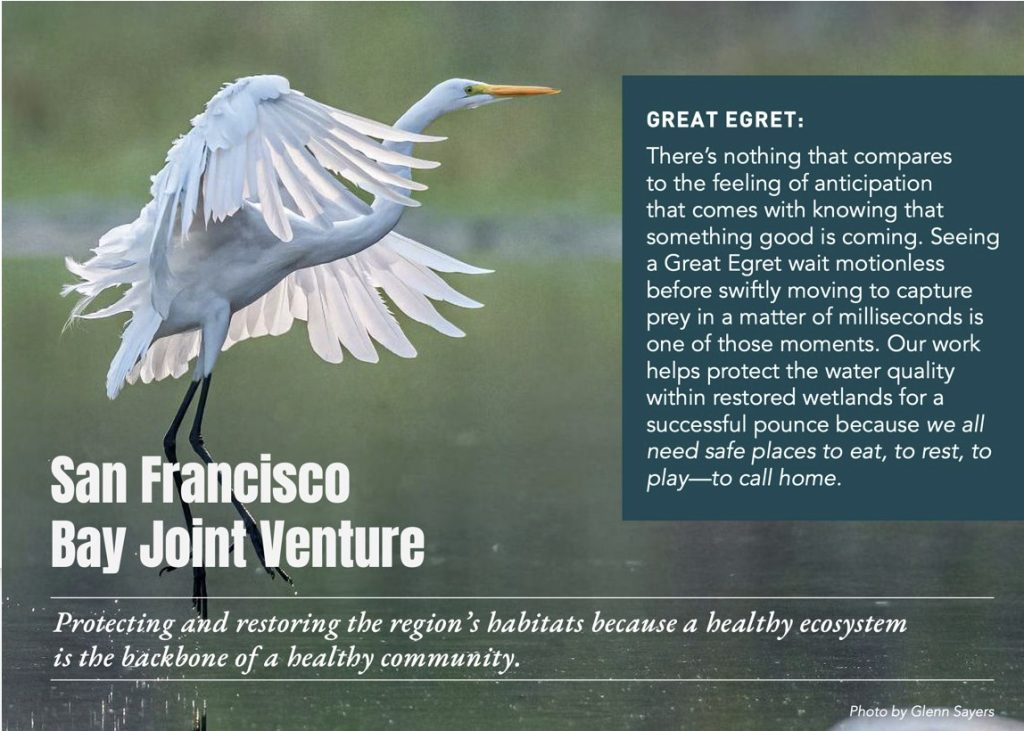
It is tempting to dismiss this as making serious work cute. The actual maneuver is more disciplined: find a concrete character that lets people enter an abstract system, then connect that character to the system without flattening it. A bird is not the restoration strategy. It is the invitation to care long enough to encounter the strategy.
The reusable sequence
The Stone Soup agency
Holly Minch launched LightBox in 2010 after a career in nonprofit and foundation communications, including work at the Sierra Club, Spitfire Strategies, and the SPIN Project. The company grew less like a conventional agency than a deliberately organized network. Its public collaborator roster spans strategy, facilitation, media relations, writing, conflict navigation, design, organizing, coaching, digital work, and operations. The team assembled for one engagement need not be the team assembled for the next.
Minch once described the model as “Stone Soup.” Collaborators contribute to proposals, workshops, business building, and delivery; the LLC contracts with the client; specialists join where their skills fit. Today the public roster lists 16 collaborators, while LinkedIn shows 13 employees and classifies the firm in the 11-to-50 range. This is a services business, not a platform: clients buy tailored consulting engagements rather than subscriptions or standardized products.
The model matters because social-change communications problems rarely observe agency department lines. A new name may require facilitation before design. A media campaign may expose a message problem. A training may reveal that the bottleneck is not skill but authority. LightBox can change the shape of the team as the diagnosis sharpens.
There is a constraint hidden inside that advantage. A participatory process needs participation. The client must bring people into the room, share what is actually stuck, and give someone authority to decide. A flexible message platform also needs owners after launch. Where leadership wants a cosmetic answer, refuses audience research, or cannot maintain the work, the method loses its leverage. Consensus cannot substitute for strategy, and a workshop cannot implement itself.
A brand is not a group adjective
For Housing Narrative Lab, the task was to create a name, tagline, and visual identity for an organization trying to change public understanding of homelessness. LightBox’s workshops asked what the name’s “job responsibilities” should be: reflect values, resonate with audiences, and distinguish the organization. This is a wonderfully unromantic way to name something. It moves the conversation from everybody’s favorite adjective to the work the name must perform.
The result, Housing Narrative Lab, positioned the organization as a rapid-response communications hub. Its tagline - “Changing the story, so everyone has a safe place to call home” - connected narrative work to a human outcome. In its first year, the organization produced a national study of public understanding and trained more than 50 grassroots and national housing groups. LightBox did not cause every result that followed, but it helped build a coherent container for the work.
A name is not merely something the team likes. It is a small employee that never sleeps. Give it a job description.
That practicality has been present from LightBox’s earliest writing. In 2010, Minch told the story of a plumber who diagnosed weak shower pressure as a $20,000 pipe problem. Years later, a houseguest installed a waiting shower head in five minutes and fixed it. Her lesson for consultants was pointed: do not bind people to their problems with advice that serves your bill. LightBox’s aspiration was to hand over the right wrench and help the client use it.
What another organization can copy on Monday
- Replace the requested object with the audience decision it must support.
- Interview the people who use the system and the people who deliver it.
- Write a job description for every name, message, and channel.
- Create common signposts, not mandatory scripts.
- Budget for distribution and training, not just production.
- Leave behind tools that make the client less dependent on the consultant.
That final point locates LightBox in the market. Spitfire Strategies, Metropolitan Group, M+R, Resource Media, independent consultants, and in-house teams all offer parts of the same broad category. LightBox’s useful difference is the combination of a small flexible network, deep experience in progressive movements, facilitation before production, and a stated “campsite rule”: leave the client better equipped than you found it.
Its customers range from grassroots groups to foundations and public agencies. The published list includes ACLU of Northern California, Greenpeace US, SEIU, Transgender Law Center, State Voices, Disability Rights California, the David and Lucile Packard Foundation, the Evelyn and Walter Haas, Jr. Fund, and dozens more. They do not share an issue. They share a communications predicament: the work is complicated, the stakes are real, and attention is scarce.
LightBox does not solve that predicament with louder adjectives. It gets people to decide what the story is for. Then it gives the story a route into the world - a front door, a trail map, sometimes a very patient egret.