There is a peculiar problem in wine country. Nearly everybody has the same raw material: patient growers, photogenic hills, earnest winemakers, long tables and a sunset that behaves as if it has been hired. The distinction is obvious when you stand there. It becomes strangely difficult the moment someone opens a blank document and types, “For immediate release.”
Solterra Strategies exists in that gap. The Paso Robles firm works with wineries, restaurants, tourism organizations, attractions, events and trade associations. Its job is to turn a place that feels special into a proposition an editor can print, a traveler can remember and a board can approve. That last audience matters more than it first appears.
The company was founded in 2011 by Stacie Jacob, an agricultural journalism graduate raised in a small Nebraska farming community. Before Solterra, she worked at Fleishman-Hillard, became the Washington Wine Commission's first public relations director, ran the Paso Robles Wine Country Alliance for seven years and led Visit San Luis Obispo County. She learned the trade from nearly every chair around the table: agency, association, destination and local advocate.
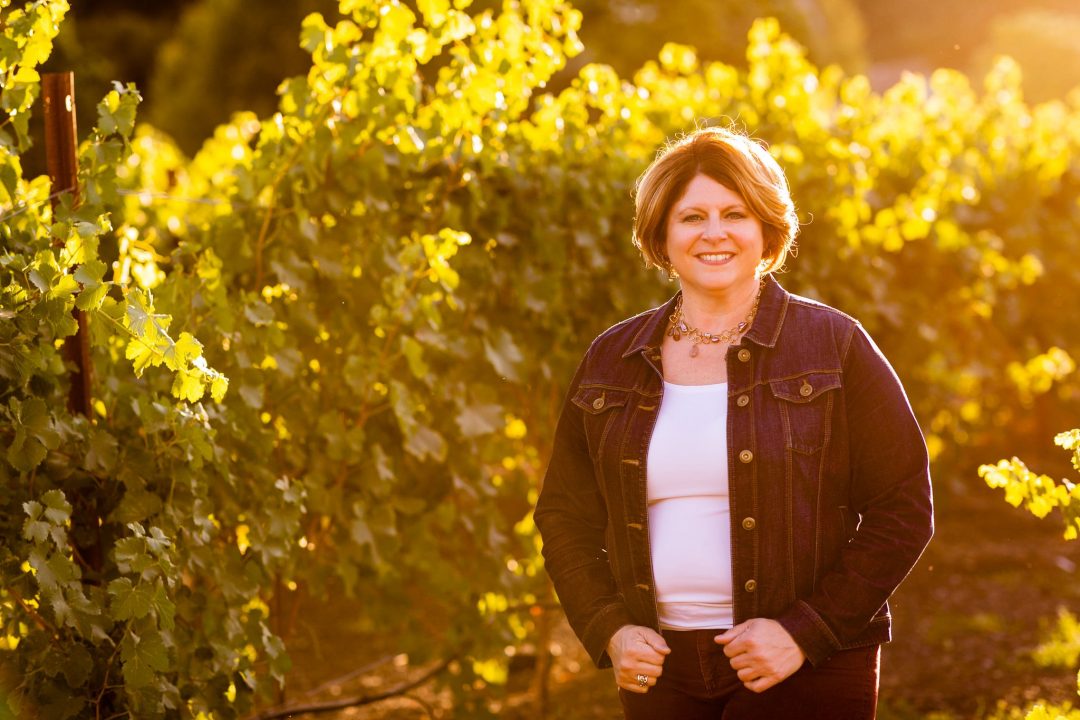
The founder left one table to serve the whole room
Jacob's founding question was practical: what if she could step outside the Wine Country Alliance and help many clients pursue their goals? The answer was Solterra, a name assembled from sun and earth. It is sentimental in precisely the way the firm's work is not. Solterra's public service list is granular: message development, media tours, crisis communication, website strategy, copywriting, government relations, event management, strategic retreats, membership recruitment and even executive search.
“It is not simply the brand that makes the product, but also the people and place at its heart.”Stacie Jacob, founder and chief strategist
This makes Solterra less like an advertising shop and more like a translator with a project plan. A winery may need distinction in an aisle of attractive labels. A destination may need visitors in February without irritating residents in July. An association may contain members who compete every day but must agree on the same regional sentence. Solterra works across all three problems because each begins with identity and ends with coordinated behavior.
Listen to the client, examine its assets and locate the point of difference that can survive scrutiny.
Use media, trade relationships, events and partnerships to let outsiders validate the story.
Turn coverage into social content, digital campaigns, partner material and the next useful pitch.
A board of directors is also an audience
The agency's most revealing specialty is association management. Solterra explicitly courts trade groups governed by boards. Those clients are demanding because the brand does not belong to one chief executive. It belongs, imperfectly, to a roomful of members with different budgets, constituencies and definitions of progress.
Consider its documented work for San Simeon. The early phase did not begin with a glamorous campaign. It established systems, benchmarked consumer engagement and studied the audience. The next phase combined one timely press release, direct outreach to regional travel and lifestyle journalists, relationships with tourism and wine organizations, daily social publishing and influencer engagement. National attention could then be fed back into local digital channels. In 2018, a board report noted that a CBS This Morning segment caused a spike in web traffic. The machinery had produced a visible twitch on the dial.
Agency fees and pass-through advertising are not the same thing. Scope, media spend and project complexity change the bill.
Those figures answer “what did it cost?” only in slices. Solterra publishes no menu. The business appears to mix recurring retainers with scoped projects, with founder-level advice bundled beside execution. That model is familiar in professional services. Its distinguishing promise is proximity: clients work directly with Jacob, supported by a senior team, rather than watching the person who sold the account vanish after kickoff.
When the old tourism pitch stopped working
The pandemic supplied the clearest account of what failed first: ordinary destination marketing. Fly-in aspiration became useless when movement itself felt risky. For Travel Paso, whose marketing and public relations Solterra manages, the audience and message changed. The campaign concentrated on California drive markets and reframed Paso Robles as wide-open wine country suited to a road trip. Public relations ran beside content and marketing instead of as a detached press office.
The changed condition changed their mind. This sounds obvious after the fact, which is the fate of most good strategy. The campaign became a finalist for Visit California's 2022 Poppy Awards. Its lesson is not to chase the mood of the week. It is to identify which premise of the old pitch has become false, then rebuild around a truth the product can actually deliver.
The light orchestra and the little firm
Four years later, the strategy had a more theatrical object. Sensorio, the 35-acre immersive art destination in Paso Robles, was launching FOSO, a Fiber Optic Symphonic Orchestra made of 32 light columns synchronized to an original score. Solterra paired national media outreach with previews, artist conversations and partnerships with local arts organizations. The campaign made the installation legible at two scales: an attraction worth traveling for and a cultural project attached to its community.
Entries across the 2026 Poppy AwardsSensorio won Best Public Relations Campaign in a tie with LEGOLAND California Resort. The award went to the tourism business, while Solterra was the agency behind the launch.
That qualification is important. An agency can shape the invitation, but the experience must reward arrival. Solterra's strongest work sits where product, place and publicity reinforce one another. A field of light helps. So does a respected wine region. Communications cannot rescue a thin experience, a confused governing board or a client unwilling to let the strategy alter the work.
The part worth copying
“Tell a good story” is advice with the nutritional value of a cocktail napkin. Solterra's public record suggests a more useful sequence that a small winery, regional attraction or civic group can actually borrow.
- Start with an asset inventory. List what is true, ownable and interesting before inventing a slogan.
- Benchmark before amplifying. Know the audience and current engagement, or attention will arrive without a way to judge it.
- Name the shared interest. For member groups, build the campaign around the overlap among stakeholders, not the loudest member's wish list.
- Give each channel a job. Earned media supplies credibility; social extends and humanizes it; events make the promise tangible; partnerships borrow reach.
- Design the second use. A placement should become a post, a partner asset, a sales proof point and material for the next pitch.
This approach loses force when the experience cannot support the claim, when leadership needs instant direct-response sales, when stakeholders refuse a common position, or when a client treats local relationships as decoration. Place branding compounds slowly. It rewards consistency, access and something real for visitors to discover.
Solterra is not a venture-funded platform pretending service can be automated. It is a small, privately held firm whose current team spans account direction, communications, digital media, content and coordination. The website shows nine people; other business data puts the estimate slightly higher. Its competition includes specialist wine agencies, destination consultancies, in-house teams and every generalist shop willing to learn the vocabulary.
Its defense is accumulated context. Jacob knows how a reporter thinks because she began in agency PR, how a grower group argues because she ran wine associations, how a destination spends because she led one, and how a local reacts because she lives there. None of this is flashy. That may be the point. Wine country already has scenery. What it needs is someone to decide which detail deserves the microphone.