The most important person at a public meeting is sometimes the woman in the back row who knows where the street floods. She has no engineering model. She may have arrived late, after work, and missed the slide explaining the project. But she knows the catch basin clogs every October. If nobody asks her, a technically handsome plan can proceed with one very wet blind spot.
Regina Villa Associates has spent 48 years making sure somebody asks. The Boston consultancy, better known as RVA, sits between government and the governed: beside the transportation planner, across from the neighborhood group, behind the registration table, and later at the spreadsheet where every question is supposed to acquire an owner. It is a public-relations firm only if you use the term in its most literal sense. It manages the relations of the public.
The first actAn advocacy shop learns to build a room
Regina “Jean” Villa founded the firm in 1978 after working as an executive director of the Massachusetts Nurses Association, a congressional aide, a radio host, and an adjunct teacher. That résumé explains the unusual mixture that followed. For its first two decades, RVA worked on public-policy campaigns: AIDS Action Committee efforts, “Turning 22” legislation for people with disabilities, nurse-practitioner prescribing, and statewide political races.
The job was persuasion, but it was also coalition maintenance. A policy campaign is a machine made of people who do not share the same incentives, vocabulary, or patience. By the early 1990s, RVA carried that machine into public works. It handled strategic communications for the 10-year Boston Harbor Project, then community relations for the Walnut Hill Water Treatment Plant and MetroWest Water Supply Tunnel for another decade. The subject changed from legislation to concrete. The organizing problem did not.
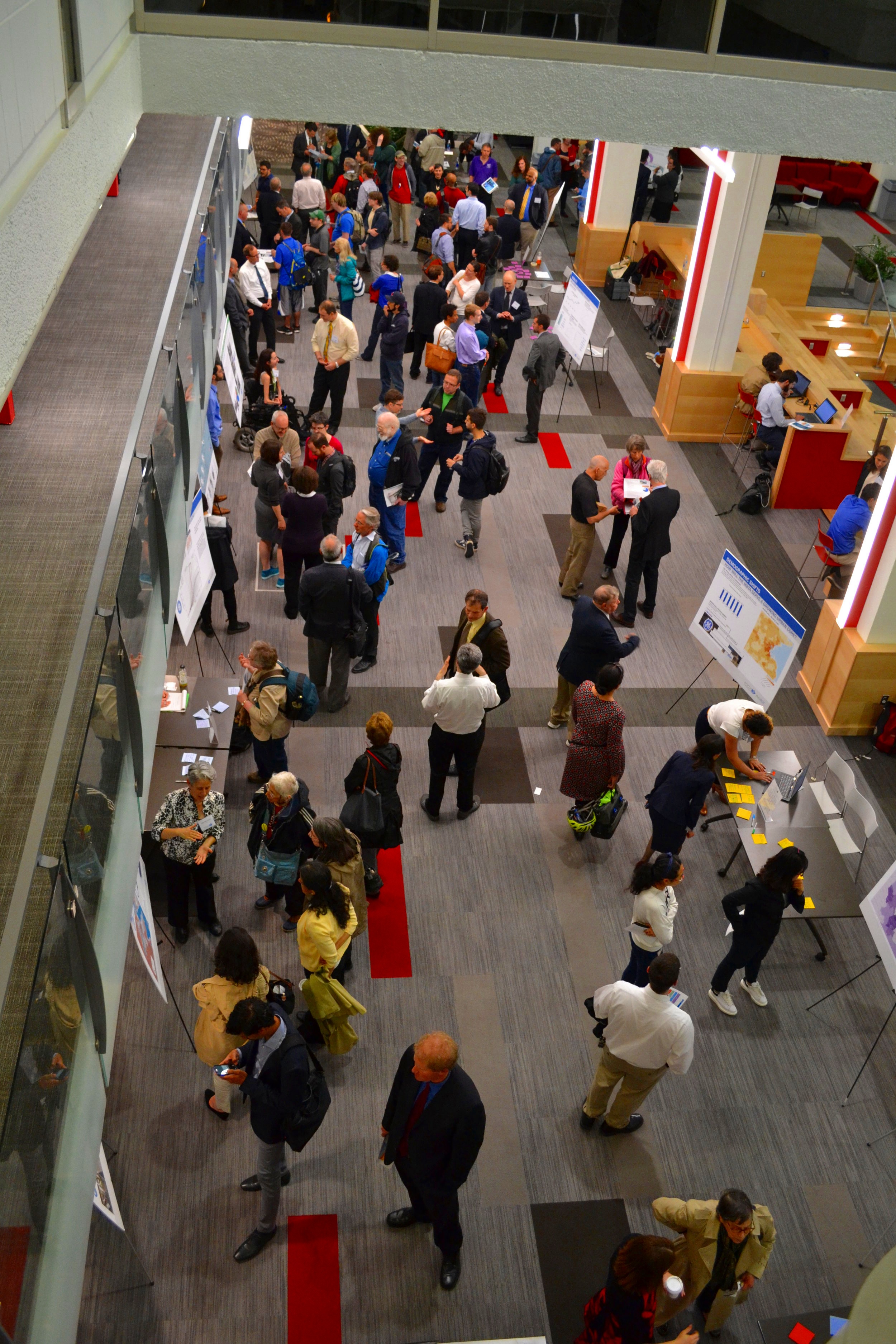
“Making connections across communities” sounds gentle. The work underneath it involves construction detours, skeptical residents, translation, hard deadlines, and a very well-kept issue log.RVA's operating idea, translated into practice
What the firm actually sellsThe meeting is only the visible part
RVA begins before the folding chairs appear. Its staff interview stakeholders, run focus groups, design questionnaires, assemble community databases, identify environmental-justice and Title VI populations, arrange interpreters, and decide which combination of notices, local groups, websites, email, social media, print, or door-to-door contact might reach the people a project could otherwise miss.
Afterward comes the less photogenic half: answering hotlines and emails, sending construction and traffic updates, maintaining websites, recording mitigation commitments, reporting what was heard, and checking whether the outreach worked. The company says it evaluates reach and content with feedback, web analytics, and program-specific tools, then adjusts. That last verb matters. Without adjustment, “engagement” is merely an announcement with snacks.
The rest of the menu follows the same logic. RVA facilitates strategic planning, manages events from agency meetings to gatherings of more than 2,000 people, and produces videos, graphics, websites, public-service announcements, photography, and campaigns. It sells scoped professional-service engagements, often as the public-involvement specialist alongside engineering and planning firms. There is no off-the-shelf subscription. A half-day conference and a decade-long construction program are different creatures.
Where it earns its keepWhen the model meets the rider
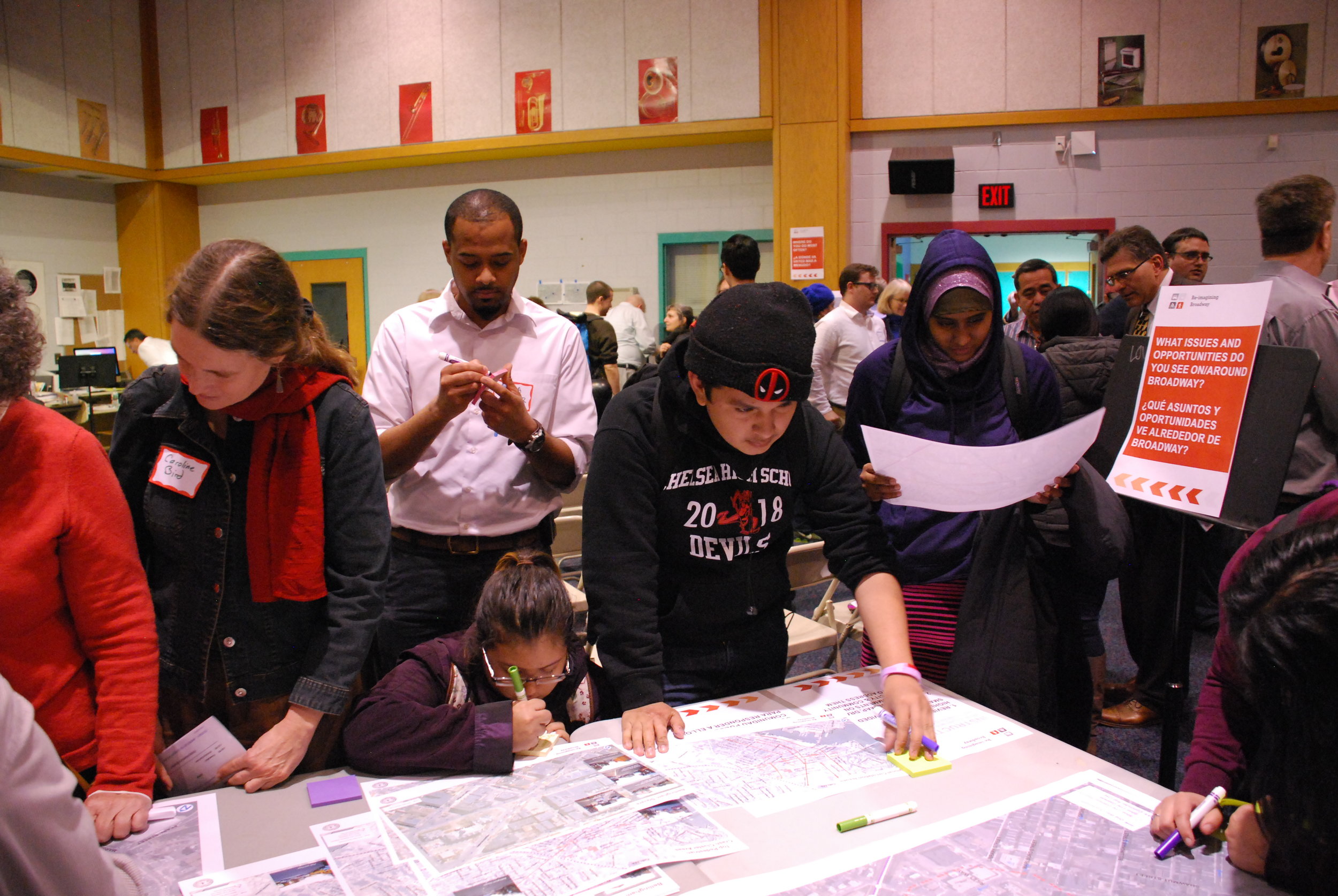
Consider the MBTA Bus Network Redesign. The technical team used location and travel data to test huge numbers of possible networks across more than 50 cities and towns. The system served roughly 400,000 riders a day when the study began. Modeling could reveal where trips started, where they ended, and which proposed routes performed best against agreed goals. It could not, by itself, decide what counted as an acceptable walk, a tolerable transfer, or a workable trip for someone leaving a late shift.
RVA worked on the engagement side with the MBTA, Arup, Cambridge Systematics, and other partners. This is where the firm's niche becomes distinct. A general PR agency can package an announcement. An engineering consultancy can explain a drawing. RVA is built to operate in the argumentative middle, where the drawing is still changeable and the people in the room possess knowledge the drawing does not.
The first thing to failOutreach that begins after the decision
Public participation usually goes wrong before the public arrives. The failure is timing. If the route, schedule, mitigation, and budget are already fixed, a meeting advertised as a conversation becomes theater. Residents discover that their only real choice is whether to be polite about a foregone conclusion. The room gets louder; the project team becomes defensive; every future invitation inherits the mistrust.
RVA's service list reveals its answer: stakeholder assessment comes early, communication runs through design and construction, and questions remain trackable after a meeting ends. The pandemic forced another change. In 2020, the firm helped move the Massachusetts Early Intervention Consortium's two-day annual conference online and conducted public work virtually. The useful lesson was not that Zoom had replaced the room. It was that participation needed more than one door. Current work mixes in-person open houses, virtual meetings, multilingual materials, local media, and outreach in familiar community places.
Five habits worth stealing
- Write the stakeholder map before the press release.
- Ask which voices are missing, then change the channel, language, time, or venue.
- Give every concern an owner and a next action.
- Report what changed, including the things that did not and why.
- Treat the public's local memory as project data, not atmospheric noise.
These habits have limits. They work when a sponsor is prepared to expose a real choice, fund accessibility and translation, keep the process open long enough to learn, and answer after listening. They do little for a decision already locked, a schedule with no room to move, or a client seeking applause rather than information. Facilitation cannot manufacture agency. It can only make agency legible and usable.
The business beneath the civic languageSmall firm, long memory
RVA remains a compact, privately held company. Its website describes 14 staff; LinkedIn places it in the 11-to-50 range. Regan Checchio, who joined in 2000, became chief executive in September 2022, succeeding Nancy Farrell, the leader who had steered the company since 1999. Farrell moved into a senior-advisor role. In a consultancy whose assignments routinely outlast project managers, administrations, and sometimes office addresses, that continuity is commercial infrastructure.
The firm is certified as a Woman Business Enterprise and Disadvantaged Business Enterprise, credentials that matter in public procurement. Yet certification alone does not explain a client list spanning MassDOT, the MBTA, the Massachusetts Department of Public Health, water authorities, municipalities, nonprofits, and engineering teams. Longevity here comes from being useful in unglamorous moments: the angry call, the translated notice, the open house on a rainy weeknight, the spreadsheet cell that proves someone promised to call back.
RVA's market is the quiet infrastructure behind infrastructure. Roads, bridges, sewers, public-health campaigns, and transit networks all have technical owners. They also have human consequences distributed unevenly across neighborhoods, schedules, languages, incomes, and bodies. The company makes those consequences harder to ignore and easier to manage.
Which brings us back to the woman in the last row and the flooded street. Her observation may not overturn the plan. It may alter a drain, a construction sequence, a notice list, or nothing at all. But now it has entered the machinery. Somebody has written it down. Somebody owes her an answer. In public work, that modest conversion - from complaint to accountable information - is often where trust begins.