There is a particular kind of silence that arrives after somebody asks, “Does anyone have anything else to add?” It happens in fluorescent rooms, on weeknights, after the PowerPoint has run long. The organizers see an empty comment card and conclude that the public has nothing to say. Laura Cortez built a company around a less convenient possibility: perhaps the people with something to say never made it into the room.
Cortez Consulting is an Austin public-engagement and strategy firm. Its portfolio sounds like a tour of everything a city argues about: pools, parks, roads, affordable housing, food systems, college access, aging and displacement. The customer is usually an agency, nonprofit, foundation, university or development team. The other customer - the one that does not always sign the contract - is the person who has to live with the decision.
That distinction explains the firm's place in the market. A conventional communications agency can polish the announcement. A planning consultancy can draw the plan. An event producer can fill a room. Cortez works in the uneasy space between those jobs, where a project must find the people it affects, make the subject legible, collect evidence and show that listening altered something.
A career redirected by one neighborhood
Cortez came to Austin in 1999 as an AmeriCorps VISTA volunteer. She had studied environmental science, later earned an MBA and then a PhD in higher education. In 2012, while serving as Director of Public Engagement at the University of Texas at Austin's Community Engagement Center, she led work on the Colony Park Sustainable Community Initiative.
Colony Park sits in Austin's eastern crescent, an area shaped by long public neglect and later development pressure. The assignment did more than supply a line on a résumé. Cortez has said it changed her professional trajectory. In 2015, she launched Cortez Consulting and carried the basic lesson forward: expertise about a place is already distributed among the people who live there. The consultant's task is to build a route by which that knowledge can reach the plan.
“We believe to make a difference, we must engage everyone.”Cortez Consulting
The firm's old service list made the route explicit: community outreach, virtual and in-person meetings, focus groups, facilitation, public relations and marketing. The technique was asset-based. Instead of treating a neighborhood as a collection of deficits, the team began with its relationships, institutions, memory and practical intelligence. Materials could be produced in Spanish, with other translation arranged. Input came through interviews, surveys, small groups and public gatherings, then through qualitative and quantitative analysis.
The first route can be wrong
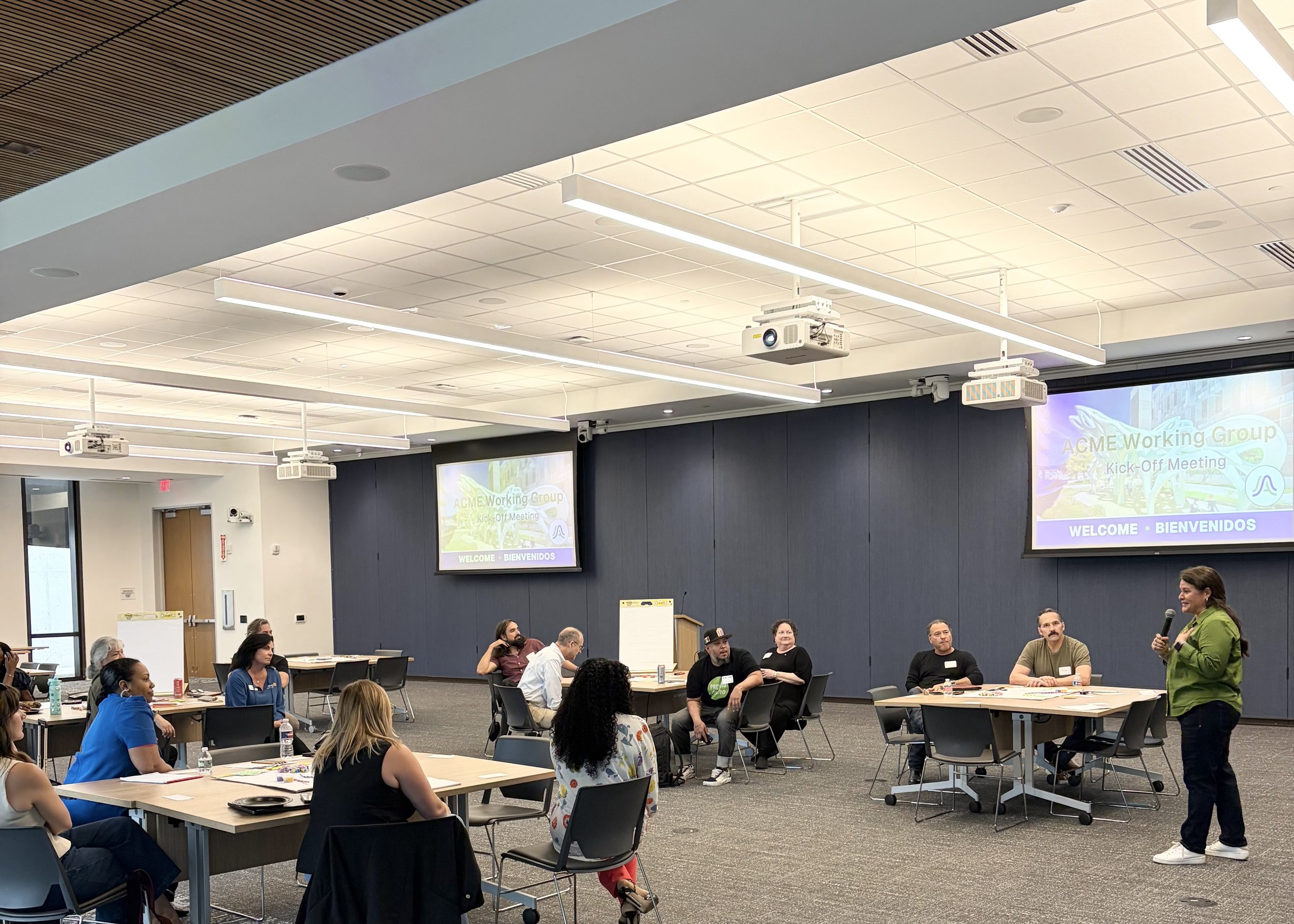
The Palm Park project offers the most useful glimpse of what this looks like when the neat plan meets ordinary friction. In 2023, Cortez Consulting worked with Waterloo Greenway and Austin's Parks and Recreation Department on an eleven-month process for the historic downtown park. The sequence included outreach, gallery-walk open houses, a virtual survey, small-group conversations, a pop-up at Creek Show and a later public meeting. Across the wider engagement, more than 1,500 residents provided input.
At one point, the team tried to organize conversations through Sanchez Elementary and Martin Middle School. Responses from staff were hard to secure. This is where a brittle outreach plan blames “low engagement” and proceeds anyway. Cortez Consulting changed the route. The team contacted a parent-support specialist at Palm Elementary, someone who knew that many current families had connections to the old Palm School. The relationship worked.
Approach two schools through the expected institutional channel. The response stalls.
Find a trusted parent-support specialist with local history and existing family relationships.
It is a small story, which is exactly why it matters. Public engagement is often described with large nouns - equity, inclusion, empowerment. In practice, it can hinge on whether the messenger answers the phone, whether the location carries meaning, or whether a parent trusts the person extending the invitation. The method is not stubbornness about the plan. It is stubbornness about the goal.
What the work costs - and what the numbers do not say
Consultancies rarely post a tidy menu. Cortez Consulting's current advisory pricing is not public, though it says rates vary for small nonprofits, midsize organizations and large agencies. Public procurement records give a partial view of scale. Austin authorized a 19-month engagement contract capped at $180,340 in the firm's early years. A 2020 multi-term Colony Park contract ran up to 42 months with a ceiling of $253,750. In 2025, the city approved as much as $1,418,300 for a displacement-prevention navigator program divided between Cortez Consulting and El Buen Samaritano.
Public contract ceilings, not a revenue chart
*Shared ceiling across two providers. Contract limits describe authorized spend, not profit, company revenue or a guaranteed payout. Bars use separate visual scale for readability.
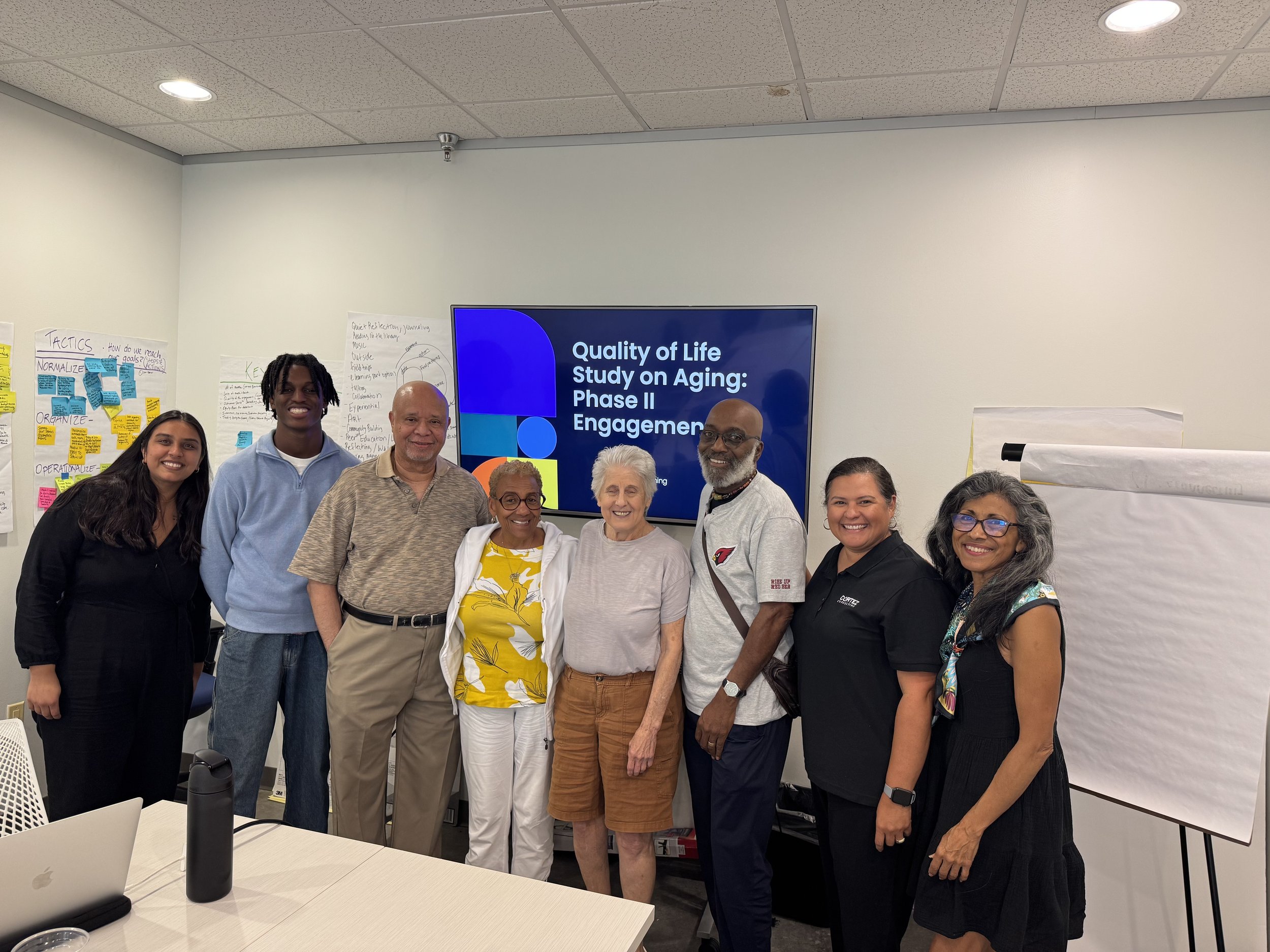
The deliverable is not simply “a meeting.” On the St. John redevelopment, the team recruited a community advisory committee, facilitated small discussions and collected feedback about the plan. Public input was connected to more family-friendly units and better links between the residential buildings and the park. On the 2015 aquatic planning effort, the job included educating residents about the condition of Austin's pools while gathering their priorities. On the Quality of Life Study on Aging, the team worked with age-friendly partners across an eighteen-month engagement.
In other words, the buyer pays for process architecture: who to involve, how to reach them, how to run the exchange, how to record it and how to carry it into a decision. That work can be expensive because access is labor. Translation is labor. Follow-up is labor. So is admitting that the first route did not work.
The outside consultant moves inside
After ten years, the company changed its front door. Its current website leads with executive advisory rather than a list of public meetings. Cortez Consulting now offers three-, six- and twelve-month embedded assignments, working on site one to three days a week as a fractional Chief Strategy Officer, Chief Operating Officer or Chief of Staff. It also sells strategic-planning projects, executive retreats, board reconnection, wellness resets and coaching.
The explanation is unusually candid. Consultants get a glimpse of an organization's struggles, the company says, but everyone becomes so busy finishing the project that they miss the work of strengthening the team. That observation changed the offer. Instead of arriving only to run the external process, Cortez Consulting wants to sit beside leadership while the organization navigates growth, change or a temporary gap.
This is a crowded market. Fractional executives compete with permanent hires, independent coaches, large strategy firms and the heroic improvisation of an existing staff. Cortez Consulting's argument is that a decade spent mediating between institutions and communities is useful inside the institution too. The continuity is not a job title. It is the habit of locating missing voices, turning competing accounts into a workable plan and making progress visible.
The part worth borrowing
You do not need to hire a consultancy to copy the cleanest part of its method. Before announcing a meeting, make a list of who will bear the consequences and compare it with the list of people most likely to attend. Recruit connectors, not merely endorsers. Offer more than one format. Separate what you heard from what you decided. Then return with a plain account of what changed, what did not and why.
A five-question test before the invitation goes out
- Whose daily life will this decision alter?
- Who is missing from the contact list?
- Which person or institution already has their trust?
- What other doorway works if the meeting does not?
- How will participants see the effect of their time?
The approach has conditions. It cannot rescue a decision that has already been made while pretending to seek input. It weakens when there is no budget for language access, no time to build relationships, no authority to change the plan, or no commitment to report back. An embedded adviser also makes less sense when an organization needs a permanent accountable operator, not temporary capacity. Listening is not a ceremonial layer placed over power. It works only when the people holding power are prepared to move.
That brings us back to the quiet room and the empty comment card. The absence of feedback looks like an answer, but it may only be evidence of a poorly chosen route. Cortez Consulting's decade in Austin suggests a better interpretation: silence is data about the process. The meeting was never the point. Building a decision that more people can enter - and recognize themselves in afterward - was.