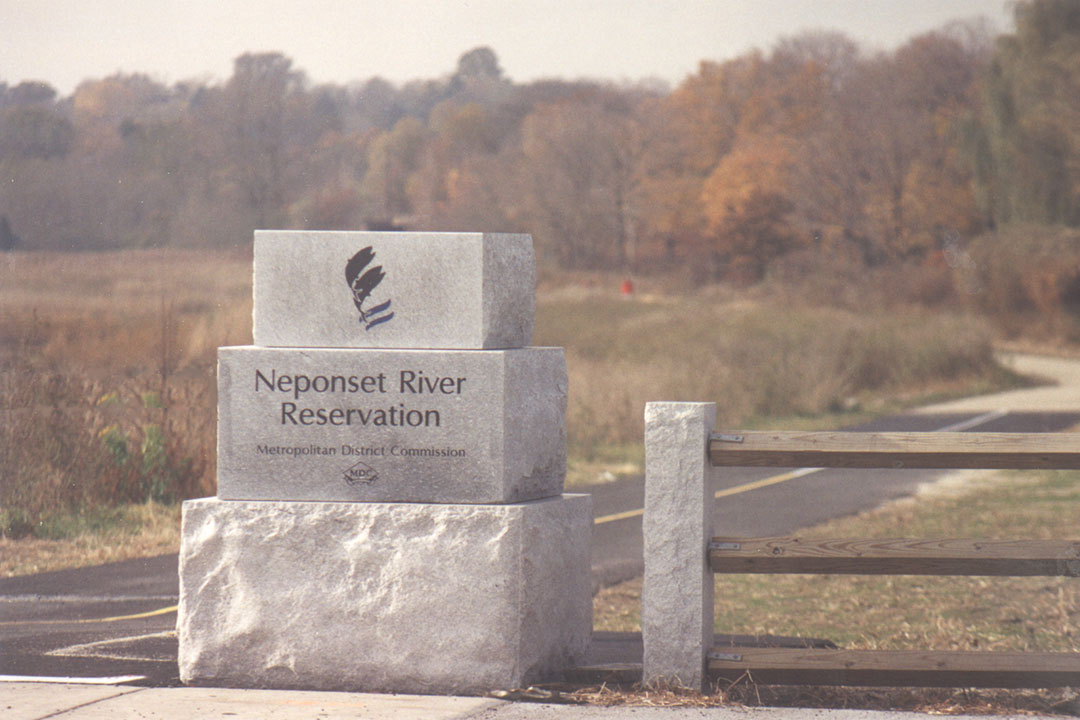
The most consequential object in the Neponset River Greenway may not be the trail. It may be the folding chair. Before the eight-plus miles of path, the restored wetlands, the soccer complex and the waterfront parks, there were more than 35 public meetings, design charrettes, site visits and roundtables. The Collaborative, a Boston planning firm, led them while coordinating surveyors and civil and environmental engineers. A $40 million bond followed the master plan. Years later, the American Planning Association named the corridor one of America's Great Places.
This is the firm's governing idea in miniature. A public project has two kinds of engineering. One concerns grades, runoff, access and materials. The other concerns attention: who understands the proposal, who distrusts it, who improves it and who will defend it when money and politics arrive. The Collaborative has spent more than 35 years refusing to put those jobs in separate rooms.
The plan is not the product
Joe Brevard and Ed Shoucair, both MIT-trained city planners, started the firm in 1990. The company grew from Wallace Floyd Associates, a practice the Collaborative links to Buckminster Fuller and projects including Epcot Center and the United States Pavilion at Expo 67. That lineage matters less as pedigree than as a habit: look at the whole system. The Collaborative's system contains planning, landscape architecture, urban design, transportation, engineering coordination and communications.
Most consultancies can produce a list like that. The interesting part is the missing handoff. A transportation analyst does not finish a technical report and toss it to a public-relations team. The audience research, public workshops, visual explanation and physical proposal are meant to develop together. The company calls this Change for Good. In less branded language: the people drawing the thing sit near the people explaining the thing.
That combination puts the company in a peculiar corner of the market. Municipal planning departments can do much of this work in-house. Specialist landscape studios may bring deeper focus to a single site. Large engineering consultancies bring armies of technical staff. Communications agencies know how to make a message travel. The Collaborative's wager is that certain assignments are damaged by splitting those capabilities among separate vendors, especially when the design is politically sensitive, ecologically complicated or difficult to explain.

The meeting is not an announcement about the work. On the right project, the meeting is part of the work.
A trail with a housing policy
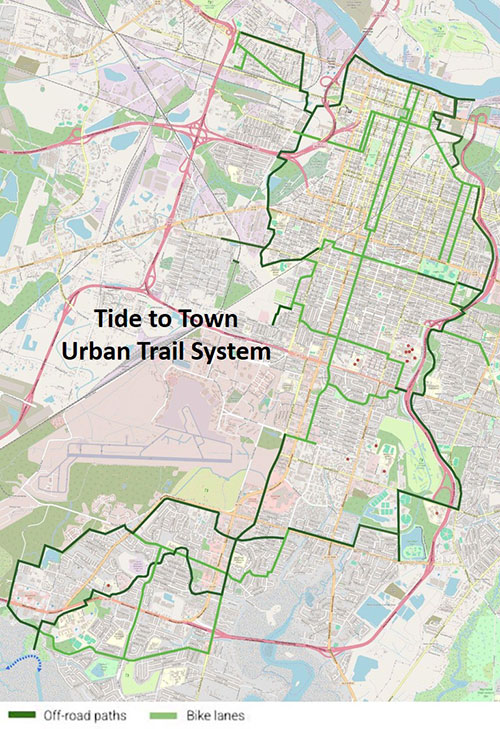
Savannah's Tide to Town project makes the model unusually visible. The protected walking and cycling network is planned to run nearly 30 miles and connect 62 neighborhoods. The obvious assignment is the route. The harder assignment is what success might do to the people already living beside it. Better trails can raise nearby demand and prices. A green amenity can become an eviction notice with attractive signage.
Working with Transport Studio, the Collaborative developed an equitable-growth plan that pairs mobility with household economics. Its proposed actions include interest-free repair loans for 140 homeowners a year, more assistance for renters becoming first-time buyers, hiring goals for trail-related development, support for local businesses and expanded preschool, daycare and eldercare. The first seven-mile path segment was scheduled to open in 2026.
That distinction is important. Professional-services firms often describe impact with the price tags of the capital projects around them. Here the useful comparison is exact: roughly a quarter-million dollars for the planning and engagement scope, against a decades-long urban investment whose benefits and side effects will be measured in housing, health, jobs and access. The consultant does not control all those outcomes. It can force them into the brief before concrete makes the argument harder to change.
What failed first was the clean handoff
The conventional sequence is seductively neat: experts decide, designers render, communicators announce, residents react. Its weakness appears at the end, when the public encounters choices that already feel settled. Opposition looks irrational to the people who did the technical work; the technical work looks theatrical to people who were invited too late. The Collaborative's structure is an answer to that failed sequence. Research and listening begin early enough to alter the proposal.
The same logic travels surprisingly far. For NASA, the communications group has supported public affairs, video, web, exhibits, education and events. The firm reports a 95-percent-plus overall performance rating across seven years of a NASA contract, along with five Emmy Awards and a shelf of other media honors. At MIT Lincoln Laboratory, its landscape work for a 160,000-square-foot microelectronics building had to solve security, slope and runoff. It also made the science legible: stone and weathering steel evoke the extraction of rare-earth materials, while the entrance plaza borrows the geometry of a semiconductor wafer.
NASA video and a stormwater-conscious plaza sound like different businesses. For this firm, both are acts of translation. One translates research into public understanding. The other translates the work inside a building into the land outside it.
The bit worth stealing
A city does not need to hire this particular firm to borrow the underlying operating system. The useful moves are plain enough to copy:
- Put communications in the technical scope at the beginning, with its own budget and decision rights.
- Ask who bears the downside if the project succeeds. Tide to Town treats displacement as a design constraint, not a later apology.
- Turn meetings into working sessions where local knowledge can change priorities, routes and safeguards.
- Make the physical design tell the institution's story, as the semiconductor geometry does at Lincoln Laboratory.
- Separate the consultant fee from capital unlocked or influenced. It keeps claims honest and purchasing decisions clearer.
There are limits. Listening cannot substitute for elected authority, construction money, competent engineering or follow-through. An integrated consultancy is least useful when the problem is narrow, the decision is already fixed or participation has no plausible power to alter anything. It also depends on the client: home-repair loans and local-hiring goals remain proposals until governments fund, enact and administer them. The method works when officials are willing to expose choices early and residents can see their fingerprints on the result.
Who buys it
Cities from Boston and Cambridge to Atlanta and Savannah; state and federal agencies including NASA, the FAA, FTA, EPA, U.S. DOT, National Park Service and MBTA; plus nonprofits, architecture and engineering partners, and technology companies.
How it earns
Project fees and public contracts for professional services. The company is privately held, with no publicly disclosed venture funding.
The business of making a plan survive contact
The Collaborative calls itself a national public-policy, planning, design and communications firm. Its Boston headquarters is joined by a stated presence in Atlanta, Philadelphia and Palo Alto. Its customer list ranges from city governments to federal agencies, nonprofits and biotechnology companies. This is business-to-business and business-to-government consulting, sold through expertise, contracts and repeat credibility rather than a scalable product.
The strongest evidence for its model is not that every idea becomes concrete. Public work rarely offers that luxury. It is that the firm's better projects leave behind both a place and an explanation for the place. Neponset offers the cleanest example: a plan, an unusually extensive civic process, public financing, a finished corridor and later national recognition. Tide to Town is the newer, more difficult test. It asks whether the benefits around a popular trail can accrue to the same households who endured the years before it.
There is something refreshingly unfashionable in all this. The Collaborative does not promise to remove politics from planning. It treats politics, memory, suspicion and aspiration as materials. Maps show where a trail can go. The harder craft is making enough room for people to decide where it should go, what must travel with it and who should still be there when it arrives.
Continue exploring