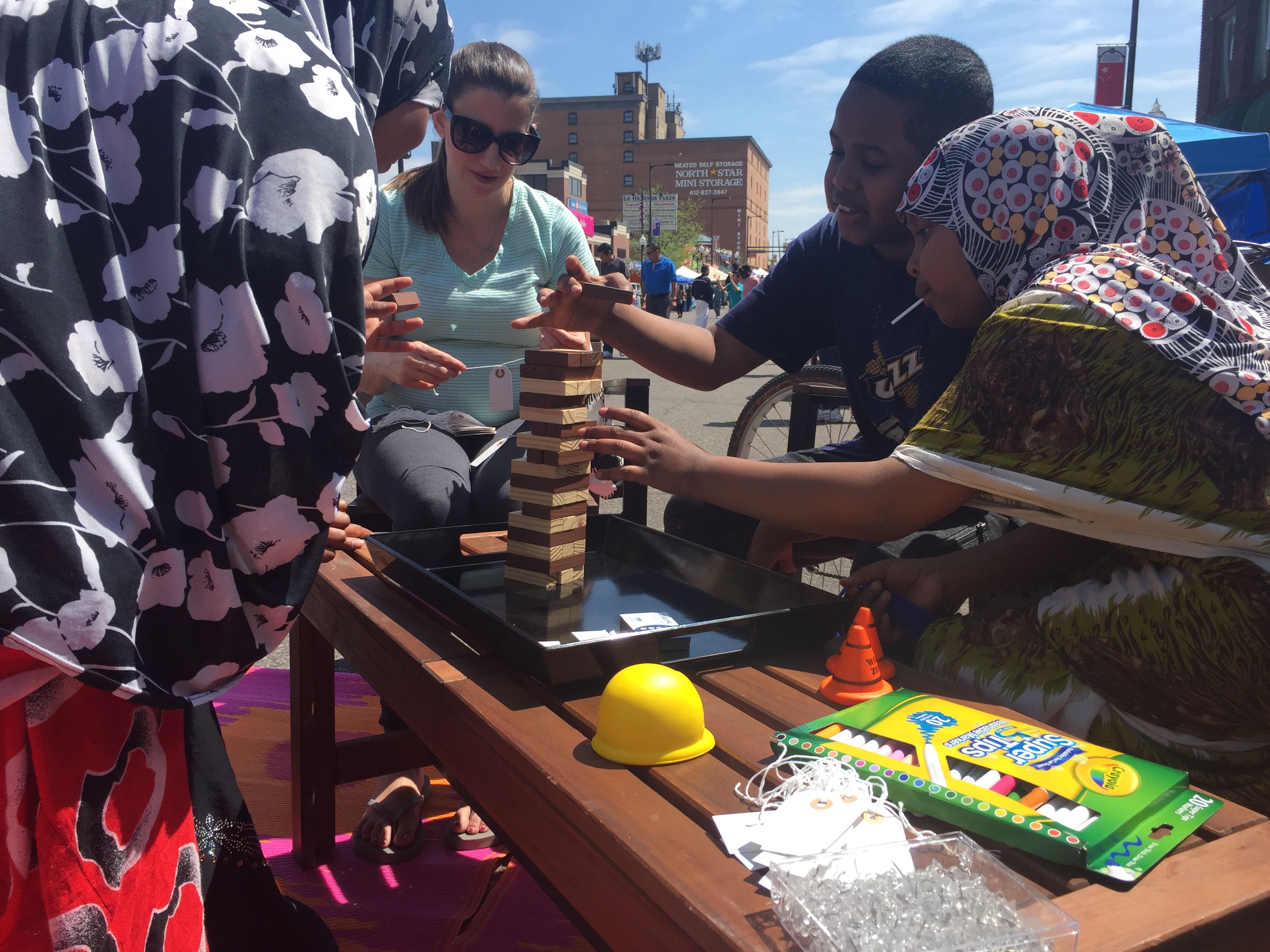
There is a photograph on the Zan Associates website that contains almost no transportation infrastructure. No train. No traffic signal. No heroic sweep of new pavement. Instead, several people are playing Jenga at a folding table on a sunny Minneapolis street. There is a toy hard hat nearby, some crayons, and the familiar concentration of people who do not want to be the one who topples the tower.
This turns out to be a good photograph of a transportation consultancy. Zan works on bus rapid transit, rail, highways, bike plans, sewers, parks, freight and street reconstruction. But its real material is attention. The company designs ways for agencies to hear from people who may never read an environmental document, take a Tuesday evening off for a hearing, or speak comfortably into a microphone beneath fluorescent lights.
The seam between curb and kitchen table
A road project has two designs. One is the physical design: lanes, crossings, drainage, access, schedules. The other is the public process around it. Who understands the tradeoffs? Who can object early enough to matter? Which shopkeeper knows when the front door will be blocked? The second design is where Zan makes its living.
Founder Charleen Zimmer started the Minneapolis firm in 2001 as a solo practice built around a context- and community-sensitive approach to transportation planning and design. Its services now fall into three overlapping jobs.
Go where people are
Pop-ups, culturally specific events, stakeholder interviews, business visits, online tools and targeted surveys.
Make the choice visible
Maps, graphics, workshops, web content and activities that turn an engineering question into something people can handle.
Return the evidence
Engagement summaries, decision records, project updates and construction communication that show what was heard.
That mix places Zan somewhere between a planning firm, a public-relations shop and a field research team. A conventional communications agency can explain a decision. An engineering firm can design one. Zan's niche is the messy interval when the decision is still negotiable and the people affected by it need a usable way inside.
“We believe good community input will influence actions and decisions.”Zan Associates, statement on creative engagement
What fails first is usually the invitation
Public engagement often starts with an innocent mistake: the agency schedules a meeting and calls the room “the public.” The people who arrive are real constituents, but they are also a sample shaped by free time, transportation, language, child care, trust and comfort with bureaucracy. The first failure is not necessarily listening badly. It is mistaking attendance for representation.
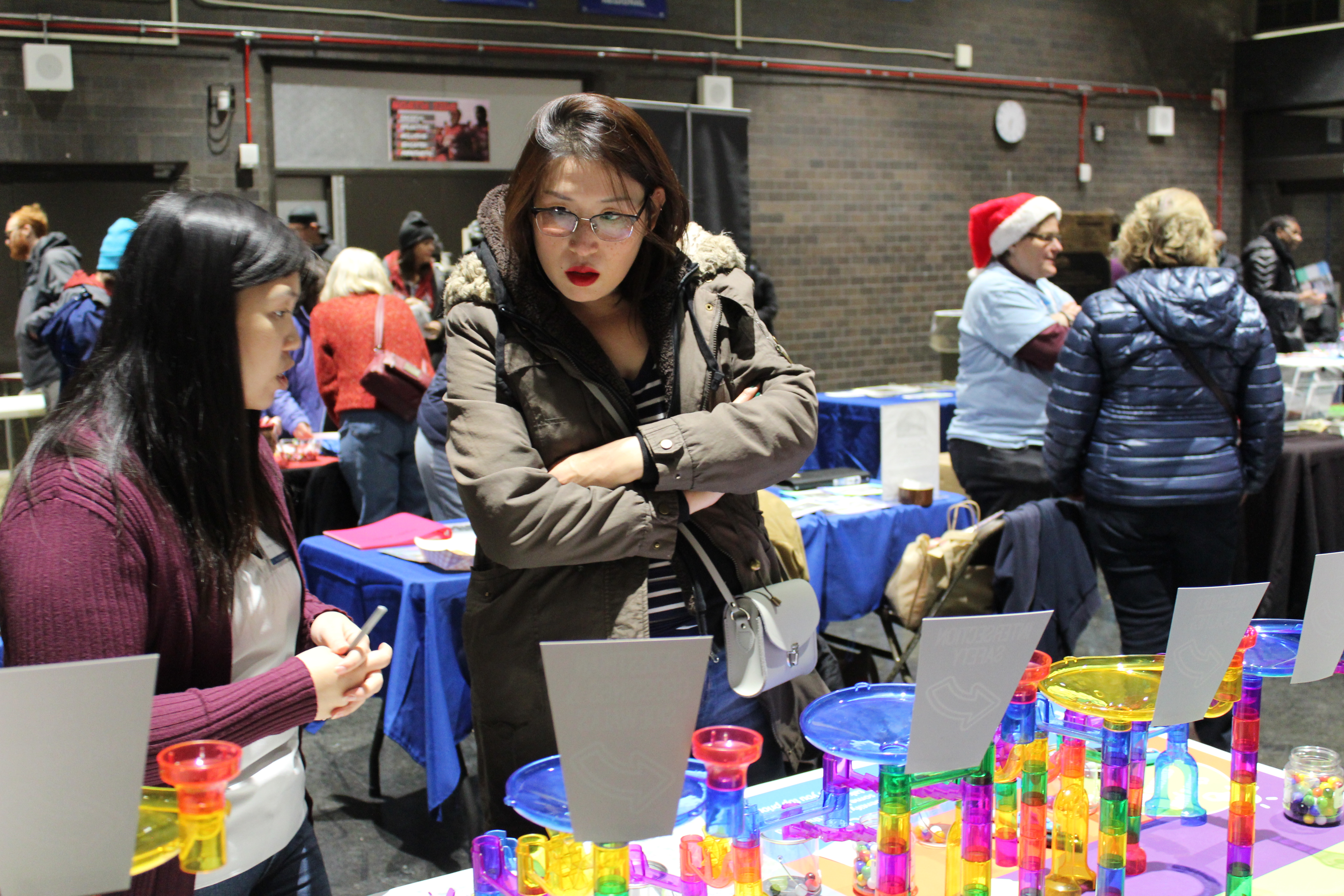
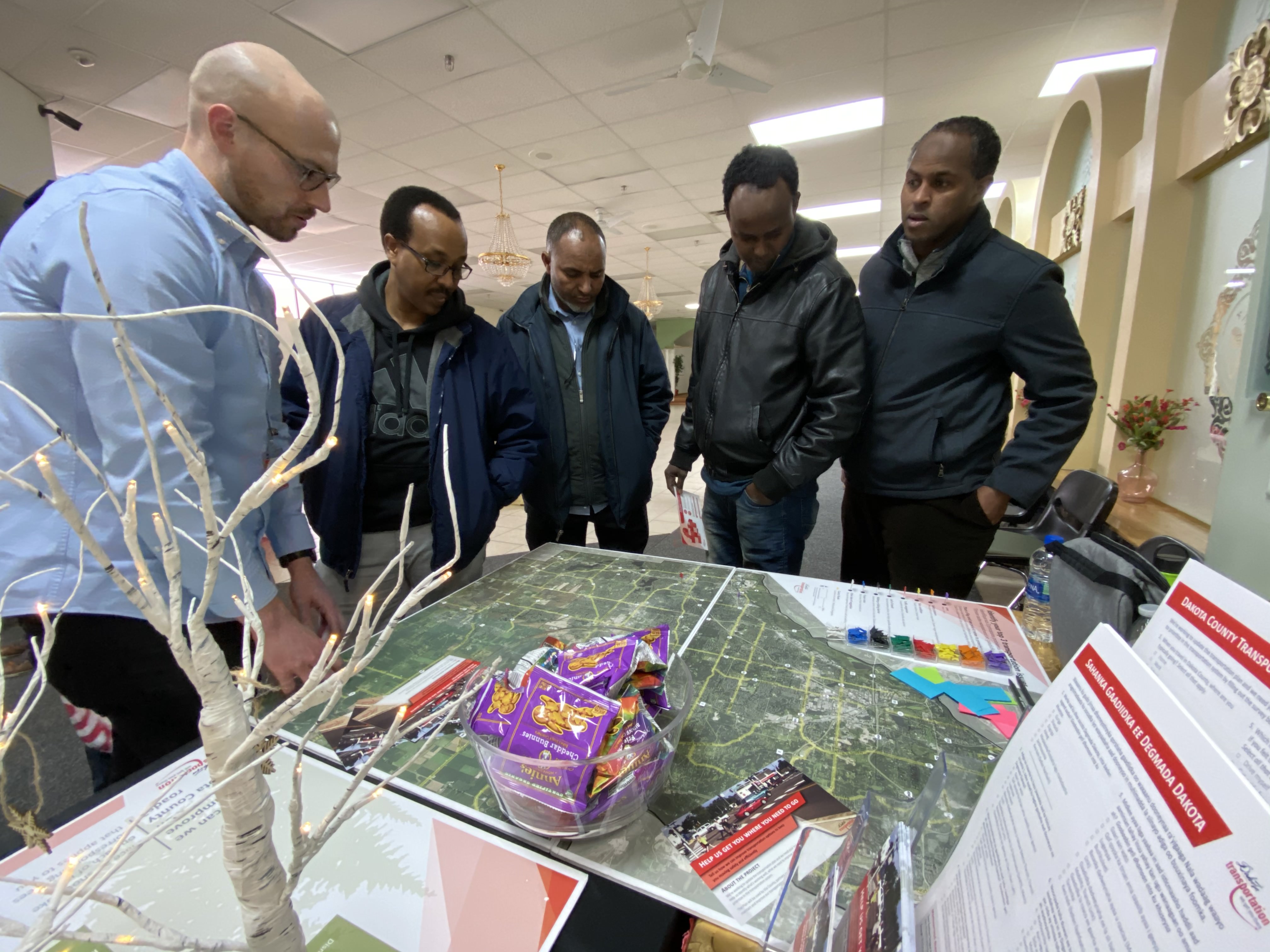
Zan's portfolio reads like a catalogue of repairs to that mistake. For a Dakota County transportation plan, engagement happened at a Burnsville mosque. For a Minneapolis freeway project, staff talked with residents at a Cinco de Mayo festival. Hennepin Avenue outreach included sidewalk, skyway and community-event pop-ups. The I-494/Highway 62 study combined an online survey, targeted phone survey, farmers-market tables, neighborhood festivals, social media, flyers and email. Different channels were not decoration; they corrected for the bias of any single channel.
This is also what changed the firm's scale. Joy Miciano joined in 2011 as Zimmer's first employee. She had entered transportation communications during the reconstruction of Interstate 35W through Richfield and Minneapolis, where “outreach” could not be separated from access, disruption and daily anxiety. In 2021, Miciano became president and CEO. By 2024, the company was described as roughly 30 people strong, with a second office in Portland.
What does conversation cost?
Zan does not publish a rate card, and the public numbers require care. In 2025, Minneapolis authorized a two-year master services agreement of up to $300,000 for Zan as one member of its Public Works Community Engagement Consulting Pool. That figure is a ceiling, not a guaranteed payment.
Not-to-exceed total for the Northside Greenway Phase 1 and 2 contract after a $225,000 amendment in February 2026. The scope reaches beyond engagement into engineering, design, bid preparation and green-stormwater work. It is not Zan's annual revenue and not the price of a single public meeting.
The distinction matters because public participation is easy to trivialize as posters and snacks. On Northside Greenway, the city selected the Zan-led team for a package that joined community engagement to conceptual layouts, preliminary and final engineering, plan sets and bid preparation. Outreach was not a press release bolted onto the end. It was one input to the design machinery.
The useful thing to copy
Most organizations cannot copy Zan's transportation experience overnight. They can copy the operating sequence. It is almost stubbornly unglamorous.
Name the decision
Tell people what is genuinely open, what is fixed, and who will decide. Ambiguity produces suspicion faster than disagreement does.
Map the missing voices
Do not ask only who attended last time. Ask whose routines, language, mobility, work hours or history make attendance unlikely.
Make tradeoffs touchable
Use a map, movable pieces, a short scenario or a street-corner conversation. A concrete choice invites a concrete response.
Show the receipt
Publish what was heard, what changed, what did not, and why. The feedback loop is where participation becomes trust or theatre.
Notice what is missing: the promise that consensus will bloom if everyone gets the right sticky notes. Good engagement does not dissolve conflict. A transit lane can still remove parking. A safer crossing can still slow a commute. Construction can still make a bakery hard to reach. Zan's own work on Richfield's 66th Street included weekly updates, access maps, business coordination, sidewalk meetings, a hotline and issue tracking. Those tools do not make disruption pleasant. They make it visible and manageable.
The necessary conditions
This method depends on real room to influence the outcome, enough time to reach beyond the usual participants, agency staff willing to document tradeoffs, and a budget that treats engagement as project work. If the decision is already closed, a playful activity merely makes the window dressing more colorful.
A small firm in a market of large machines
Zan competes with several kinds of alternative: major engineering firms with communications teams, specialist public-affairs consultancies, planning shops, and community organizations hired for local or culturally specific outreach. Minneapolis's own consulting pool includes examples of all four. Zan's advantage is not size. It is fluency at the seam - enough planning knowledge to understand the drawings, enough design skill to explain them, and enough field practice to know that a technically correct invitation can still reach almost nobody.
Its customers are largely public agencies and the contractors serving them: Minneapolis, Hennepin and Ramsey counties, the Metropolitan Council, Metro Transit, MnDOT and other civic bodies. The end users are harder to list because they are simply the people around a project - riders, drivers, children walking to school, people with disabilities, business owners, residents worried about safety, and residents who have learned not to expect much from another planning process.
Zimmer starts alone
A context-sensitive transportation practice opens in Minneapolis.
Miciano joins
The future CEO becomes Zan's first employee.
The handoff
Miciano becomes president and CEO; Zimmer remains founder.
Recognition, research, reach
Leadership awards, a regional travel study, Minneapolis contracts and Pacific Northwest expansion mark the next chapter.
In 2024, WTS Minnesota named Miciano its Woman of the Year and honored Zan's Brigitte Bjorklund with the Rosa Parks Diversity Leadership Award. The recognition fits the firm's public thesis: transportation expertise is incomplete if it cannot make a decision legible to the people carrying its consequences.
Which returns us to the Jenga tower. It is tempting to call the game a gimmick. It is also a model. Streets and transit systems are arrangements of dependencies. Move one piece and pressure shifts somewhere else. The expert knows the structure. The resident knows which block they cannot afford to lose. The useful meeting begins when both can point to the same tower.
Keep walking