The most important sentence in a highway project may not be in the engineering plan. It may be the note taped to a bakery door explaining that the driveway will close on Tuesday. The engineer sees drainage, pavement and traffic flow. The baker sees whether the morning delivery truck can get in. Between those two views sits Quest Corporation of America, a Florida communications company founded in 1995.
Quest calls itself a marketing and communications firm. That is true, but incomplete in the way that calling an air-traffic controller a person with a radio is true. The firm works around public projects where information is consequential: roads, tollways, airports, water systems and municipal programs. Its people arrange meetings, map stakeholders, answer construction questions, document compliance, build websites, shoot video and fly drones. They take the official project and turn it into something a resident can use.
A company built in the middle
Sharlene Francois Lairscey started Quest as an S corporation serving both public and private clients. The early proposition was practical: improve stakeholder relations, make the collateral, plan the marketing and support field operations. Road and construction work became the durable center. In that market, communications is neither decoration nor an afterthought. A missed notice can fill a meeting room with angry people. A confusing map can make a sensible plan look evasive. A badly handled complaint can become tomorrow's council agenda.
This is why Quest's catalog looks almost comically broad. It includes public meetings and crisis communication, but also GIS maps, translation, ADA compliance, surveys, newsletters, mobile apps, audio engineering, 3D animation, livestreaming and pre-construction drone imagery. Read as a menu, it feels unruly. Read as a project, it makes sense. The same agency that needs a meeting facilitator on Monday may need a Spanish fact sheet on Wednesday and aerial progress footage on Friday.
“Roads, bridges, pathways - these all begin as lines on paper, but end as places where life happens.”Roberta Simantel, Quest communications manager
The handoff without the disappearing act
In 2018, Lairscey brought her daughter, Jessica Francois, into an equal ownership partnership. At the company's 30-year mark in 2025, Francois became sole owner and chief executive. The transition was clean but not theatrical. Lairscey did not vanish into a plaque on the wall; she remained president and chief sustainability officer. The daughter took the wheel while the founder stayed in the car.

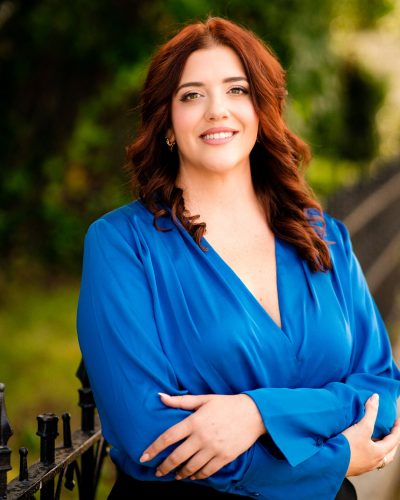
There is a useful business idea here. Founder succession is often framed as a binary event: one leader exits, another enters. Quest treated it as an overlap. Francois had years to learn the peculiar economics and sensitivities of public work. Clients did not wake up to a stranger. The founder's continued role also signals that “sustainability” at Quest means continuity as much as environmental vocabulary.
The pause that explains the business
The cleanest example of what Quest actually sells arrived in 2012, when MetroPlan Orlando awarded the company a $105,202 assignment for public involvement on a long-range transportation plan. Soon afterward, MetroPlan learned that a commissioner had accepted a job with Quest. The work stopped while the agency examined the timing and process.
$105,202 under a microscope
The first thing to fail was momentum. MetroPlan suspended the assignment. What changed the decision was not persuasion but review: general counsel determined that the commissioner had not worked for Quest when he voted, had taken no part in evaluating proposals, and had violated no statute. The commissioner resigned from several boards to avoid the appearance of future conflicts. MetroPlan then authorized work to resume.
No clever slogan could have solved that problem. The remedy was dates, roles, records and institutional distance. That episode captures the market better than a glossy campaign does. In government communications, the appearance of integrity matters alongside integrity itself. The communications vendor operates inside that trust boundary, even when the question is about the vendor.
Many tools, one billable spine
Quest makes money the ordinary professional-services way: contracts, renewals, task orders and subcontracting assignments. It can lead an engagement or join an engineering team as the public-involvement specialist. The customers are agencies and authorities, as well as the AEC firms building for them. Its published roster includes FDOT, Florida's Turnpike Enterprise, Central Florida Expressway Authority, Toho Water Authority, counties, cities, airports and engineering names such as AECOM, HNTB, Jacobs, Kimley-Horn, Stantec and WSP.
The Toho Water Authority relationship shows how such work compounds. Quest's own archive says it began serving Toho in 2007. In 2024, the authority approved a two-year renewal for public information officer services capped at $450,000. The figure is not the company's “price” for public relations. It is a public ceiling on one ongoing, scoped relationship. Still, it reveals the model: trust earned on one assignment becomes the opportunity to handle the next set of notices, meetings and issues.
The newer production work extends the same model. In 2026, Quest wrote, filmed and edited an update for the Central Florida Expressway Authority about technology that detects wrong-way drivers. Ground cameras and drone footage did not replace public involvement. They gave it another grammar. The technical achievement became a story that an ordinary driver could understand in two minutes.
The part worth copying
Quest's advantage is not that no competitor owns a camera or can run a meeting. Florida has many capable public-affairs firms, and large engineering companies maintain communications staff of their own. The difference is organizational proximity: Quest keeps field communication, creative production and technical support close enough to trade information quickly.
- Start with the affected person. Ask what the resident, shop owner or commuter needs to do next, then work backward to the communication.
- Put creators beside operators. The writer and videographer should hear from the field team before the polished message hardens.
- Document before explaining. Dates, contact logs, photographs and decision trails carry more weight than reassuring language when trust is tested.
- Design for a long project. Infrastructure outlives campaigns. Build stakeholder lists, formats and relationships that survive staff changes.
There are limits. This approach is expensive for a tiny, one-off announcement. It depends on access to accurate schedules and engineers willing to explain tradeoffs. It weakens when a client wants communication to disguise a decision rather than clarify it. And it cannot manufacture consent where the underlying plan is plainly harmful. Translation works when there is something honest to translate.
Quest has lasted because orange cones are never merely orange cones. They are late arrivals, blocked driveways, safety improvements, tax dollars and somebody's view of home. Engineers build the road. Quest's niche is to make sure the road does not arrive as a surprise.