The most revealing sentence in the history of Mazur & Co. is not a slogan. It is a confession. The firm once accepted a client engagement whose scope was too broad for its budget. The team knew it. They liked the mission, wanted to help, and said yes anyway. Then the predictable arrived wearing the costume of the unfortunate: expectations stayed fuzzy, the client became hard to reach, success became hard to measure, and the consultants were stretched thin.
Most agencies bury this kind of story beneath testimonials. Mindy Mazur, the firm's owner and CEO, described it publicly and offered the lesson in seven words: good intentions are not a substitute for clear expectations. Since then, she said, the firm has become more disciplined about defining scope before work begins.
mission
than budget
and a strained team
That episode is a small window into the business Mazur now runs. Consulting firms sell judgment, but judgment is difficult to photograph and even harder to package. The firm found its package in three verbs.
The sentence hidden inside the services
Communicate covers the recognizable agency work: messaging, media relations, executive communications, content, policy communications, crisis response, and digital strategy. Operate is less expected. It includes strategic planning, board development, organizational assessment, executive coaching, recruitment, process improvement, and full project or program management. Advocate adds public-opinion research, coalition building, stakeholder engagement, legislative tracking, and public-policy strategy.
The market usually sells these as separate purchases. Hire a PR shop for the story, a management consultant for the machinery, and a public-affairs firm for the politics. Mazur & Co.'s argument is that this division is tidy only on a proposal. In real organizations, the problems arrive tangled. A message fails because the program is not ready. A coalition stalls because nobody owns the next meeting. A strategy gathers dust because the board never agreed on the mission.
“We don't just tell you what to say. We help you achieve what you want to do.”Mazur & Co.'s practical distinction
This makes the company an odd hybrid: part communications agency, part operator, part civic mechanic. Its customers include nonprofits, foundations, universities, healthcare and conservation organizations, hospitality and tourism groups, entrepreneurs, and legal-services organizations. The common denominator is not an industry. It is a situation in which reputation, execution, and stakeholder support have become the same problem.
A succession measured in years, not headlines
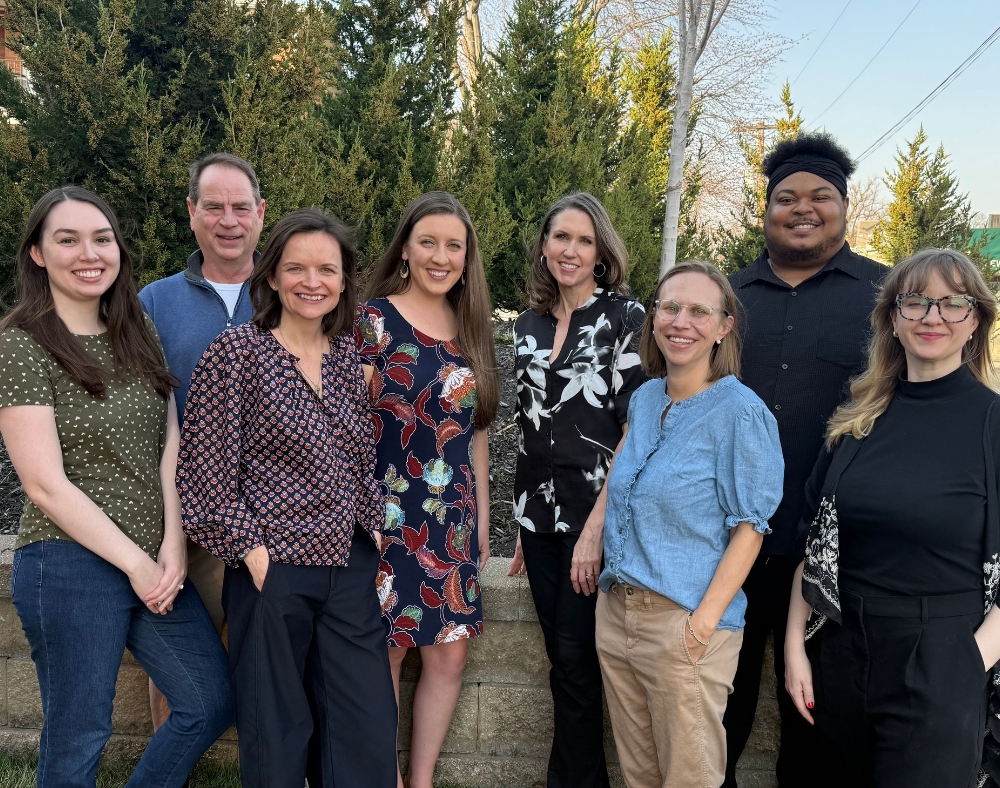
The company began in 1987, when Peggy Lents founded Lents & Associates to provide customized marketing, communications, and public-relations counsel. Mindy Mazur joined in 2019 as part of a succession plan. She brought a career that reads like preparation for the firm's three-part model: congressional aide, campaign manager, chief of staff in the Missouri Secretary of State's office, nonprofit executive director, healthcare technology COO, and agency principal.
In January 2025, Lents Mazur & Associates became Mazur & Co. Mazur assumed full ownership; Lents moved into a strategic-partner role. This detail matters. The usual rebrand story asks everyone to admire the new sign. This one is more interesting as a transfer of institutional memory. The founder did not vanish, longtime partnerships stayed, and the new owner expanded the team, office, and reach.
The preparation had started earlier. Soon after joining, Mazur modernized the firm's digital infrastructure. Months later, the pandemic made remote work mandatory rather than fashionable. The company emerged with a hybrid model and the ability to hire across Missouri and in Washington, D.C. In 2025 it held its first all-staff retreat at the St. Louis Zoo and took on work supporting Mayor Cara Spencer's transition into office. Continuity, in this case, was not stillness.
Years before the new nameThe rebrand arrived after a long operating history and a six-year succession runway. The sequence matters: trust first, typography later.
Relationships as an operating system
Mazur describes the firm as human-centered and relationship-based. That can sound like a line from every professional-services website until you inspect the mechanics. New hires meet colleagues one-to-one. Teams hold recurring internal meetings around each client. Senior people work with interns on live assignments. Strategic partners extend the bench without pretending every expert needs the same employment arrangement. When the company is not the right fit, Mazur says it regularly refers work to other firms.
The culture has its deliberately unserious details. Staff call themselves Badgers. Frankie Louise Badger is listed as team mascot. Mazur is a Muppets devotee who took up the banjo during the pandemic. The first retreat happened at a zoo. None of this proves that a project will work. It does signal an organization trying to make collaboration feel like a behavior rather than a plaque.
There are limits. Relationship-led work needs responsive clients, access to decision-makers, and enough budget for the scope. The model is strongest when an organization faces a genuinely connected problem - a new initiative requiring internal alignment, public explanation, and stakeholder support. It is weaker when the buyer wants cheap commodity output, instant scale, or a consultant to resolve a disagreement the leadership team refuses to name.
Four things worth borrowing
- Name the jobs customers hire you to do in plain verbs.
- Keep adjacent expertise connected when the customer's problem is connected.
- Treat succession as knowledge transfer, not merely a closing date.
- Set scope, budget, responsiveness, and success measures before enthusiasm takes over.
The crispest way to understand Mazur & Co. is to imagine a press release about a program that the organization cannot yet deliver. A conventional agency polishes the release. A conventional consultancy repairs the program. A public-affairs adviser rounds up the people who must believe in it. Mazur & Co. wants to sit where those assignments collide.
That is not a promise that every knot can be untangled by one small firm. It is a recognition that the knot exists. For a company born in public relations, the notable evolution is its refusal to treat the story as decoration. The story, the system, and the stakeholders have to agree. Three verbs are easy to print on a door. Making them work as one sentence is the business.