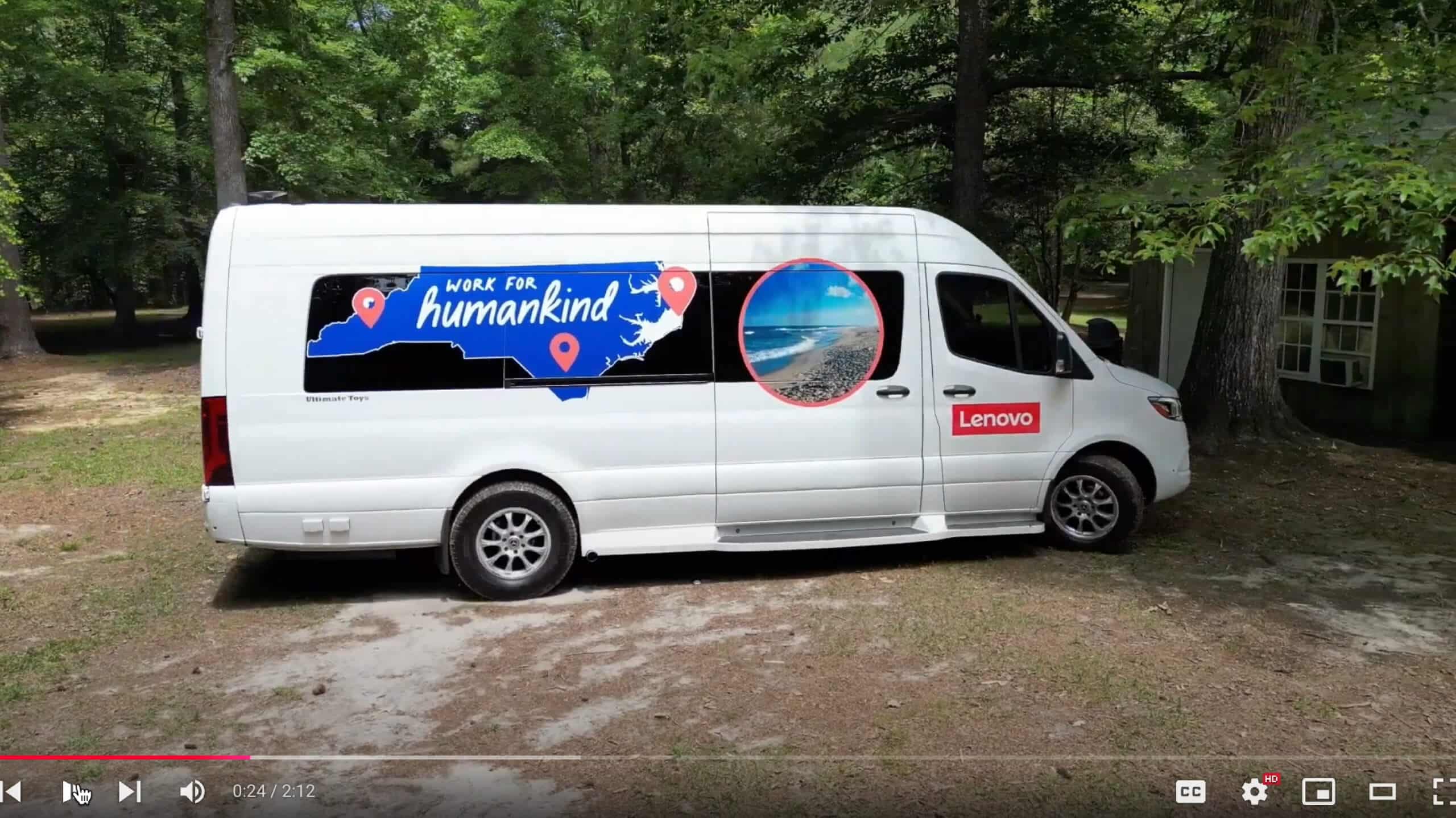
The most revealing detail in NP Strategy's portfolio is not a slogan. It is a van. For three weeks, staff from the Columbia-born communications firm drove Lenovo's branded vehicle nearly 3,000 miles across North Carolina. Inside were HBCU students and technology. Outside were campsites, conservation projects, community partners, reporters, social posts and the small emergencies that attach themselves to any ambitious trip. This was public relations, though it looked a great deal like expedition management.
That distinction explains the firm better than the usual vocabulary of messaging and reach. NP Strategy helps organizations when a story has physical consequences: a factory is opening, a mine needs permits, power lines are down, a municipality wants residents to understand what local government does. The work spans community assessment, crisis response, public affairs, media training, social media, events and video. The sell is not a single clever line. It is coordinated judgment.
The company began in 2013 inside the orbit of Carolinas law firm Nexsen Pruet. Co-founder Heather Hoopes-Matthews had been an investigative reporter before becoming the firm's marketing and public-relations director. Co-founder Leighton Lord was a lawyer steeped in economic development and public institutions. Their premise was practical: clients facing rapid change needed somebody who could understand the legal room, the newsroom and the community meeting without confusing one for another.
The press release is usually the receipt. The purchase happened earlier, in the meetings, maps, rehearsals and replies.What NP Strategy's case work makes visible
Two clocks, one difficult job
Former journalists know the newsroom clock. The question arrives at 2:47. The answer is expected at 2:48. Political operators know another clock: relationships accumulate slowly, then become decisive all at once. NP Strategy has recruited from both worlds. CEO Amanda Loveday moved through broadcast journalism, campaign leadership and congressional communications before taking the top job in 2025. Across the firm are people who have worked in news, government, corporate communications and creative production.
Its organizational trick is equally unusual. NP Strategy is wholly owned by Maynard Nexsen, the national law firm created in 2023 from the merger of Nexsen Pruet and Maynard Cooper & Gale. That affiliation does not turn communicators into lawyers. It gives a regional agency access to relationships and offices far beyond its home markets, while preserving a working style that is conspicuously local. As of September 2026, NP Strategy described a presence in Columbia, Charleston, Greenville, Charlotte, Raleigh and Birmingham.
The storm measured the reply button
Hurricane Helene gave that operating model a severe test. Broad River Electric Cooperative serves more than 25,000 members. After the storm, those members did not need a brand campaign. They needed to know where crews were working, when power might return, which hazards to avoid and whether anyone was listening.
NP Strategy helped create daily outage and restoration updates, safety posts, scam warnings, photographs and stories about linemen and volunteers. The team also answered people. Its published case study counts more than 7,000 responses over ten days. Facebook interactions reached 30,307, impressions rose by 2,000 percent and the cooperative added 1,555 followers. Most arresting was the sentiment: 95 percent of feedback was positive.
Those figures say something unfashionable about crisis communication. Speed matters, but responsiveness matters more. A beautifully typeset outage update cannot answer the member whose oxygen machine has stopped. The communications team becomes part switchboard, part translator and part witness. The product is not sentiment itself. It is an information rhythm sturdy enough to earn sentiment.
A factory arrives before the factory
When Samsung announced its first North American home-appliance manufacturing facility in Newberry, South Carolina, in 2017, NP Strategy coordinated the announcement, managed statewide media and began a longer community project. It identified and ranked stakeholders, designed a plan for each relationship and tracked the work. A free Veterans Day lunch with local American Legion chapters became an annual event. Plant tours, community donations and newsletters kept the relationship moving after the television crews left.
The Haile Gold Mine assignment was slower and more contentious. Reopening a 12,000-acre mine required local, state and federal permission. The firm built an informational website, organized gatherings, worked with reporters and joined the company's legal team through a multi-year permitting process. Thousands of stakeholder engagements later, the project received its permits. The mine's reported capital investment since 2007 was about $927 million. The communications fee was not published; the scale of what depended on the work was.
Each project uses a different unit of progress. The storm uses hours and replies. The road trip uses miles and deliverables. The mine uses years and permissions. That flexibility is the firm's place in the market. It sits between a conventional PR agency, a public-affairs consultancy, an event producer and an embedded crisis desk. A client can buy strategy, but the case studies suggest the firm prefers strategy that has somewhere to go on Tuesday morning.
What failed first was the room
The cleanest example of a changed mind came during COVID-19. South Carolina Power Team had a three-day Economic Development Review built around gathering members in person. The room became impossible. NP Strategy did not try to simulate every physical detail. It rebuilt the event as "EDR from Afar," then continued with media relations, stakeholder engagement and social content. The venue failed; the need for members to convene did not. That distinction told the team what to preserve.
The discarded assumption
A successful review required people to share a physical conference room for three days.
The surviving purpose
Members still needed context, connection and a common view of economic-development work.
There is a useful copyable method here. Start with the audience's decision, not the channel. List the people who can delay, improve, misunderstand or legitimize the project. Give each relationship an owner. Establish which facts can be released, by whom and how fast. Build an update cadence before the first difficult day. Finally, measure unanswered questions alongside impressions. Reach is pleasant; unresolved confusion is expensive.
The advantage is specificity
Many agencies promise storytelling. NP Strategy's sharper claim is that a story can be engineered from observable behavior: the factory tour happened, the outage map changed, the student team collected useful data, the public meeting produced an answer. The firm's video and social teams then have something real to capture.
That approach also explains its customers. Manufacturers and mines need community permission, formal or informal. Utilities need trust when infrastructure fails. Municipal organizations need residents to notice the useful machinery of local government. Economic-development groups need convening power. These are not businesses in search of louder adjectives. They are institutions whose outcomes depend on people understanding what happens next.
Loveday's elevation to CEO in 2025 made the firm's lineage especially tidy: a former journalist and political communicator leading an agency founded by a former journalist and a lawyer. The leadership changed, the organizing idea did not. Attention is fast. Trust is slow. The job is to work on both clocks at once - and, occasionally, to drive the van.
Keep following the story