The peculiar thing about a public hearing is that it happens near the end. By then, engineers have engineered. Lawyers have checked the law. Financial people have found the money. A thick report exists, along with a thinner presentation explaining the thick report. Then someone stands up at a microphone and asks a question that none of those documents quite answers: Why should we trust you?
Providence Strategic Consulting makes its living in the distance between those two events. The Bakersfield firm calls itself a strategic communications company. That is accurate, but incomplete in the way that calling a bridge “concrete” is accurate. Its more interesting product is public permission - the patient construction of a constituency that understands a project before the project becomes a fight.
Founded in 2004 by political and public-relations strategist Tracy Leach, Providence began as a one-woman operation at her kitchen table. The firm now reports more than 500 clients and 200 successful campaigns. Its roster runs through the Central Valley economy: water agencies, energy companies, agriculture, rail, mining, healthcare, retail, nonprofits and local government. These are businesses where communication is rarely decoration. It is part of whether work proceeds.
Successful campaigns reported by the company - the useful scale of Providence is not audience impressions, but repeated practice around approvals, issues and organizations.
The supporters who did not yet exist
The firm's 2017 case study on Kern Citizens for Energy contains a telling diagnosis. When Kern County began a broad environmental review of oil and gas activity in 2013, the industry did have supporters. The trouble was that they were “scattered, unidentified and complacent.” This is the first failure in many public-affairs campaigns: agreement exists privately but cannot be seen publicly.
The environmental review changed the calculation. A streamlined local permitting process would eventually need a vote, and the opposition already had a story. Providence created Kern Citizens for Energy, bringing together residents, small-business owners, nonprofits, chambers of commerce, taxpayer advocates, elected officials and energy companies. The immediate job was to support the environmental review. The larger job was to make passive support legible as a constituency.
The distinction matters. Buying an advertisement can create awareness; it cannot make a county supervisor feel that informed constituents are watching. A press release can announce; it cannot reconcile the concerns of a water district, a neighborhood and a regulator. Providence's method is less glamorous and more operational: identify stakeholders, learn the objections, translate technical material, recruit credible messengers, coordinate media and show up before the decisive meeting.
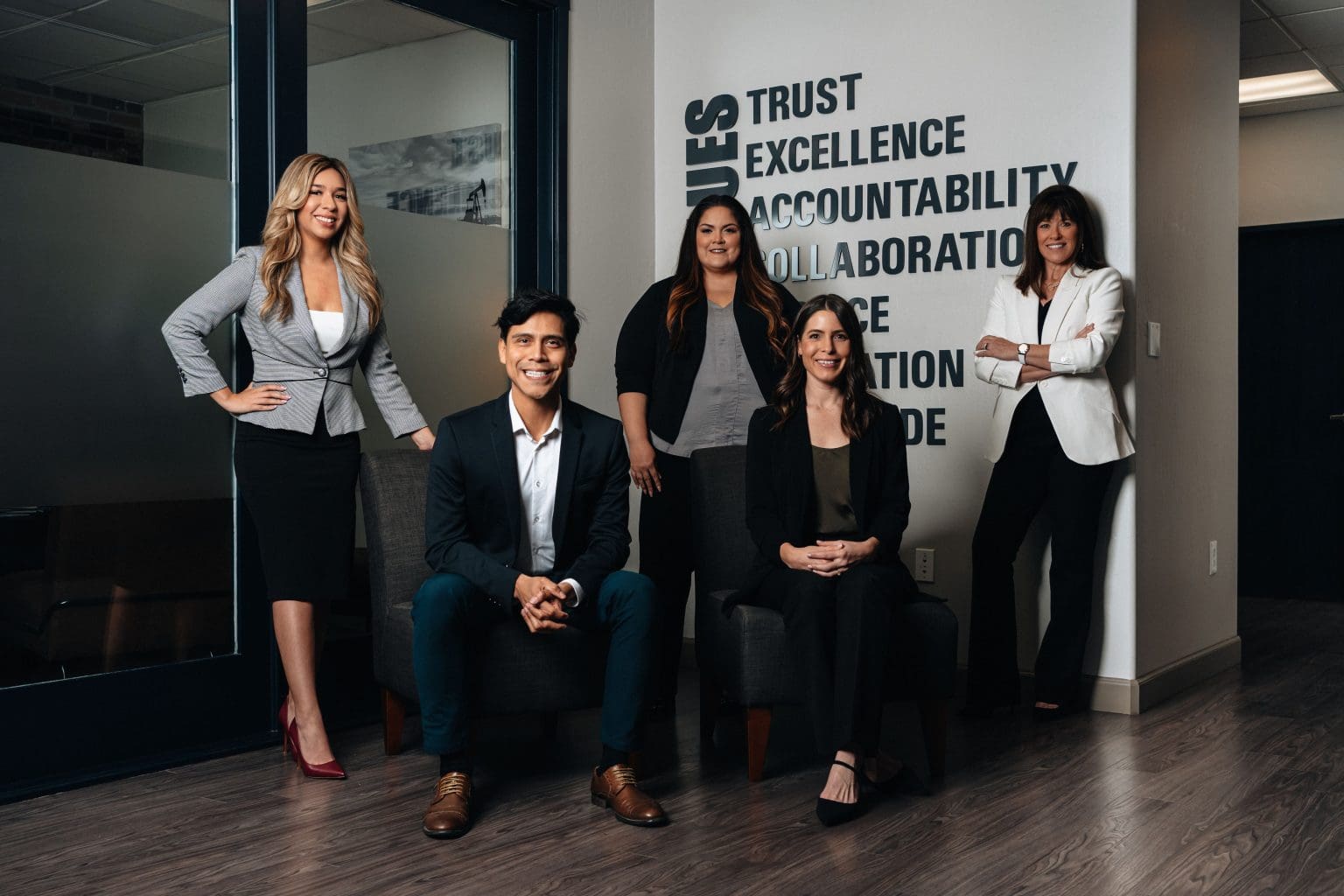
One shop, several kinds of trouble
Providence groups its services into communications and marketing, event and campaign management, and government and public relations. Underneath are many crafts: media relations, crisis response, issue advocacy, coalition building, digital advertising, social media, websites, branding, graphic design, photography and video. It also trains executives to handle reporters and the modern equivalent - an activist with a phone and a live account.
This breadth is its competitive argument. A conventional creative agency can make the campaign look coherent. A lobbying shop can read the political room. A crisis consultant can prepare the statement. Providence tries to connect the rooms, keeping the message consistent from stakeholder briefing to social post to elected-official meeting. Through the Worldcom Public Relations Group, which it joined in 2018, the independent firm can also call on partner agencies outside its home territory.
Its public client list makes the niche clearer: Kern County Water Agency, Rosedale-Rio Bravo Water Storage District, Oildale Mutual Water Company, Amtrak San Joaquins, Goodwill Industries of South Central California, Golden Queen Mining Company and Valley Children's Healthcare. In 2020 it became agency of record for Outlets at Tejon and Tejon Ranch Commerce Center. The common denominator is not industry. It is a client whose reputation, customers and public setting overlap.
The price of an ongoing conversation
Providence is a private professional-services business. It sells retainers, project work and consulting time rather than software or media inventory. A surviving 2016 rate card shows how the smaller end once worked: six-month social-media packages at $800, $1,500 and $2,000 a month, with principal consulting at $225 an hour and associate time at $125. Those figures are a decade old, not a current menu. They are useful because they reveal that even the entry product was designed as a continuing practice, not a one-day burst.
Six-month minimum in a 2016 Providence brochure. Included hours and services varied by tier. These are archival prices, not current quotes.
Public contracts show the larger end. In 2016, the San Joaquin Joint Powers Authority approved a two-year, five-month marketing and outreach agreement for the Kern region, capped at $151,500. For fiscal 2025-26, Kern County Water Agency staff recommended renewing Providence for public education and outreach at up to $105,000. The stated duties included handling public and media inquiries, joining local water efforts and coordinating the agency's public interactions.
That is the cost of communication as upkeep - less a campaign launch than an always-ready civic interface. One Oildale Mutual Water Company testimonial says Providence built a communications structure to educate customers during a long dispute, then ran a campaign supporting new board members. The claimed result was millions saved for ratepayers over time. It is a client's account, but it captures the model: first make the issue understandable; then make participation possible.
What can be copied - and what cannot
The reusable part of Providence's playbook is procedural. Start outreach while choices can still change. Keep a live stakeholder map rather than a ceremonial mailing list. Give every technical assertion a plain-language twin. Let supporters speak in their own credible voices. Connect communications to legal, regulatory and operating plans. Rehearse the difficult interview before the camera arrives. None of this requires a famous agency. It requires treating public understanding as work with an owner, a schedule and a budget.
There are limits. Communication cannot repair a project that is technically weak, legally indefensible or unwilling to respond to legitimate concerns. A coalition manufactured after decisions are fixed will look manufactured. And Providence's Central Valley advantage - long relationships with agencies, businesses, media and elected officials - does not transfer instantly to a place where an adviser has no local trust. The process travels better than the Rolodex.
Providence has continued to widen its tools. A Fresno office opened in 2020. In 2024, the company celebrated its twentieth year by opening Providence West, a third location with a custom podcast studio. That same year it joined a Colorado School of Mines and Carbon TerraVault feasibility study backed by an $8.9 million Department of Energy award. In 2026 it packaged its water-sector work around a blunt phrase: public affairs is project risk management.
That phrase is the firm's clearest idea. Buildings need foundations; projects need facts; public decisions need a story sturdy enough to survive contact with people. Providence did not invent that reality. It simply noticed that someone had to be responsible for it.