The trouble with a plan is that it can behave impeccably on paper. The arrows align. The colors obey. The future arrives on schedule, usually somewhere near the lower-right corner. Then the document meets a city, where water systems age, land remembers its previous uses, budgets become politics, and residents have the annoying habit of knowing things the consultant does not.
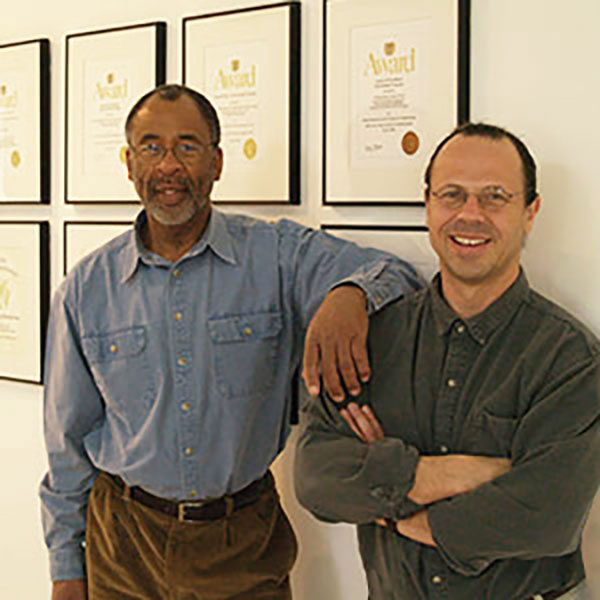
Joe Brevard has spent his career in that collision. He is an engineer who became a city planner, a combination that gives him two instincts at once: understand the system, then ask whom the system serves. Since 1990, when he and fellow MIT-trained planner Ed Shoucair founded the Collaborative in Boston, the work has moved across disciplines that are often kept in separate conference rooms - planning, design, engineering, transportation and communications.
The firm began with four people. Its founding ceremony was not cinematic. Brevard and Shoucair went to the Massachusetts Department of Corporations and signed the necessary papers. Bureaucracy, for once, supplied the opening scene. They later called it the start of an adventure, which is a generous thing to call a government filing and perhaps an essential temperament for anyone entering public planning.
An engineer learns to plan in public
Brevard studied engineering at the New Jersey Institute of Technology before earning a master's degree in city planning at MIT. Later graduate study at Clark University took him into geography, political economy and the economics of development. The sequence matters. Pipes and roads are physical systems, but they are also decisions about money, power and access. A technically sound answer can still be a civic failure.
Before founding the Collaborative, he worked as a senior management consultant at Camp, Dresser and McKee, now CDM Smith. There he managed a long-range water-supply effort for the Metropolitan District Commission in Hartford. The region depended on the Barkhamsted Reservoir system, built in an earlier era and capable of supplying 66 million gallons per day. Brevard developed alternative pathways for introducing supplementary sources as demand grew.
This was planning as choreography rather than monument. The question was not simply what to build. It was when to act, how to phase the choices, and how to avoid spending tomorrow's options today. Anyone can draw the heroic final state. It takes judgment to preserve several workable futures while the evidence is still arriving.
“Today, even though more than 30 years have passed, we still see ourselves as forever in startup mode.”Joe Brevard and Ed Shoucair
The company named for a method
Calling a firm “the Collaborative” is a promise with nowhere to hide. The name turns every meeting into a small audit. Brevard and Shoucair built their practice around connection: engineer with designer, technical analysis with public explanation, vision with the unglamorous sequence of steps that makes it real. The inheritance came partly through Wallace Floyd Associates, the practice from which the Collaborative grew and which had itself worked with Buckminster Fuller.
One civic problem, five professional languages
The connections have produced work with an unusually broad physical vocabulary. Contaminated sites have become parkland. Abandoned rail corridors have become paths for walking and cycling. Downtown plans have created places to gather. Transit work has addressed access for people using wheelchairs. Educational material has carried science, technology, engineering, art and design into classrooms.
There is a useful humility in this list. A planner does not personally pour the concrete, restore the wetland or run the train. Leadership is exercised upstream, by setting the problem correctly, and sideways, by helping specialists and residents understand one another. The finished place belongs to the people who use it. The plan should be proud enough to work and modest enough to disappear.
Listening is infrastructure, too
Public participation is one of Brevard's recurring areas of work. The phrase is dangerously easy to drain of meaning. A microphone at the end of a presentation counts as participation on many schedules. The Collaborative's stated approach begins earlier: research the problem, listen for needs and aspirations, and join communication to technical analysis rather than applying it like a label at the end.
In Sandy Springs, Georgia, Brevard and Shoucair led a visioning process tied to a comprehensive-plan revision. It used an online survey, public meetings and a focus group of civic-association leaders. Elsewhere, Brevard's record includes transit outreach, municipal planning and capital-facilities work. The subjects change; the central difficulty does not. A community contains several versions of itself, all speaking at once.
Colleagues describe a related management style inside the firm. One former employee wrote that Brevard and Shoucair financed valuable training, provided room to grow and did not micromanage. It is a small but revealing echo. Collaboration is much less convincing when it stops at the office door.
A trail with consequences beyond the trail
The recent Tide to Town plan in Savannah shows how far that connective approach can travel. The trail now under construction is designed as a nearly 30-mile network with separated bike lanes linking 62 neighborhoods. A narrow reading would call it a mobility project and stop there. The Collaborative's plan treats mobility as the beginning of the question.
Its equity strategy proposes assistance for 140 homeowners each year through interest-free maintenance and improvement loans. It calls for more down-payment, closing-cost and gap-financing support for renters seeking their first homes. It recommends hiring goals for city residents, people of color and women on trail-related development, along with expanded preschool, daycare and eldercare.
The logic is plain once stated: a path can connect a neighborhood to opportunity while rising values make it harder for existing residents to remain. Good infrastructure cannot pretend that one effect is engineering and the other somebody else's department. In Tide to Town, the route and the right to stay near it occupy the same plan.
The internship arrived during an emergency
In May 2020, the firm launched the Collaborative Summer Institute, an annual program for undergraduates, graduate students and recent graduates. The first group brought together 12 interns virtually. They worked on model zoning guidelines, ways for restaurants to expand outdoor seating, and software concepts to help facilities managers check accessibility requirements.
It was an apt curriculum for an organization that prefers live problems. The students were not asked to admire planning from a safe distance. They were placed inside the compromises: public space and private survival, urgent improvisation and durable rules, software and the built environment. The institute extended Brevard's professional habit to a younger cohort - connect the disciplines, then make the connection useful.
A century-old trip, remembered
There is one family story that gives Brevard's public career a quieter frame. In 1926, his mother, Sarah Louise Van Allen, represented Worcester at a national spelling bee. Her journey began with a stop at the Boston Public Library, continued by steamboat through the Cape Cod Canal and Long Island Sound, then by train to Washington. A newspaper helped arrange the trip; her church helped provide clothes and spending money.
A century later, Brevard helped bring the episode back into view. “I think she was blown away,” he said of the experience. It would be too neat to turn a mother's journey into the explanation for a son's vocation. Still, the scene belongs here: a young person, carried by public institutions and a community's faith, discovers that the map is larger than it looked.
Much of Brevard's work concerns that same enlarging function. A clean river, an accessible station, a trail between neighborhoods or a meeting where someone is genuinely heard can alter the map of an ordinary life. None is glamorous in isolation. Together they are the equipment of belonging.
Forever unfinished
Brevard and Shoucair have said that every year is a time both to look back and to look ahead. Their preferred description of the firm - forever in startup mode - may be the most accurate summary of a planner's life. Cities decline to be completed. Water demand changes. Land acquires another history. A path solves one problem and reveals the next.
After 35 years, the compelling part of Brevard's career is not a single signature project. It is the repeated insistence that technical work and public life belong in the same room. He has made a practice of joining the people who calculate capacity, draw landscapes, run meetings, explain tradeoffs and live with the result.
Paper is still necessary. So are arrows, colors and lower-right corners. But the proof of a plan is elsewhere: in whether a resident can remain in a neighborhood, a cyclist can reach the next one, a city can choose its next water source wisely, and a young planner is trusted with a real problem. That is where Joe Brevard's plans tend to go when they leave the office.