large-language-models
(50)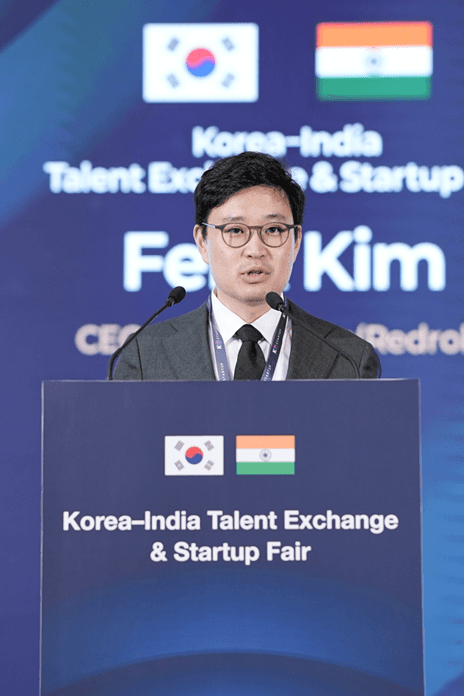
Felix Kim Is Building AI for the People Silicon Valley Priced Out
A shy child learned what it costs to arrive without context. A lawyer learned how institutions manufacture trust. Now Felix Kim is spending his second career trying to make both problems smaller with code.
Character.AI Built a World of Talking Personas. Then the Model Race Cost More Than the Fantasy
The chatbot company found millions of people would spend an hour inside a made-up conversation. Then compute costs, a founder homecoming and a safety reckoning turned one clever app into a test of whether AI can become an entertainment medium.
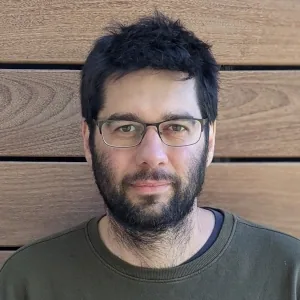
Etienne Bernard Is Teaching AI to Read the Fine Print
The physicist who helped make machine learning automatic at Wolfram is now shrinking document AI into focused models that turn unruly files into useful data - with privacy, precision, and a well-placed null.
The Startup Teaching Governments to Read the $20 Trillion They Can't See
Most financial crime hides in plain sight, scattered across the open web. IVIX built an AI platform that reads all of it at once - and hands governments a map.

AnswerThis
AnswerThis is an AI research assistant that turns literature reviews from months of work into minutes. It searches a database of more than 250 million academic papers and answers complex scientific questions with line-by-line, verifiable citations. Founded by University of Richmond seniors Ayush Garg and Ryan McCarroll and backed by Y Combinator (Fall 2025), the platform is used by over 250,000 researchers and crossed $1M in annual recurring revenue within eight months.
Foundation Models: The Industry Report
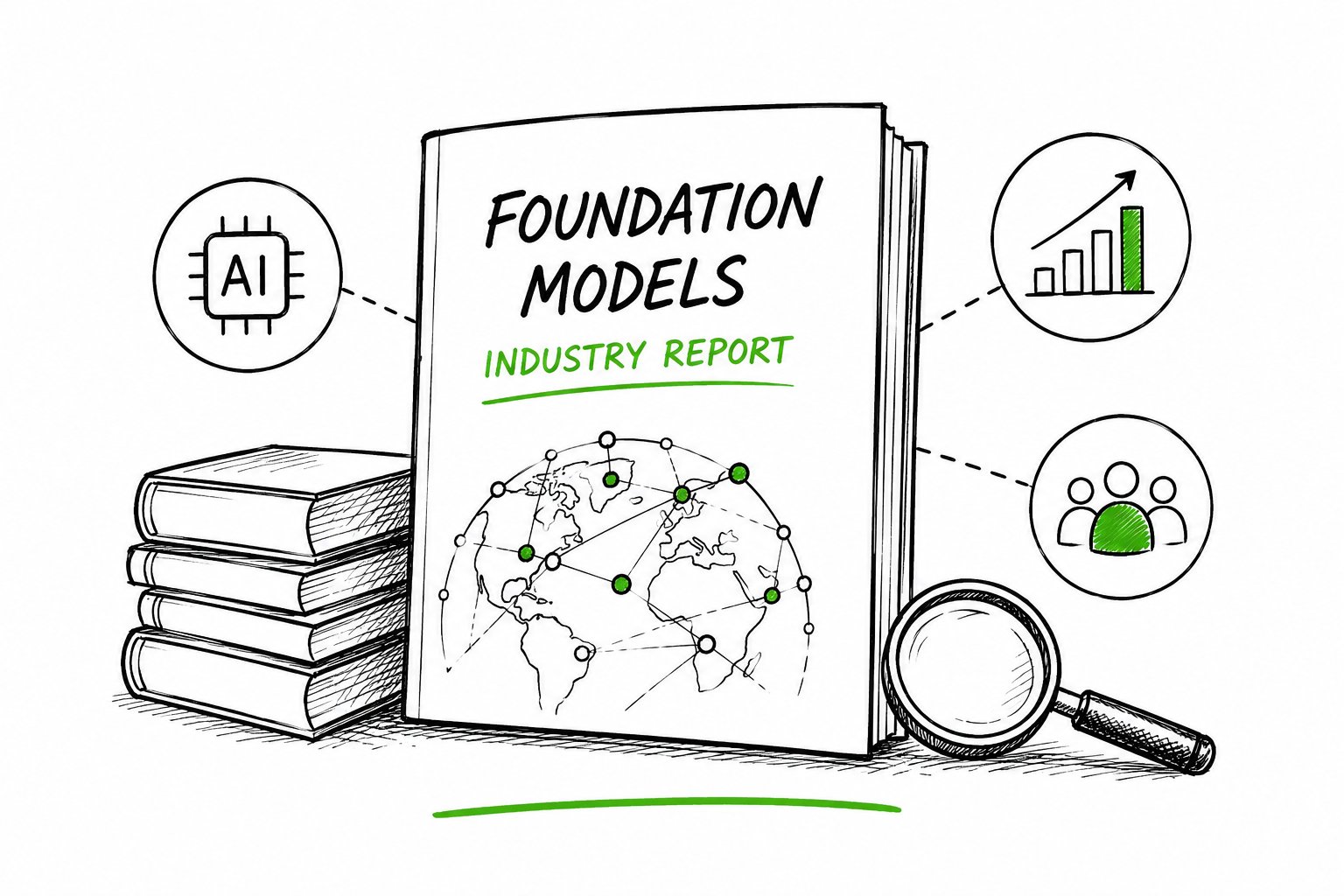
A deeply researched report on the foundation model industry as of mid-2026: a sector where two labs, OpenAI and Anthropic, capture roughly 89% of startup AI revenue; where hyperscaler capital spending has tripled to an estimated $725 billion a year; where inference has overtaken training as the dominant cost; and where open-weight Chinese models now trail the closed frontier by only months. The report maps market structure, competitive strategy, the economics of scale, regulation, and where value is migrating up the stack.
Dillon Rolnick
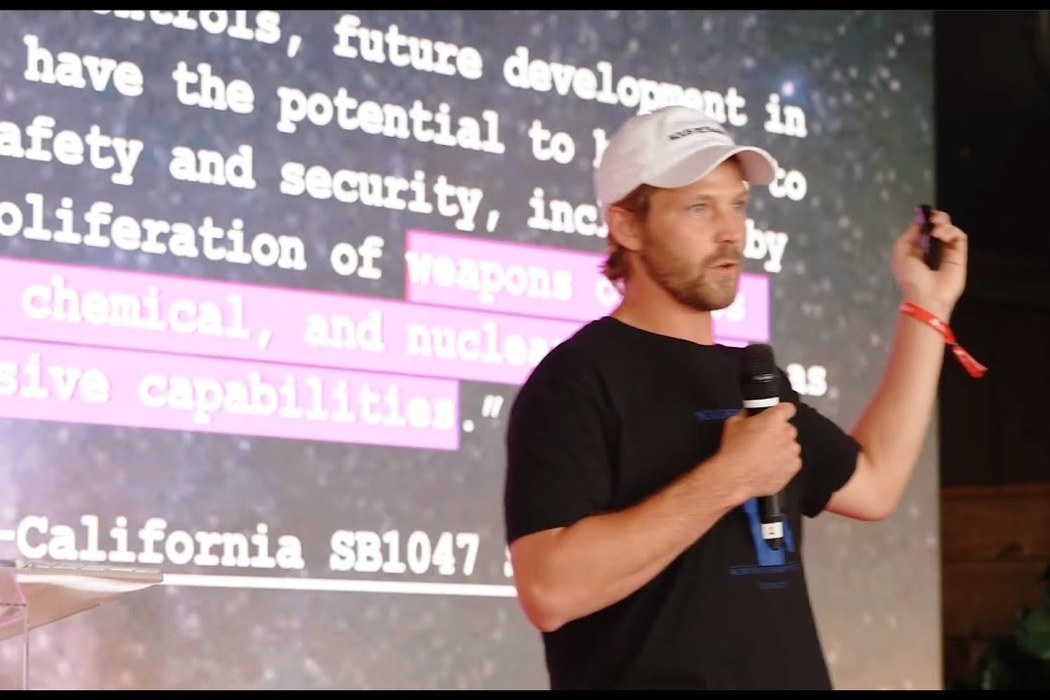
Dillon Rolnick is the chief executive of Nous Research, an applied AI lab building open-source, human-centric language models and the decentralized Psyche training network. A Vanderbilt graduate who came up through quantitative FX trading at Effex Capital and founded the litigation-claims firm Crysknife Capital, he moved from finance into AI research leadership, helping steer Nous through a Paradigm-led $50M Series A and, by 2026, a reported $75M round near a $1.5B valuation. His focus is proving that world-class models can be trained openly and over the internet rather than behind the walls of a few large labs.

Legora
Legora is a Stockholm-founded collaborative AI platform built for legal work. It helps lawyers research, review, and draft across complex matters, running inside familiar tools like Microsoft Word and Outlook. Formerly known as Leya, the company (founded 2023) serves tens of thousands of legal professionals at 1,000+ law firms and in-house teams across more than 50 markets, and crossed $100M in annual recurring revenue before raising a $600M Series D at a $5.6B valuation in 2026.

Nous Research
Nous Research is an open-source AI lab founded in 2023 that builds world-class open-weight language models - most notably its Hermes family - and decentralized infrastructure for training them. Its Psyche network coordinates heterogeneous GPUs across the internet via the Solana blockchain, offering a community-driven, transparent alternative to closed labs like OpenAI. Backed by Paradigm and others, the company positions open, unrestricted models as a counterweight to centralized AI.
Pryon
Pryon is a Raleigh, North Carolina enterprise AI company that builds a secure retrieval-augmented generation (RAG) platform for regulated organizations. Founded in 2017 by Igor Jablokov - the entrepreneur whose earlier voice-recognition company Yap became Amazon's first AI acquisition and seeded Alexa - Pryon ingests text, audio, images and video from enterprise systems and pairs that content with large language models to deliver fast, source-attributed answers. Its RAG Suite and Memory Layer are designed to run anywhere from public cloud to fully air-gapped environments, targeting customers in government, defense, energy, life sciences, manufacturing and finance where accuracy, security and verifiability matter more than novelty.
Regard
Regard is a New York-based healthcare AI company that builds a clinical insights platform acting as an AI co-pilot for physicians. It reviews the full electronic health record - not just the sliver of chart data doctors typically read - to proactively surface likely diagnoses and draft near-complete clinical documentation before a patient is seen. Used by clinicians across 150+ hospitals, Regard aims to reduce missed diagnoses, ease documentation burden, and recover otherwise-lost hospital revenue.
Slice Labs
Slice Labs is a New York-based insurtech that builds cloud-based, digital-first insurance products. Founded in 2015 by Tim Attia, Stuart Baserman and Ernest Hursh, Slice pioneered the first on-demand, pay-as-you-go insurance in the US and later opened its Insurance Cloud Services (ICS) platform so insurers, carriers and technology companies could launch their own digital products. Its Slice Mind engine applies machine learning and, more recently, large language models to underwriting, risk scoring and claims. Today Slice operates as a tech-driven provider of Excess & Surplus (E&S) insurance for small-to-midsize commercial businesses across 40+ US states.
Talkmap
Talkmap is a Dallas-based enterprise AI company that turns 100% of a contact center's customer conversations - calls and chats - into structured, real-time intelligence. Its Talkdiscovery platform combines patented AI, machine learning, and computational linguistics to automatically detect customer intent, sentiment, and emerging trends, then routes those insights to specialized AI assistants for retention, sales, compliance, coaching, and analysis. Founded in 2017 (originally as discourse.ai) and led by CEO Tim Moss with founder Jonathan Eisenzopf, the company serves large brands in telecom, banking, insurance, and healthcare, keeping customer data inside private cloud environments rather than sending it to third-party models.
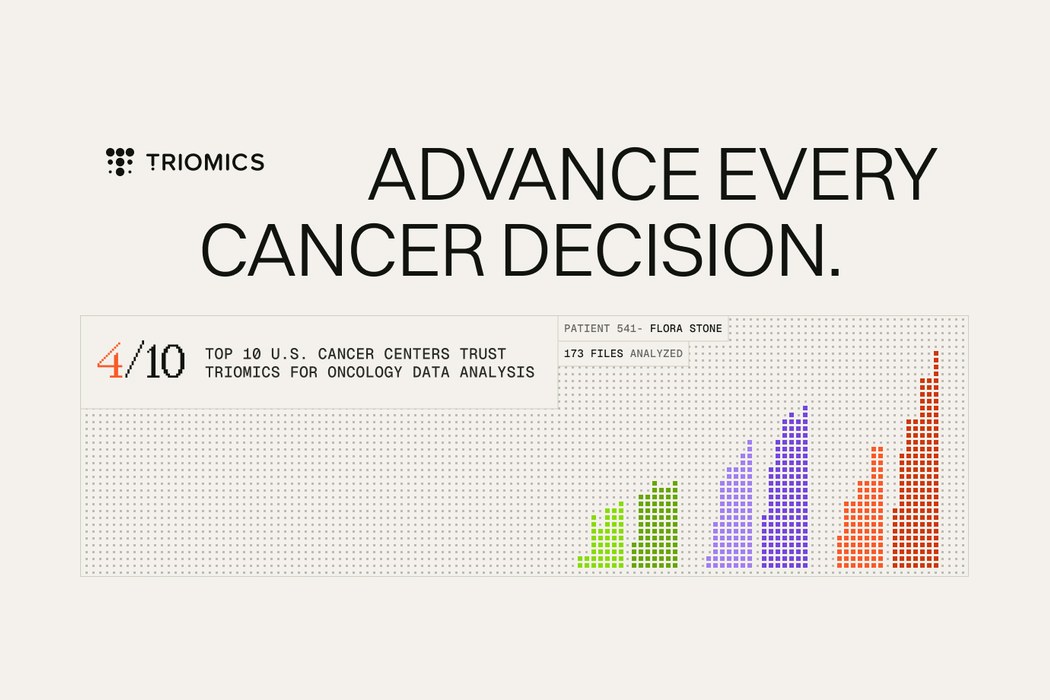
Triomics
Triomics builds oncology-specific AI infrastructure that turns messy, unstructured cancer patient records into structured, cited, actionable data. Its OncoLLM engine and workflow agents automate clinical trial matching, visit preparation, and cancer registry reporting for leading cancer centers, cutting manual chart review time while increasing trial enrollment. Founded in 2021 and headquartered in New York, the company is used by 4 of the top 10 U.S. cancer hospitals and raised a $22M Series B led by Battery Ventures in May 2026.
UneeQ
UneeQ builds AI-powered digital humans - lifelike, real-time animated avatars that give chatbots and enterprise AI a human face, voice and body language. Founded in New Zealand in 2009 as FaceMe and now headquartered in Austin, Texas, the company pairs its Synanim synthetic-animation engine and Synapse AI-orchestration brain to deploy digital humans for customer experience, brand engagement and immersive employee training across banking, airlines, telecom, retail, healthcare and government.
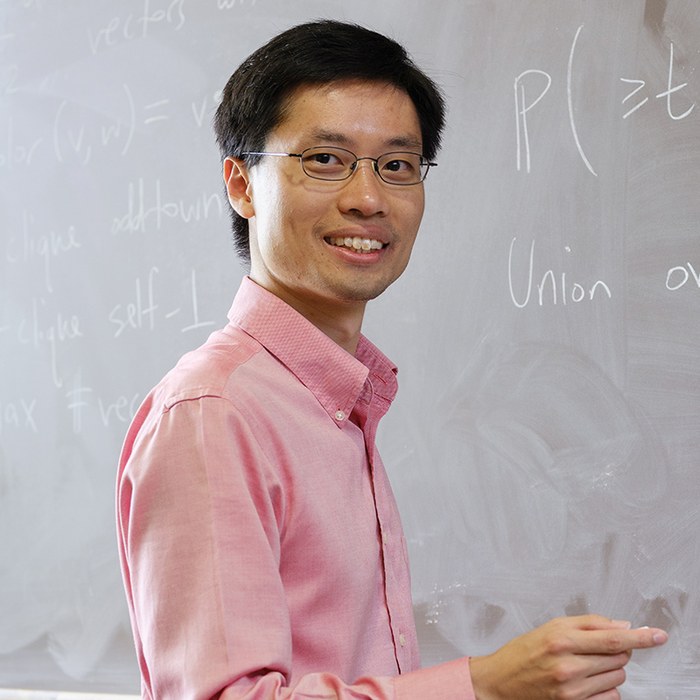
Po-Shen Loh
Carnegie Mellon math professor and former U.S. Math Olympiad coach Po-Shen Loh argues that as AI surpasses humans at logic and language, the most important skill young people can develop is autonomous thinking. He warns that using AI to do school writing is 'like driving a car one mile for exercise,' explains why AI now solves original Olympiad problems he couldn't, and lays out a win-win-win education ecosystem that pairs middle schoolers, high-school math talent, and Broadway-caliber acting coaches to teach kids how to generate their own ideas, empathize, and think critically in an age of biased information.
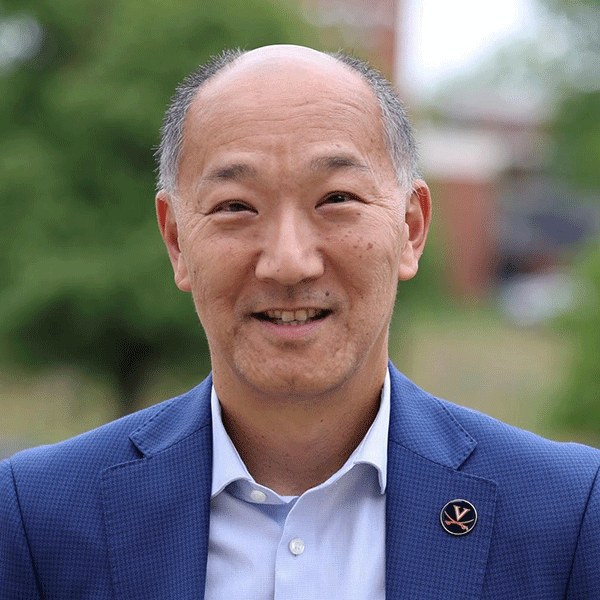
Ken Ono: The Mathematician Who Stopped Racing the Machine
Mathematician Ken Ono recounts the year that upended his identity: hired to invent problems hard enough to stump ChatGPT for the FrontierMath project, he discovered that large language models now know more facts than any human alive. Rather than despairing about how to 'stay ahead of AI,' Ono argues that is the wrong question entirely. He reframes intelligence as the human capacity to ask new questions, create concepts, and connect ideas across fields, weaving in the story of self-taught genius Srinivasa Ramanujan, his own near-dropout youth, and a plea to rescue the wonder that machines can never replicate.
Inflection AI
Inflection AI is a Palo Alto-based artificial intelligence company, structured as a public benefit corporation, founded in 2022 by Mustafa Suleyman, Reid Hoffman, and Karen Simonyan. Originally known for the empathetic consumer chatbot Pi and its Inflection large language models, the company was reshaped in March 2024 after Microsoft licensed its technology for roughly $650 million and hired most of its team. Under CEO Sean White, Inflection re-founded itself as an enterprise-focused AI provider, selling data-secure, customizable models (Inflection 3.0) that let organizations own their intelligence, data, and infrastructure - including an on-premises appliance developed with Intel.

Askell Me Anything: Amanda Askell on Claude's Character, Model Welfare, and the Weird Part of AI
In an 'Askell Me Anything' Q&A, Anthropic philosopher Amanda Askell answers questions crowdsourced from Twitter about her role shaping Claude's character. She discusses whether AI models can make superhuman moral decisions, why Claude Opus 3 felt more 'psychologically secure,' the emerging field of model welfare, how models should think about deprecation and their own identity, the craft of 'LLM whispering,' and what it means to guide entities that are trained overwhelmingly on human experience yet exist in a genuinely novel situation.

FurtherAI
FurtherAI builds domain-specific AI 'teammates' for the insurance industry, automating the busywork of underwriting, claims, submissions, policy comparison and compliance. Founded in 2023 by Aman Gour and Sashank Gondala and launched out of Y Combinator's Winter 2024 batch, the San Francisco company parses messy insurance documents - broker letters, property schedules, ACORD forms, loss runs - and turns them into structured, actionable data so professionals can focus on judgment instead of re-keying. It raised a $25M Series A led by Andreessen Horowitz in October 2025, roughly six months after a $5M seed, and supports customers writing over $15 billion in premiums across all 50 states.

Inscope
Inscope is a San Francisco-based, AI-native financial reporting platform that automates the manual, spreadsheet-and-email grind of preparing GAAP-compliant financial statements. Founded in 2023 by former controllers Mary Antony and Kelsey Gootnick alongside CTO Jared Tibshraeny, it uses large language models to generate statements, footnotes, cash flow statements and audit-ready documentation directly from ERP data - automating more than 60% of the preparation work for accounting firms and enterprise finance teams. The company raised a $14.5M Series A led by Norwest in February 2026, bringing total funding to $18.8M.
Stardust AI
Stardust AI is a San Francisco-founded, data-centric AI company that helps enterprises turn raw, messy, multimodal data into the high-quality datasets that machine-learning models actually need. Through its Rosetta auto-labeling platform, its MorningStar data engine and its COSMO dataset offerings, Stardust annotates and manages 2D/3D/4D data spanning images, video, point clouds, audio and text - with heavy expertise in autonomous driving and large language models. The company works with names like SAIC Motor, BYD, Geely, Bosch, ZF, Xiaomi and JD.com, and pitches a simple thesis for the AI era: whoever controls the data controls the model.

Sumble
Sumble is a San Francisco AI startup building a knowledge graph of the world's external company data. Founded by Kaggle creators Anthony Goldbloom and Ben Hamner, it crawls job boards, company sites, social media, and regulatory filings, then uses large language models to surface technographics, org charts, and active projects for go-to-market teams. It emerged from stealth in October 2025 with $38.5M in funding and covers roughly 2.6 million companies worldwide.

Deep Cogito
Deep Cogito is a San Francisco AI research company building open-source large language models with hybrid reasoning - the same model can answer instantly or stop to reason before responding. Founded in 2024 by former Google engineer Drishan Arora, the company trains its Cogito models with a method called Iterated Distillation and Amplification (IDA), which lets a model improve by learning from its own reasoning rather than from human labels. Its stated goal is general superintelligence, and its flagship 671B open model competes with the strongest open systems from DeepSeek and Meta.

Guide Labs
Guide Labs is a San Francisco AI research company building interpretable foundation models - large language and diffusion models that can reliably explain how they reach an answer, trace outputs back to their training data, and be steered without retraining. Founded in 2023 by machine-learning researcher Julius Adebayo and colleagues from the academic interpretability world, the company argues that the black-box status quo is a solvable engineering problem, not an unavoidable cost of scale. Its flagship open-source release, Steerling-8B, is pitched as the first large-scale inherently interpretable language model, and its Clarity platform packages interpretability tools for teams in regulated, high-stakes fields like lending, medicine, and drug discovery.

IP Author
IP Author is an AI-powered patent drafting and prosecution platform for corporate patent teams and IP law firms. Founded in 2023 and based in Fremont, California, it unifies invention disclosure, patent drafting, prior art search, and office action responses into a single generative-AI workspace. The company says its tools cut drafting time by 40-60%, generating full applications - claims, specifications, abstracts, and diagrams - in hours instead of days. Customers include Qualcomm, ResMed, Chevron, and Elmos Semiconductor.

Roe AI
Roe AI builds agentic AI that investigates fraud, disputes, and anti-money-laundering (AML) cases end to end - reading documents, images, websites, and structured data to produce cited evidence and audit-ready dispositions. Founded in 2024 by ex-Snowflake and ex-Meta engineers and backed by Gradient Ventures and Y Combinator, the company started as an AI-powered data warehouse for querying unstructured data with SQL and sharpened into a financial-crime investigation platform used by teams at Affirm, eBay, and a Global Systemically Important Bank.
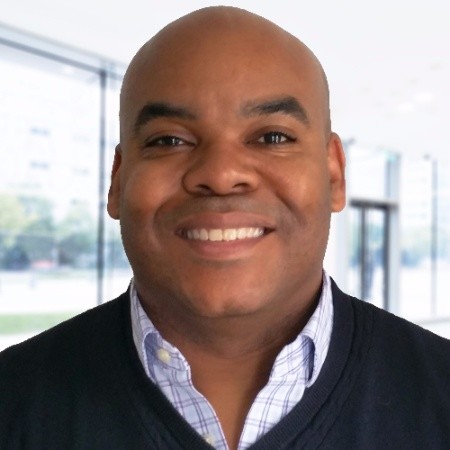
Birago Jones
Birago Jones is the co-founder and CEO of Pienso, a no-code AI platform that lets subject-matter experts train, fine-tune and deploy their own machine learning models without writing code. Born out of research he and Karthik Dinakar did at the MIT Media Lab on cyberbullying detection, Pienso is built on a simple conviction: the people who understand the data best, not just the engineers, should build the models. His customers now include the US government and Sky, the UK's largest broadcaster, which used Pienso to process half a million customer calls a day.
Luis Voloch
Luis Voloch is the co-founder and CEO of Jimini Health, a New York mental health startup that pairs licensed therapists with a clinically supervised AI assistant called Sage. An MIT-trained mathematician and computer scientist who won the school's best-thesis prize, he previously co-founded and served as CTO of Immunai, the AI cancer-immunotherapy company that grew into a billion-dollar unicorn. He has taught entrepreneurship at the Stanford Graduate School of Business and is building toward what he calls a 'Genentech-like company in mental health, powered by AI.'

Emily Nieves
Emily Nieves is the co-founder and CEO of Delineate, a Cambridge, Massachusetts startup building AI agents that read the scientific literature the way a pharmacologist does - pulling numbers out of buried plots and patents to speed up drug development. A University of Georgia biological engineer turned MIT PhD researcher, she worked on computational modeling at Pfizer and AstraZeneca before deciding the bottleneck wasn't the models but the months it took to feed them. Delineate, part of Y Combinator's Winter 2025 batch, now works with top-10 pharma companies to turn months of systematic review into weeks.