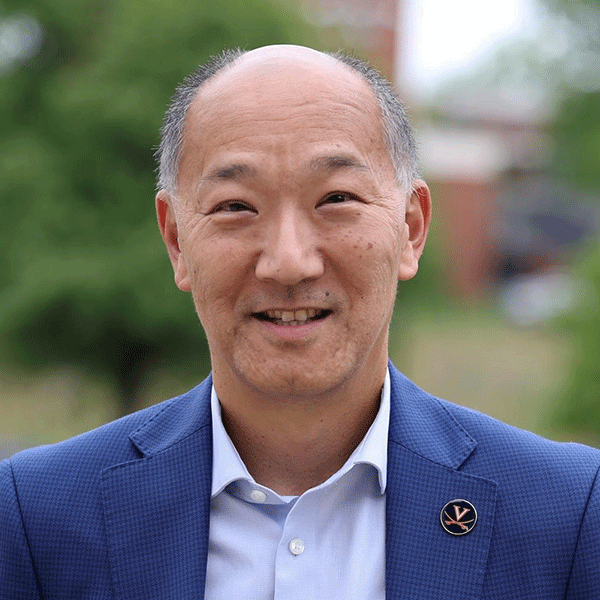
Exactly one year ago, Ken Ono was a carefree university professor. He wrote his papers. He enjoyed his life at the University of Virginia. He described himself, when pressed, as a man lucky enough to be good at mathematics. And then, as he tells it, "a dramatic change came."
The change arrived at work, in the form of large language models. Ono had been recruited into the FrontierMath project, an effort by the Berkeley-based research company Epoch AI, which hired professional mathematicians from around the world to invent problems ferociously difficult — problems designed to measure exactly how capable these machines were becoming. The task was deceptively simple: write questions the model would get wrong. For the first time in a career built on being good at math, Ono struggled to do it.
"For the first time," he says, "I struggled to create questions that ChatGPT would get wrong." He was, by his own admission, shaken. At the time he was among a small circle of scientists granted access to these frontier systems, and he had to sit with the knowledge for a few patient months before the rest of the world caught up to what he already suspected. The verdict, when it landed, was blunt: "These models know more facts than any human being."
For a while the fear had a shape, and the shape was a question: How will I stay ahead of AI? It is the question millions of professionals are quietly asking themselves right now. And it is precisely the question Ono has come to believe is wrong.
His argument arrives by way of an image that is almost funny. "No one is interested in watching Usain Bolt run a mile against a motorcycle," he says. "It's not a fair race, yet we still watch the Olympics." As a society, Ono notes, we long ago made peace with the fact that machines can out-perform us in every physical way. What we are only now learning to accept is that computers have reached us in the domain we thought was safely, exclusively human: deep thinking.
The World's Most Extraordinary Librarian
To understand what these models actually are, Ono offers a metaphor he keeps returning to. "Think of large language models as the world's most extraordinary librarian," he says. "If something has been written, the model has probably seen it. If something is on YouTube, the model has probably trained on it. If you read a newspaper article, by the afternoon the model has probably seen it." Competing with that capacity for accumulation, he says plainly, is impossible.
But — and this is the hinge on which his entire philosophy turns — a librarian is not everything. "Knowledge is now cheap," Ono says. "But how to use it and how to verify it has become expensive." The distinction matters, urgently. He drives it home with a pair of unsettling questions.
The Librarian Test
"Do you want your librarian to be your neurosurgeon?"
"Do you want your librarian to be the air traffic controller, tracking hundreds of planes flying over North America or Korea?"
"Absolutely not — because that human judgment is essential."
The librarian holds the facts. The human decides what to do with them when a life, or a hundred lives, is on the line. That gap — between knowing and judging — is where Ono has come to plant his flag.
Redefining the Word "Intelligence"
The encounter with AI did something Ono did not expect: it changed his sense of who he is. "My identity has changed," he admits. "My view of intelligence has changed considerably." The old definition — the ability to reason, to arrive at correct conclusions — turns out to be something a machine can now do, whether quickly or slowly, and it doesn't matter which. So Ono has gone looking for what remains.
"Can you conceive a new concept?" he asks. "Can you generate ideas? Can you connect concepts deeply? That is intelligence. It is not the repetition of facts." And here he delivers his sharpest indictment of the systems we have built to cultivate young minds: "We are not good at teaching that."
He is careful to widen the frame. Genius, in Ono's telling, is not one thing. It is the capacity to recognize a pattern in one field and carry it into another, unfamiliar one, to push that second field forward — an act he refuses to reduce to mere luck. "Five years ago I would have said, oh, that's just being in the right place at the right time," he says. "But that's unfair. You're in the right place at the right time, and yet you still have to make the observation." Spotting the target of opportunity, he insists, is the talent. And he does not use the word genius lightly.
There is a quieter genius too, one he wants us to honor: the student, the worker who becomes an expert in a narrow field simply because they keep showing up, learning something new in that field every single day. "That, too, is intelligence," he says, "and a kind of genius we should recognize."
The Letter That Saved a Runaway
To understand why Ono cares so much about hidden, undiscovered genius, you have to go back to a teenager on the edge of throwing his life away — and to a ghost from Indian mathematics who reached across a century to pull him back.
Ono's story is, he concedes, unusual. He is the son of a mathematician. As a boy he was deemed gifted, and his parents decided early that he would become a mathematician too. They had, in fact, mapped out all three of their sons. The eldest would be a pianist — and he became one. Ken, the youngest, would be the mathematician. And the middle son, judged good at neither math nor music, was told he should simply go work at a bank to get by. That verdict lit a fire. That middle son, Santa Ono, grew up to become the president of the University of Michigan, a distinguished scientist driven, Ono believes, by the need to prove his early appraisal wrong.
For Ken, the pressure nearly curdled into ruin. He dropped out of high school. He did not want to be what his parents wanted; he did not want to be the one Asian kid in class expected to be good at math while everyone else "had a life." In April 1984, his plan was to run away from home and never face his parents again — and he didn't care.
Then a letter arrived. It was written on yellowed paper, as though it were a hundred years old. It came from Janaki Ammal, the widow of the Indian mathematician Srinivasa Ramanujan, thanking Ono's father for a small contribution toward a statue built in Ramanujan's memory. And Ono's father — a man of almost no visible emotion, a man who never cried — wept. "I have to tell someone what this is," he said, and later showed his son the letter.
Who Was Ramanujan?
A self-taught mystic who believed his goddess handed him formulas, which he scrawled into his notebooks.
So consumed by mathematics that he neglected his other courses — and failed out of college twice.
He died at 32, all but forgotten, leaving behind three notebooks brimming with formulas the world is still decoding.
Ono's father loved Ramanujan's story for a deeply personal reason: Ramanujan represented hope. A Japanese mathematician who came of age when the world was at war, Ono's father had loved mathematics partly because it was a way to escape the long food lines. After World War II, the United States sent some of its finest mathematicians to Japan to rebuild the universities and train a new generation — and it was at one such conference that Ono's father first learned of Ramanujan, and where a Princeton professor discovered him and invited him to study in Princeton, launching his career.
"So what did Ramanujan mean to me that day?" Ono asks. The answer reshaped him. "For the first time I heard my parents speak of someone as a hero who had not gone to Harvard or Princeton and was not a perfect student. On the contrary, my father's hero turned out to be a two-time college dropout. And I needed that."
Chasing the Ghost
The rescue was not instant. Later, at the University of Chicago, Ono was, in his own words, a terrible student. But just before his senior year, flipping channels, he stumbled onto a PBS documentary about Ramanujan — the man he hadn't thought about in years. He was mesmerized. On television, in full color, was the whole story his father had only sketched in blurry outline, and it woke him up. He had a lot of catching up to do. He became a good student. Then came the biography, The Man Who Knew Infinity. Perhaps, he thought, it was a sign. Perhaps he was meant to follow Ramanujan.
He did. He began a thesis rooted in Ramanujan's work, and by the end of his PhD he was working on the theory of Galois representations — the very mathematics that, as it happened, underpinned the proof of Fermat's Last Theorem, the biggest math news of the late 20th century. "Every time," he says, "following Ramanujan has turned out to be the best decision of my life — and every one of those chances could have gone a different way."
That thought became a mission. For several years Ono ran a program called The Spirit of Ramanujan, hunting for overlooked talent — and pointedly, for talent that does not come from privilege. The irony is delicious: his current boss, Carina Hong — a former student and now his employer at Axiom Math — was one of the program's first recipients. "It makes me wonder where she would be today," Ono says, "if she had not received that Spirit of Ramanujan fellowship." He is certain there are many more such people out there, waiting to be found.
The Wonder We're Draining Away
If genius is latent in so many of us, why do we see so little of it? Ono lays much of the blame on how we school and measure the young. The best students in Korea, in America, all over the world, are stressed in high school — stressed in middle school, even — consumed by a relentless calculus: How do I get into the right high school? The right college? Will I get the right test scores? If you do these things merely because they are checkboxes, Ono says, "that's wrong." He is not naïve enough to tell students to opt out of a system that will decide their fate. But he begs them to at least stop and recognize that they are inside one.
His alternative is almost childlike, and that is the point. "For children," he says, "play is science." Watch a toddler with a stack of building blocks. They aren't really learning about gravity — and yet they are absolutely learning about gravity. They stack the blocks, knock them down, laugh, and do it again. That, Ono suggests, is the purest form of inquiry we ever practice, before the fear of our future and our reputation sets in.
The Energy He Wants to Bottle
Visit a kindergarten on "bring your parent to school" day and you'll hear it: "I know all the prime numbers!" "I'm so good at adding!"
That wonder, Ono says, is the fuel of every scientist and every discovery — and we let it evaporate. "Imagine where we'd be today," he says, "if we could keep that wonder alive."
Here Ono the technologist and Ono the humanist reconcile, and it's how he climbed out of his AI despair. The machine had already read all his papers. "It understands my papers better than I do," he says — not with bitterness, but relief. He can now ask an infinitely patient librarian any question about the fields adjacent to his own, and "AI will not laugh at me." Knowledge, for anyone lucky enough to have the internet and afford a model, has become cheap. And in America, where a single year of university can cost $80,000, that is a revolution with a dirty secret attached: nearly everything you learn book-by-book, academically, you could now learn from a large language model, at your own pace, perhaps faster.
What you cannot get from the model, Ono insists, is the human reach — how to draw out the right question, what the next question in a field might be. "That," he says, "is why we still go to college, and why we still need professors." Everything else — the tutoring, the precise, personalized learning — AI can help with. On that front, he believes, "we are not doing our best to educate our children in this world." He says it not to attack teachers. He is one.
Who Owns Your Identity?
The stakes, for Ono, are not abstract. In his country, education is punishingly expensive. You can walk out of college $150,000 in debt, then enter a professional school and pile on $200,000 more — only to discover, three years in, "I can't stand the sight of blood." But now you can't leave your profession, because the debt owns you. "That," Ono says flatly, "is hell." You get trapped, and your life becomes: I go to work because it pays the bills.
So he wants something different for his own children, and for everyone else's: to be passionate about the world they actually live in. Because if you are passionate about that world, you cannot help but care — about the climate, about the conflicts between cultures, about the wars flaring everywhere. How can this be? The people who ask that question hardest, Ono suspects, are the unusual ones. They are the ones to watch.
And so the professor who a year ago feared he'd been outrun by a machine arrives, finally, at an answer that has nothing to do with racing at all. The world's best scientists, he says, should still see the world as a wondrous thing. The best doctors should still act out of compassion, not credential. If we lavish all our attention on perfection, on speed, on the taking of ordinary tests, how are we ever going to train the next Einstein — the one standing in a lab, wondering aloud, "I wonder if such-and-such is true?"
The librarian will always know more facts than you. That race is over, and you lost it, and Ken Ono is proof that losing it can be the beginning of something better. What no model can do — and what, he reminds us, we should never surrender — is the wonder, the question, the ownership of a self. Go, he says. Find your passion. The world is still, gloriously, waiting to be looked at.
Reporting based on Ken Ono's recorded remarks. Watch the full conversation on YouTube → youtube.com/watch?v=jGZOi-7haCw