She taught machines to read the part of a drug-research paper that nobody else wanted to: the plots.
The models were never the slow part. Emily Nieves had spent years at Pfizer and AstraZeneca building mathematical pictures of how the body absorbs a drug, where it goes, and what it does once it gets there. The math was quick. The reading was not. Before any model could run, someone had to comb through hundreds of published papers and pull out the numbers - and half those numbers were locked inside figures, charts, and plots that no spreadsheet could open.
That bottleneck became Delineate. Founded in 2024 and now part of Y Combinator's Winter 2025 batch, the Cambridge company builds AI agents that read the scientific literature the way a trained pharmacologist does. They use custom large language models and computer vision to extract structured data from unstructured biopharma papers and patents - including the data trapped inside a chart's pixels - and turn it into something a drug-development team can actually decide on.
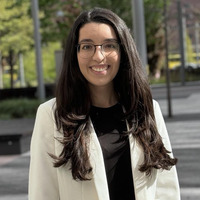
Nieves is the co-founder and CEO. She is also, at the same time, a PhD candidate in Biological Engineering at MIT, working squarely at the seam where artificial intelligence meets pharmacology. The company's own line for what it sells is plain enough: quantitative evidence for consequential decisions.
The stakes are not abstract. In Delineate's telling, saving a single day in a clinical trial can be worth between one and five million dollars. So when the work that used to take months starts taking weeks, the math changes for everyone in the room.
The name fits the work. To delineate is to draw the precise edge of a thing - to say clearly where one shape ends and another begins. That is what the company is trying to do with biopharma evidence: take a fog of unstructured papers and figures and pull a clean, decision-ready line through it. Based on Massachusetts Avenue in Cambridge, a short walk from the labs and pharma offices that fill the Boston corridor, Delineate is building in the same neighborhood as the customers it serves.
There is a quiet discipline inside every large drug company called pharmacometrics. Its job is to replace guesswork with math: to predict, before a single patient is dosed, how a compound will behave - the right dose, the likely effect, the risks. Done well, it spares people from trials that were never going to work and points scarce resources at the ones that might. The umbrella term is model-informed drug development, or MIDD, and it is the world Nieves comes from.
Two techniques sit at the center of her work. Model-based meta-analysis, or MBMA, pools the published results of many separate studies into one quantitative picture - which means it lives or dies on how much published data you can actually gather and trust. Quantitative systems pharmacology, or QSP, builds mechanistic models of how a drug moves through the body's biology. Both are hungry for clean numbers from the literature, and both have historically been starved by how slow that data is to collect.
That is the gap Delineate steps into. By using language models and computer vision to assemble fit-for-purpose datasets from the literature at scale, the company is trying to feed these methods faster than a team of human reviewers ever could - and to do it in a way that is reproducible and transparent, so the evidence holds up when a consequential decision rides on it.
The timing is not incidental. Regulators have signaled a move away from mandatory animal testing, which raises the premium on predictive, computational approaches like QSP and physiologically-based pharmacokinetic modeling. When you can no longer lean on an animal study to answer a question, you need a model you can trust - and a model is only as good as the data underneath it.
"Quantitative evidence for consequential decisions."
Undergraduate biological engineering at the University of Georgia, doing research in the Hallow cardiorenal laboratory - the first place she modeled how a body handles a drug.
Computational researcher at Pfizer and AstraZeneca, building models across cardiorenal systems, metabolism, and cell therapies - and meeting the literature bottleneck head-on.
Begins a PhD in Biological Engineering at MIT, working at the intersection of AI and pharmacology.
Co-founds Delineate with engineer Jawad Iqbal and takes the CEO seat. The product: a literature co-pilot for quantitative systems pharmacology.
Delineate joins YC's Winter 2025 batch and raises seed funding, with top-10 pharma companies already using the product.
Speaks and sits on a panel at ISOP ACoP 2025: "Envisioning the Role of GenAI in Modern Pharmacometric Workflows."
Most AI that reads documents reads text. Delineate's agents go after the harder material - the figures, the patents, the dense supplementary tables - and turn buried results into clean, usable datasets.
That feeds model-informed drug development: model-based meta-analysis, quantitative systems pharmacology, human dose prediction. The point is reproducible, transparent, scalable modeling - and timelines measured in weeks, not months.
It lands at the right moment. As the FDA moves away from mandatory animal testing, predictive modeling approaches are no longer a nice-to-have.
Biological engineer from the University of Georgia, MIT PhD researcher, and ex-Pfizer / AstraZeneca modeler. She knows exactly which numbers a drug team needs - and how painful they are to find.
Her co-founder. A robotics and AI engineer who came from Lockheed Martin's Skunkworks advanced-development division - the place built to ship hard things fast.
Not the models. The reading. Fix the reading and you fix the speed of everything downstream - which is the whole bet behind Delineate.
It is one thing to build software for an industry. It is another to walk into that industry's main conference and present to the exact people you used to be. Nieves does both. At the American Conference of Pharmacometrics, she presented "Delineate: a Literature Co-Pilot for Quantitative Systems Pharmacology" - a pitch aimed squarely at the modelers who feel the literature bottleneck in their own week-to-week work.
In 2025 she returned to the stage at ISOP ACoP, speaking on and joining a panel titled "Envisioning the Role of GenAI in Modern Pharmacometric Workflows," including a talk on leveraging generative AI to build fit-for-purpose datasets from the literature. That credibility is hard to fake. She holds a PhD-track footing at MIT, a track record at two of the largest drug companies in the world, and a product that practitioners can poke at. The result is a founder who can speak the customer's language because, until recently, she was the customer.
It also shapes how she talks about the company. The framing is not "AI will replace the scientist." It is closer to the opposite: give the scientist a co-pilot that handles the grunt work of reading, so the human can spend their judgment on the decision that actually matters. The company calls what it delivers quantitative evidence - and insists that evidence be reproducible, transparent, and scalable, three words that mean a great deal to anyone who has had a model fall apart under scrutiny.
Delineate's AI doesn't just read words - it uses computer vision to digitize data trapped inside a figure's pixels.
She runs a venture-backed AI company while still finishing a PhD at MIT. Two full-time jobs, one person.
Her co-founder came from Lockheed's legendary Skunkworks - the lab behind some of aviation's boldest leaps.
The pitch hinges on one stark figure: a single saved day in a clinical trial can be worth millions.
Where it goes next is a question of scale. A literature co-pilot that already moves 15 times faster than the standard, used by two of the largest drug companies on earth, with a founder who can stand on the field's own stage and defend the method - that is a narrow, deep wedge into a very large industry. Emily Nieves is betting that the future of drug development is not more data, but better-read data. So far, the people who would know are listening.