innovation-hub
(14)
Katalyst Labs knows who you need to meet
Jehan Ara’s Karachi accelerator treats access as a business tool. Its recipe pairs practical mentoring with rooms where Pakistani founders and women leaders can make useful connections.
Unknown Campus puts the classroom where the companies are
In a former tobacco warehouse in The Hague, students build businesses beside working founders. Unknown Campus is betting that the people down the corridor can teach you something a lecture cannot.
ruhrHUB put six cities in the same room. Then the money changed.
For years, ruhrHUB helped the Ruhr’s startups find companies, capital and one another. After its state funding expired, the regional connector put its future into ruhrSUMMIT - now a business festival with a matchmaking wheel.
PorterShed gave Galway founders a reason to stay
A shed beside a railway station became a meeting point for Galway’s technology companies. Ten years on, PorterShed’s most useful offer is still the chance to build a business without packing up your life.
MaRS Discovery District: Great science needs a buyer
Toronto built a place where research could meet money. MaRS’s harder assignment is getting promising technology through the door of its first paying customer.
iHUB Nairobi: The business of making luck
A foosball table could introduce two founders. Keeping the doors open required a business model. Inside the Nairobi hub that learned to put a price, a partner and a pilot behind a promising idea.
1871 helped startups grow. Then it had to shrink.
Chicago’s startup hub built its reputation by putting founders in the same room. When the economics of that room stopped working, 1871 had to decide what its members were really buying.
The Israeli Innovation Hub That Starts With Fish Ponds, Olive Pits and Factory Floors
InnoValley is betting that the best place to build the next agricultural technology is beside the farms, factories and fish ponds that will have to use it. Its currency is not hype but access - to grants, operators, researchers and a region willing to test what comes next.

T-Hub Built a 572,000-Square-Foot Answer to India’s Startup Bottleneck
Hyderabad did not merely commission an incubator. It built a piece of civic machinery where founders, corporates, investors, universities and government are expected to collide - then turn those collisions into companies.
The Dot puts Tunisia’s startup maze under one roof
In Tunis, The Dot brings founders, advisers and public institutions into the same building. Its next test is making that proximity useful to entrepreneurs far beyond the capital.
Epicenter Stockholm sells the room where business happens
Desks start at SEK 5,900 a month. The bigger proposition is access to founders, corporate teams and people who can open doors - and now Epicenter wants to take that model across an entire district.

Edmonton Unlimited Wants Your Startup to Find Its First Customer
Edmonton’s publicly funded innovation agency offers free business programs, expert advice and a place to meet. Its newest wager puts young companies to work on problems that local industry already needs solved.
Órbi began with a bank account. Now it’s betting on a whole neighborhood.
A startup community, a bank, a builder and a car-rental company gave Belo Horizonte a place to meet. Órbi’s next act brings research, executive education and the streets of Lagoinha into the same conversation.
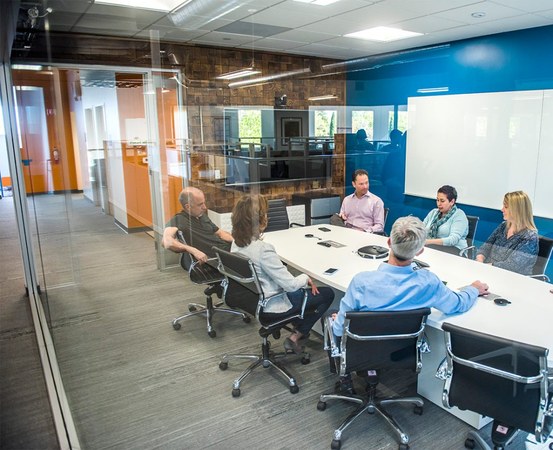
Shifamed
Shifamed is a Silicon Valley medical technology incubator founded in 2009 by serial entrepreneur Amr Salahieh. It combines human-centered design, in-house engineering, and R&D facilities to build medical device companies from concept to commercial launch, spinning out and incubating startups across cardiovascular, electrophysiology, and ophthalmology. Its portfolio and legacy companies have raised over $800M and produced multiple acquisitions by Boston Scientific, Abbott, Covidien, and Johnson & Johnson.