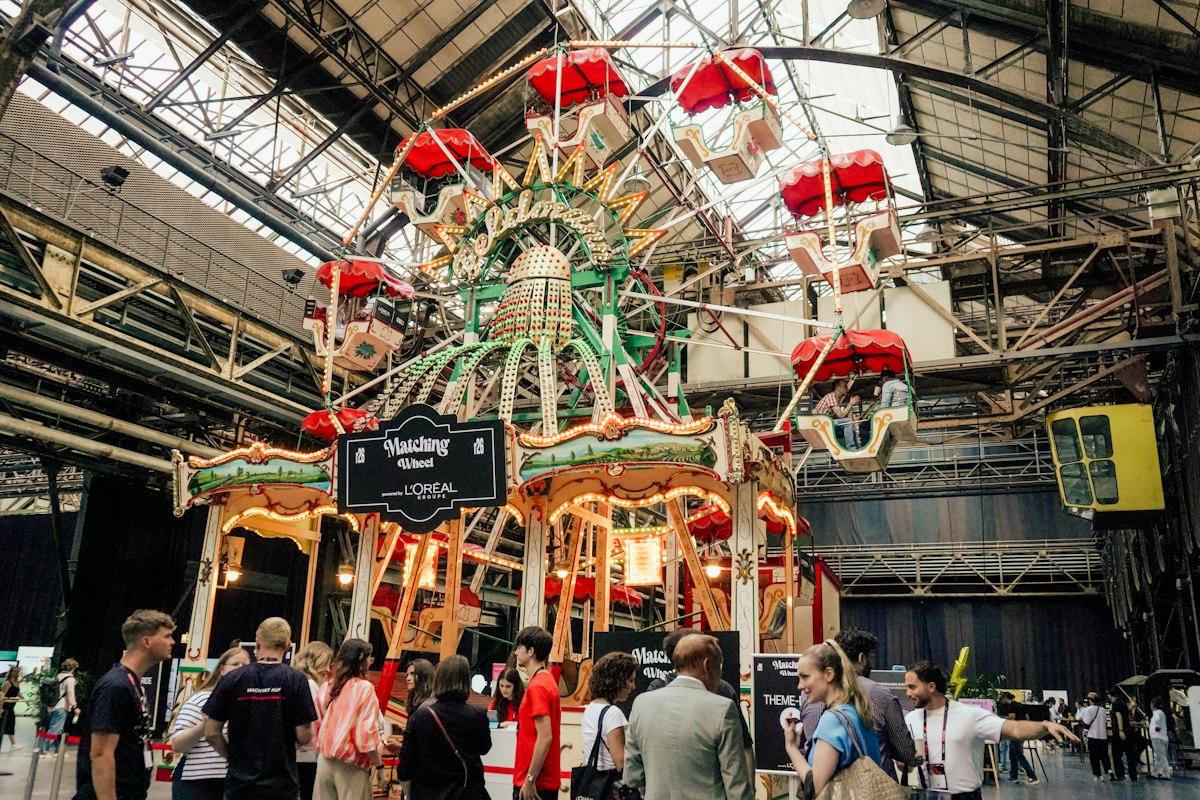
Inside Bochum’s Jahrhunderthalle, a wheel rises above the people wearing conference badges. It has striped canopies, little cabins and a sign reading “Matching Wheel,” powered by L’Oréal Groupe. The photograph appears in ruhrSUMMIT’s 2026 recap. Someone has taken the usual promise of a business event - we will help you meet people - and given it machinery. Networking, with a better view.
- Six Ruhr cities built ruhrHUB to connect founders with businesses and investors.
- Its broad support operation depended on public co-financing.
- After state funding expired in 2025, ruhrSUMMIT became its sole public focus.
The wheel makes a useful starting point for understanding ruhrHUB. This company’s specialty has been arranging encounters: between a founder and a buyer, a researcher and an investor, one city’s startup scene and the next city’s companies. Its history also supplies a less photogenic lesson. Paying for those encounters can be harder than persuading people they matter.
Six cities, one front door
Founded in 2016, ruhrHUB brought together Bochum, Dortmund, Duisburg, Essen, Gelsenkirchen and Mülheim an der Ruhr, alongside Business Metropole Ruhr and the state’s Digitale Wirtschaft NRW initiative. The geography matters. A regional founder could belong to one municipality while the most useful customer, university contact or investor sat in another.
The proposition was straightforward: give that scattered economy a common doorway. Startups needed introductions, advice and visibility. Established businesses needed access to digital ideas and teams they might otherwise overlook. Municipal development agencies and universities supplied local connections; the hub could work across their boundaries. “Think tank,” the industry label attached to ruhrHUB, rather undersells the amount of social engineering involved.
Oliver Weimann became an early managing director. He had separately initiated ruhrSUMMIT through his company in 2016; ruhrHUB took responsibility for it in 2020. Keeping those origins separate matters. The hub did not conjure its principal event from an empty room. It incorporated an existing gathering into a wider regional project.
A certificate needs a customer
A concrete example is more instructive than a festival slogan. Mirko Mollik worked on making certificates resistant to forgery using blockchain technology, then founded TrustCerts in Gelsenkirchen in 2018. FOM, the university headquartered in Essen, had a reason to care about credible qualifications. The regional account of ruhrHUB’s work identifies the startup and the university as one of its matches.
The interesting part is the fit. A founder had a solution; an institution had a relevant problem. An introduction could give both parties a conversation worth having. For a company searching the startup market, this is more useful than browsing an undifferentiated procession of pitches. For a founder, it gets the product closer to someone with a reason to use it.
By June 2022, Essen reported roughly 370 active matches. It also credited advice and investor introductions with 56 financing cases totaling approximately €77 million across the first two funding periods. These figures describe outcomes associated with supported startups. They are neither ruhrHUB’s revenue nor a venture fund under its management.
by Essen, June 2022
across two funding periods
Pizza was part of the infrastructure
The earlier programme mixed formal help with repeat encounters. A 2024 presentation described six-month individual coaching, trips to international startup events and publicity support. Other formats took selected startups to Munich or Berlin for introductions to investors and companies. ruhrSTARTUPWEEK distributed workshops and meetings across the region.
Then there was the kitchen. Startup nights combined expert talks, pitches, pizza and drinks; breakfast gatherings offered another excuse to meet. The food was incidental, but the recurrence was useful. People could return, recognise one another and resume unfinished conversations. A contact list records a name. A familiar room gives someone permission to approach it.
The money changed the menu
That operation required financing. In 2022, Essen approved €135,000 annually through its economic-development company, €405,000 over three years. It was one local contribution, rather than the whole hub budget. Public grants and shareholder support helped pay for work whose beneficiaries were spread across the region.
The state grant expired on 30 September 2025. NRW says ruhrHUB’s application was not selected for the next competitive round: six of fourteen applicants received support. This distinction matters. An existing award reached its end; the expected next award did not arrive. The financing assumption gave way before the regional idea disappeared.
The structural response became explicit in 2026. Bochum’s published council-record index records unanimous approval in June for a share transfer and merger into its economic-development organisation, with ruhrSUMMIT’s continuation among the aims. The current ruhrHUB website states that it now focuses exclusively on the summit. What had been a broad support operation became a narrower proposition.
“Let’s melt together.”ruhrHUB’s current event website
What a ticket can actually buy
Under Mariana Ilic’s leadership, ruhrSUMMIT developed into r26, a two-day business and innovation festival held on 1–2 July 2026. The offer combined stages, masterclasses, an exhibition and designated networking areas. Startup, attendee, corporate and investor tickets addressed different users; investor access included a lounge and dealflow formats.
The 2026 app asked participants about their interests and offered AI-assisted matching at meeting points. Masterclasses required registration and had limited capacity. Here the product becomes quite specific: admission to people, sessions and organised encounters. Startups seek buyers and capital; companies scout teams and ideas; investors look for prospective investments. None of those outcomes arrives automatically with a badge.
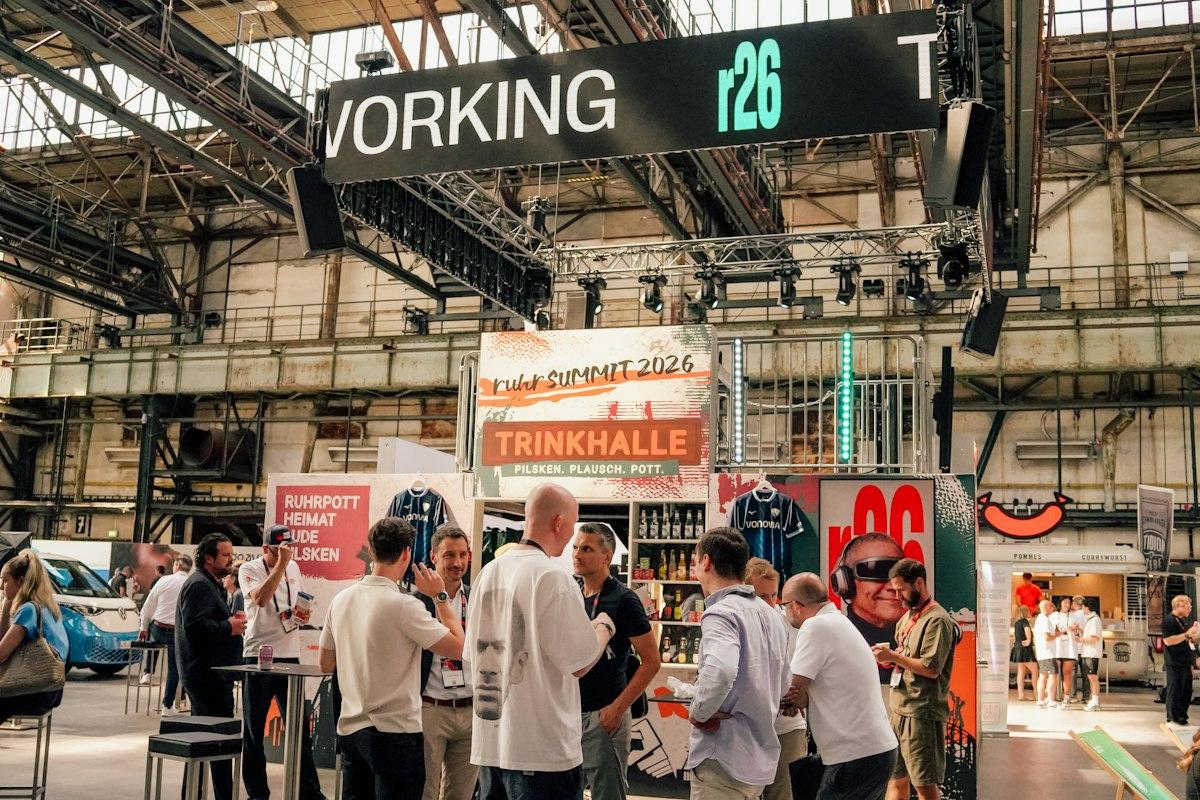
Ticket sales, exhibitor participation and sponsorship sit within the event model. A festival also occupies a different place from an accelerator or university startup centre. Its advantage is gathering several kinds of useful people together. Its limitation is time: two days of access cannot provide months of coaching, product development or procurement work.
Bring a problem, leave with a next step
The copyable lesson is to organise around a concrete need. TrustCerts and FOM make a better model than collecting the most business cards. A founder can arrive with one target customer type and a defined pilot proposal. A corporate visitor can bring a problem that an outside team might solve. An introduction then has somewhere to go.
This approach needs relevant participants, capacity to follow up and a budget for the people arranging the meetings. It is less useful when the missing ingredient is laboratory access, sustained technical support or a purchasing decision no attendee can make. ruhrHUB’s next advertised gathering is 16–17 June 2027 in Bochum. The room remains on the calendar. What happens after the conversation remains the real test.