distributed-energy
(17)
dcbel’s $9,999 Bet: Your EV Should Run the House
The Montreal company spent a decade turning an electric car into a home battery. Now the hardware is certified, Volvo and Polestar are plugged in, and the hard part has shifted from invention to installation.

The Company Turning Your Roof Into a Subscription
Palmetto owns the solar panels. You get the power. Inside the Charlotte software company betting that clean energy should work like a subscription - and raising billions to prove it.
Core States Group Built a Quiet Machine for Making 1,000 Construction Projects Feel Like One
The West Chester firm turned the least glamorous part of construction - coordinating dozens of disciplines across hundreds of sites - into a growth engine for Fortune 500 clients. Its next test is whether $210 million of patient capital can scale that playbook without sanding off the local expertise that makes it work.

The $100 Box That Turns 400,000 Homes Into a Power Plant
A former commodities trader noticed homeowners were flying blind on their own electricity. So he sold them a $100 box - and started wiring 400,000 basements into a grid-scale power plant.
Blue Pillar Made Old Machines Talk - Then Generac Bought the Conversation
Hospitals, utilities and microgrids were full of useful machines that could not share data. Blue Pillar found a practical business in connecting the awkward old stuff - often in days, sometimes for a few thousand dollars - and became part of Generac in 2022.

Canopy Power Wants to Turn Every Diesel Island Into Its Own Power Plant
The Singapore engineering company has built a business around the places conventional solar developers tend to avoid - remote islands, awkward logistics and power systems where failure is not an option.
The Texas Electric Co-op That Put a Battery Fleet Behind the Meter
Born to electrify farms that private utilities passed over, GVEC now links poles, fiber, thermostats and home batteries into one regional system. Its next trick is turning thousands of member-owned devices into useful capacity for the Texas grid.
Ameresco Found a Way to Make Old Buildings Pay for Their Own Future
The Framingham company sells a practical bargain: modernize the systems everyone depends on, then use the avoided utility bill to help pay for the work. Now data centers are turning that old energy-services idea into a new power-infrastructure business.
Qnergy
Qnergy is an Ogden, Utah cleantech manufacturer that builds Free Piston Stirling Engine generators to mitigate methane emissions at the source. Its PowerGen systems turn waste methane and other gaseous fuels into reliable, grid-quality remote power - and can destroy methane while doing it - serving oil and gas operators, landfills, livestock farms, and other off-grid sites worldwide. Led by cleantech veteran Ory Zik, the company has deployed thousands of units, abated millions of tonnes of CO2e, and is expanding into landfill gas abatement and voluntary carbon markets.

Ivy Energy
Ivy Energy is a San Diego cleantech company whose cloud software, Virtual Grid, automates the billing and management of onsite solar, battery storage, and EV charging for multi-tenant properties. It solves a stubborn accounting problem - fairly splitting the value of a shared rooftop solar array among many tenants - and turns that onsite energy into recurring, predictable net operating income for property owners. Founded in 2019 by Dover Janis, the company raised an $18M Series A led by SolarEdge in 2024 and serves multifamily and commercial real estate portfolios across multiple U.S. markets.

KiWi New Energy
KiWi New Energy is a Taiwan- and Silicon Valley-based clean energy company building what it calls the operating system for global renewable energy. Rather than manufacturing more solar panels, KiWi focuses on the AI dispatch layer between generation and consumption: its AI-Driven Energy Datacenter (AI-EDC) matches clean supply to multi-site retail and SME demand in real time, aggregating fragmented buyers into virtual demand pools and using blockchain-certified renewable energy certificates to make green power traceable. Its deployments include a rare control-layer integration with Tesla Energy storage for FamilyMart convenience stores in Taiwan, plus customers like Decathlon and Wang Steak. Founded by serial energy entrepreneur Dr. Steve Huang, the company reached breakeven in 2025 and is expanding into Japan and the United States.
Anode Technology Company
Anode Technology Company is a San Francisco startup building AI-orchestrated, battery-native mobile microgrids that deliver clean, quiet, on-demand power as an alternative to diesel generators and fuel-delivery rentals. Founded in 2024 by Paul Huelskamp and Eric Hanson - veterans of failed battery startup Moxion Power - Anode pairs purpose-built hardware (its mobile battery energy storage system, or mBESS) with proprietary software and AI services to serve EV fleet charging, construction sites, data centers, and live events. The company emerged from stealth in September 2025 with a $9M seed round led by Eclipse.
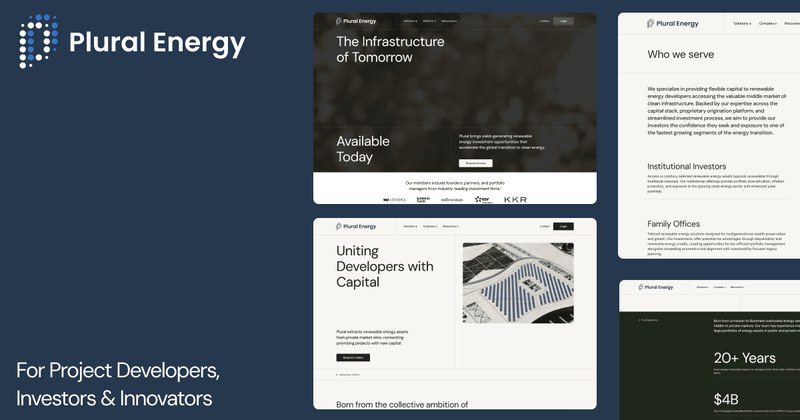
Plural
Plural is a San Francisco fintech building the financial operating system for infrastructure - a programmable execution layer that tokenizes real-world energy assets like solar farms, battery storage, and data centers. It targets the 'missing middle' of clean energy: sub-$100M projects too small for traditional project finance but too big to ignore. By pairing smart-contract automation with a registered broker-dealer, Plural lets developers raise capital faster and lets institutional and alternative investors underwrite, monitor, and trade cash-flow streams from the electron economy.
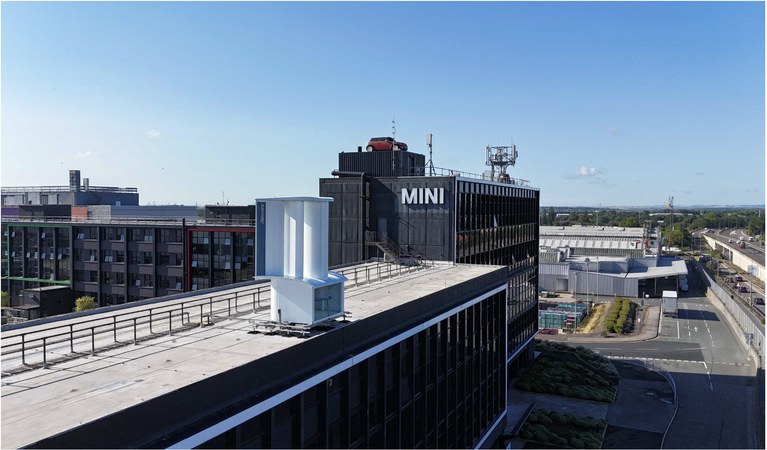
Aeromine Technologies, Inc.
Aeromine Technologies builds a motionless, bladeless rooftop wind energy system for commercial and industrial buildings. Its 10-foot units sit along a roof's edge and use vertical airfoils to capture and amplify a building's own airflow, generating electricity silently and without spinning blades. The company says the system can produce up to 50% more energy than a comparable rooftop solar array while using roughly 10% of the roof space, and it is designed to complement, not replace, solar. Founded in 2021 and headquartered in Houston, Aeromine has run pilots with BASF and BMW Group and raised a ~$9M Series A led by Veriten in 2024.

Fourier
Fourier is a Palo Alto-based clean-energy company building modular, fully automated electrolyzers that produce green hydrogen on-site and on-demand. By borrowing architecture from the data center industry - racks of small, software-managed electrolyzer 'blades' running on reprogrammed mass-produced power supplies - Fourier aims to eliminate the costly, hazardous transportation and storage that inflate hydrogen prices, making clean hydrogen practical for heavy industry, transportation fuel, and distributed energy storage.

Hover Energy
Hover Energy is a Dallas-based clean-energy company that builds patented Wind-Powered Microgrids - rooftop arrays of compact 36 kW turbines that turn a building's own edge into a sail, combined with solar, storage, and an AI-driven control stack. The system is designed to offset most or all of a building's power use on site, delivering resilient, behind-the-meter electricity to commercial, industrial, and data-center customers. Paired with IBM's watsonx and Maximo software and scaled through joint ventures like EverOn Energy, Hover pitches an Energy-as-a-Service path to what it calls 'real zero.'
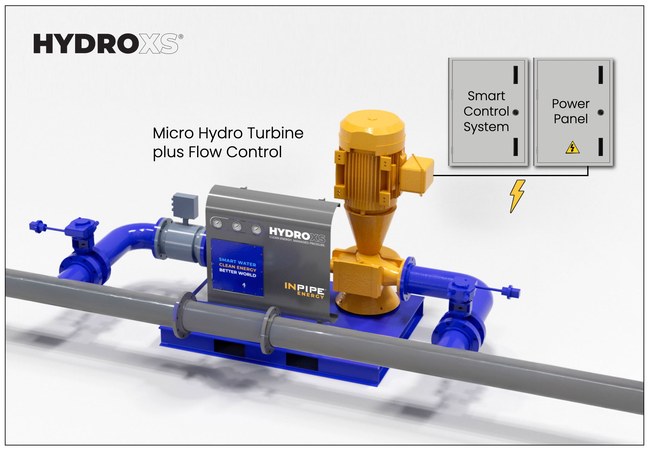
InPipe Energy
InPipe Energy is a Portland, Oregon cleantech company that turns the wasted pressure inside existing water pipelines into carbon-free electricity. Its flagship HydroXS system pairs micro-hydropower turbines with smart pressure controls that retrofit into municipal, industrial, and community water infrastructure - no dams, no new construction, no environmental harm. Founded in 2016 by Gregg Semler, the company helps water utilities and cities generate reliable baseload power, cut energy costs, and decarbonize aging infrastructure.