The most expensive battery many people own spends most of its life doing absolutely nothing. It sits in a driveway, perhaps holding 80 or 100 kilowatt-hours of energy, waiting for the school run. A common home battery holds a fraction of that. Marc-André Forget and his Montreal team looked at this mismatch and saw a business: make the car earn its square footage.
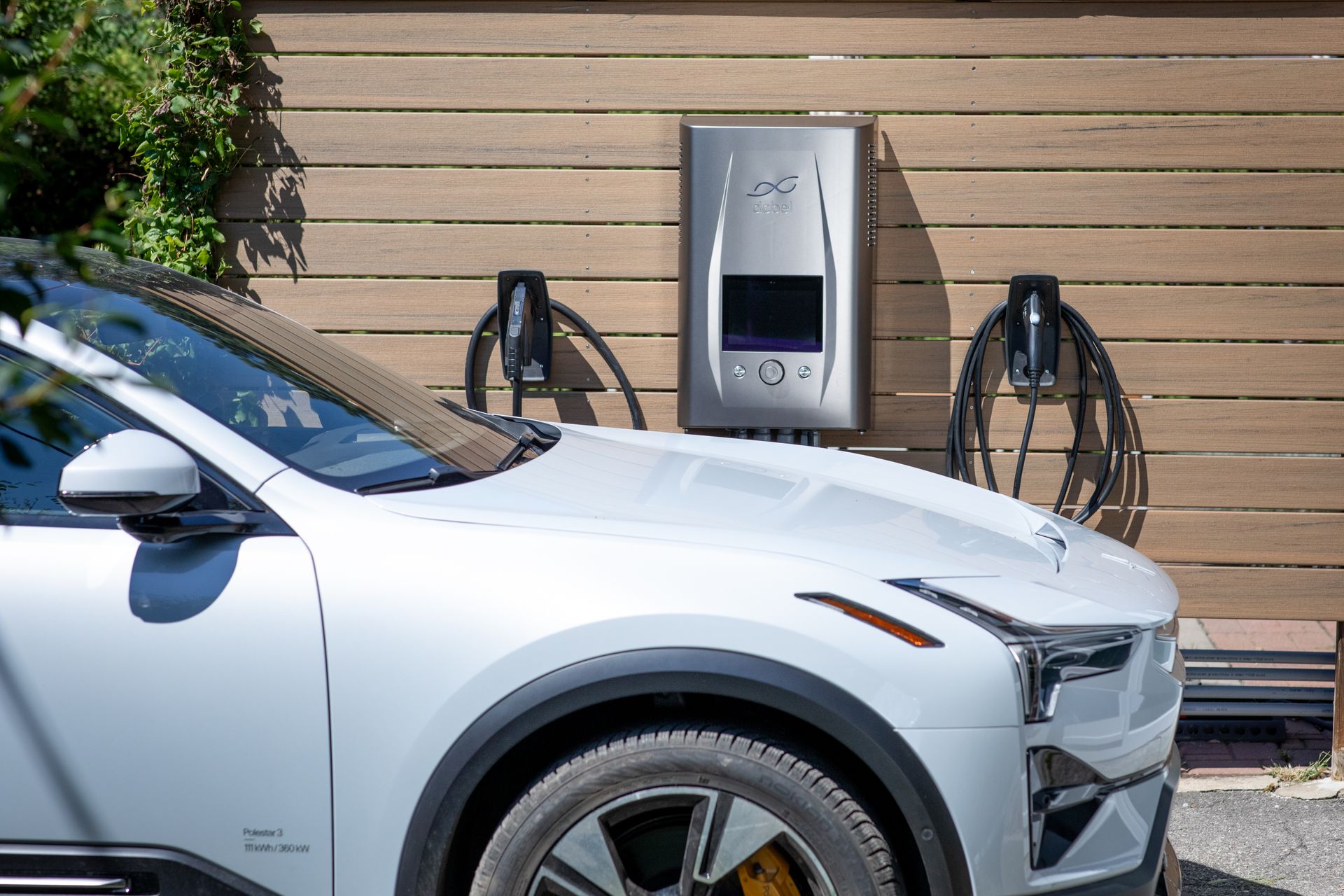
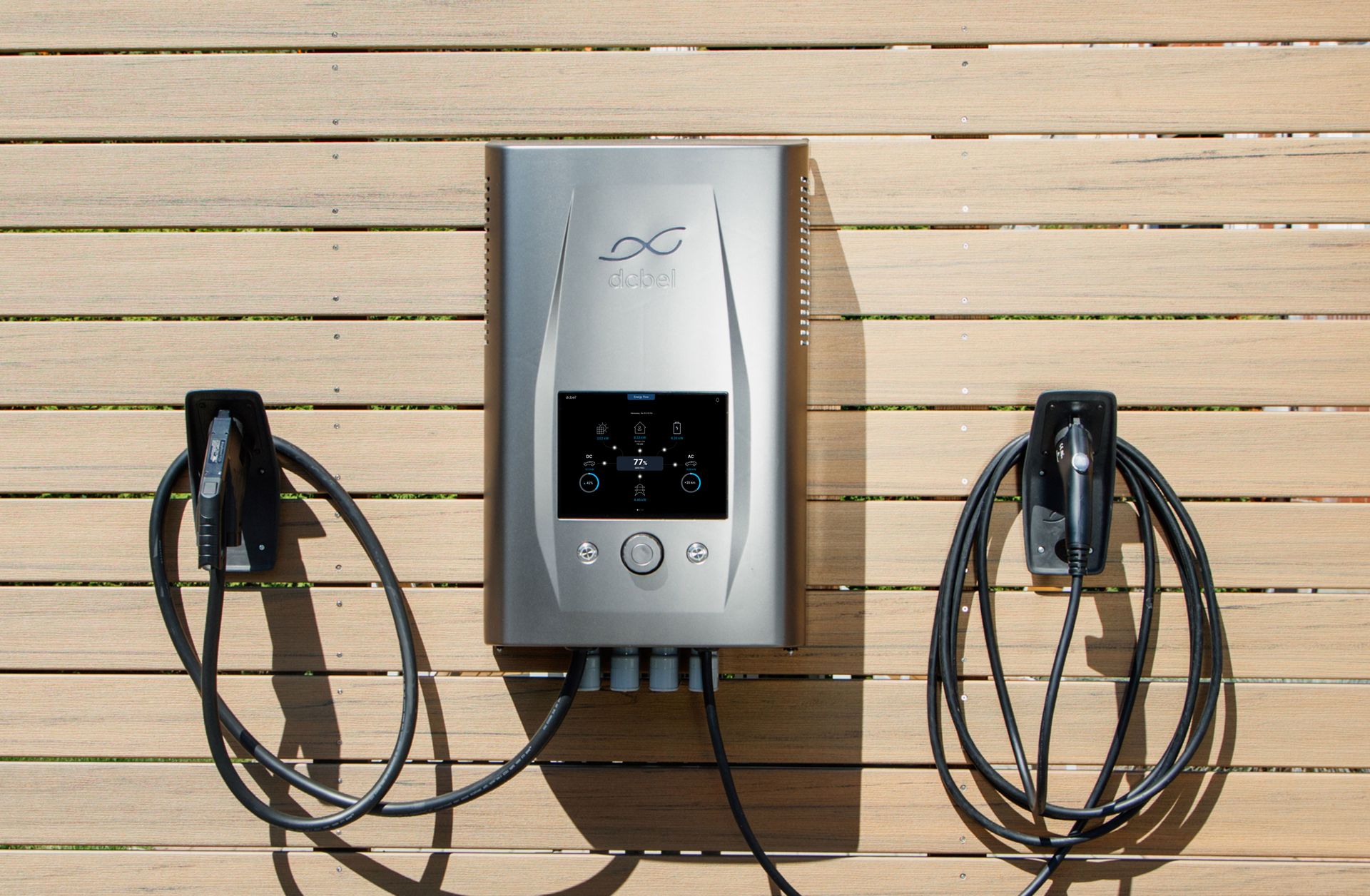
dcbel’s answer is Ara, a refrigerator-sized home energy station with a decidedly more elegant silhouette. It charges electric vehicles, converts solar power, connects a stationary battery, isolates a home during an outage and decides where electricity should go. The pitch is pleasantly domestic. When the grid gets expensive, use energy stored in the car. When the grid dies, keep the house alive. When solar panels overproduce, store the surplus instead of wasting it.
This sounds like a charger with ambitions. It is closer to a small power plant’s control room, flattened against a garage wall.
One box, six jobs, many permissions
Ara’s novelty is not any single function. Solar inverters exist. Smart EV chargers exist. Backup switches and home batteries exist. Vehicle-to-home systems exist, at least for a small list of cars. dcbel’s claim is that one shared power-conversion architecture can do the work of several devices while one software layer coordinates the whole lot.
The consumer product starts at $9,999 for Ara Core, before installation and site-specific equipment. A $200 refundable deposit begins a process that includes a home visit, system design and a detailed quote. That sequence matters. This is not a phone shipped from a warehouse. It touches a service panel, local electrical code, utility interconnection rules and a two-ton battery with wheels.
It also needs a compatible vehicle. In the United States, qualifying 2025 Volvo EX90s can now send power to the home through Ara, subject to Volvo’s specified computer and 400-volt architecture. Polestar promotes Ara for the Polestar 3 in select markets. Nissan Leaf vehicles using CHAdeMO appear in California deployments. “Bidirectional capable” is not a universal magic phrase. Model year, connector, firmware, geography and program approval still count.
What failed first was the calendar
The physics was never the only problem. dcbel was founded in 2015. In June 2023, it announced that its r16 Home Energy Station had fulfilled the relevant UL 2231 and UL 9741 requirements, becoming the first residential bidirectional DC charger in the United States to do so. The certification effort alone took more than two years, dozens of tests and three laboratories. The company said first shipments would begin in parts of California and New York.
Broad deployment took longer. Compatible cars were slow to arrive. Grid-export rules differed by territory. Every house brought its own panel, wiring and permitting biography. By May 2026, dcbel was approaching 200 installations in California. That is meaningful field progress, but it is not consumer-electronics velocity.
Deep-tech founders do not ship into a market. They ship into a dependency graph.YesPress analysis
The company’s response is visible in its evolution. r16 became Ara. The story widened from “bidirectional charger” to “Home Energy Station.” dcbel added automaker landing pages, installer coordination, utility programs and public incentives. In California, the Energy Commission’s REDWDS program offered more than $52 million in potential project funding, though only about $2.47 million was guaranteed for phase one. In Massachusetts, an August 2026 pilot offered eligible households an Ara and installation at no cost.
What changed the adoption equation was not a cheaper circuit board. It was packaging hardware with cars, installers, rebates and programs. A five-figure garage appliance is a considered purchase. A subsidized system that turns the Volvo already outside into blackout insurance is a different proposition.
The homeowner buys
Backup power, lower exposure to peak rates, solar coordination, EV charging and one app instead of a wall assembled brand by brand.
The grid may gain
A fleet of controllable batteries that can absorb surplus power, reduce peaks and potentially sell flexibility through utility programs.
Who pays, and who benefits?
dcbel has two intertwined customers. The obvious one is a homeowner with a detached house, private parking and an EV. The strongest fit is someone who also has rooftop solar, time-of-use electricity pricing or frequent outages. For that person, Ara can replace multiple boxes and make an existing vehicle battery useful at home.
The less visible customer is the institution around the house. Automakers want bidirectional capability to become a reason to buy their vehicles. Utilities want flexible loads that charge when electricity is abundant and pause or discharge when the system is stressed. Governments want lower emissions and more resilience. Installers want a product they can specify repeatedly. dcbel’s Capacity platform goes directly after energy companies with forecasting, transaction management and consumer-program tools.
That makes the business model more interesting than a hardware margin. dcbel sells Ara, coordinates installation and offers financing, but its longer game sits in software and participation: orchestrating distributed assets, supporting utility programs and helping aggregated homes behave like a virtual power plant. Hardware puts a node on the wall. Software decides what the node is worth.
The moat is orchestration
dcbel competes with several kinds of company at once. Tesla sells Powerwall. Ford and GM package vehicle-to-home systems around their trucks and SUVs. Wallbox has Quasar 2. Enphase and SolarEdge come from solar. A homeowner can also assemble separate best-of-breed components. Those alternatives may be cheaper, easier to service or better matched to a particular car.
dcbel’s difference is architectural. Its power electronics are designed to route DC energy among solar panels, batteries and vehicles with fewer conversion steps. Orchestrate OS makes local decisions, while the cloud layer handles monitoring and aggregation. The company says Ara evaluates routing choices 100 times per second and can continue providing backup operation without an internet connection. The useful idea is not “AI for electricity.” It is shared infrastructure with a control system that understands every attached asset.
The hard-to-copy layer is the accumulated permission: patents, lab testing, automaker validation, utility interfaces and installer practice. Roughly 50 patents across six technologies were cited when Canada Growth Fund led an investment round of up to $55 million in March 2025. Volvo’s venture arm had invested two years earlier. These partners supplied more than capital. They reduced compatibility and distribution risk.
What a founder can steal
First, sell the outcome that makes immediate sense. “Distributed energy resource orchestration” is accurate and dead on arrival at the kitchen table. “Your car keeps the refrigerator on” earns another minute. dcbel leads with blackouts, bills and control, then explains grid flexibility.
Second, compress the stack. A product that replaces several purchases can support a higher price and a clearer installation, provided reliability does not suffer. Third, treat certification and partnerships as product work. For climate hardware, the lab report, compatible vehicle list and electrician workflow are features.
Finally, use incentives to buy down the customer’s first-risk cost. California’s offer can cover up to $13,800 of product, installation and related costs for an initial group. Massachusetts goes further for eligible pilot participants. The company gets field data and references; the public program gets measurable grid behavior; the homeowner avoids paying to be a test case.
- 2015The private-grid thesisdcbel begins in Montreal, long before compatible bidirectional cars are common.
- 2023Certification and Volvor16 clears cited U.S. safety requirements, while Volvo becomes a strategic investor.
- 2024California becomes the proving groundREDWDS funding links home hardware to dynamic rates, research and utility behavior.
- 2025Capital meets a compatible carA financing of up to $55 million supports commercialization; the EX90 later enables V2H.
- 2026Installation is the headlineCalifornia approaches 200 systems as dcbel enters Québec and Massachusetts.
When the bet does not work
Ara is a poor fit for an apartment dweller without dedicated parking, a renter who cannot alter the electrical system, or a homeowner with an incompatible EV. It may not pencil out where electricity is cheap and reliable, export payments are weak, solar is impractical and outages are rare. A conventional Level 2 charger can cost far less. A stationary battery can provide backup even when the car is away.
There is also concentration risk in an all-in-one box. Integration reduces clutter, but a service problem can touch several household energy functions at once. Buyers should compare warranty, local installer coverage, supported loads, total installed cost and the precise compatibility of their vehicle. Marketing estimates such as ten days of backup or thousands of dollars in annual grid-program earnings depend heavily on household consumption, weather, rates and program availability.
Still, dcbel has pushed the conversation somewhere useful. The electric car is no longer merely a new appliance demanding power from the house. It can be part of the house - a movable reserve that works with the roof, the battery and the grid. After a decade, the company’s question is no longer whether electrons can travel both ways. It is whether installers, automakers, utilities and homeowners can move in the same direction.