creative-production
(29)
The Ad Agency That Carpeted a Rhino to Make a Point About the Mind
Intermark Group built an advertising agency around a stubborn idea: people rarely do what a spreadsheet says they should. Its answer combines behavioral science, media buying and creative work - occasionally with a rhinoceros standing on the product.

Redline Media Group and the Power of the Second Question
A Seminole founder built a global agency around an unfashionable habit: listening long enough to find the problem beneath the brief.
The Grain of Rice That Gave Maruri Its Name Back
An Ecuadorian agency sold itself to a global network, bought itself back, then hid vacations and laptops on individual grains of rice. The odd little promotion explains the whole business.

WITH and the Expensive Problem of Almost-Aligned Brands
The Atlanta firm spent a decade learning that the costliest brand problem is rarely a bad logo. It is the inch of daylight between what a company says, what its people believe and what customers actually experience.
Think Big Wins by Making the Message Smaller
The public-affairs firm sells speed, but its more interesting habit is subtraction: test widely, cut weak channels early, and leave an audience with one thing worth remembering.
SASSO Sells the Part After the Big Idea
The Baton Rouge agency does not stop at making an ad. It researches the audience, casts the messenger, builds the campaign, buys the attention and then checks whether anything moved.
The Hollywood Workhorse Behind the Poster
Bravo Design built a durable business in the unglamorous space between one approved idea and the hundred finished pieces a campaign suddenly needs. Its advantage is not mystery. It is memory, speed and an unusual appetite for the last mile.
The Sacramento Agency That Turned 100 Franchise Openings Into a Marketing System
DTMA began as a relationship-driven creative shop. Its more interesting second act is a lesson in operational leverage: automate the agency, standardize the launch, and let local businesses borrow an entire marketing department.
The Agency That Treats the Red Carpet Like a Newsroom
A Kiehl’s Earth Day assignment showed Lisa Jammal that social media needed its own backstage crew. She built one - part publicist, part production desk, trained to publish before the moment goes cold.

SNP Communications and the trouble with being the expert
You can know the answer and still lose the room. SNP Communications has built a business around what happens between having something to say and getting people to act.

M+M Management knows what happens after the photograph
A photographic agency grew into a publicity business spanning fashion, jewellery and afternoon tea. M+M Management’s history shows how much of a campaign happens outside the frame.
Rocket Launch knows why a $400 pineapple is news
A California agency turns familiar things into fresh stories: a luxury pineapple, a guitar built like a supercar, and a county fair with a million-dollar media plan.
Reverb Communications knows whose head belongs in the box
A tiny farmer offers a useful clue to this game marketing agency: give people something worth showing. Behind the novelty sits the work of demos, storefronts, creator relationships, and launch logistics.
Xen Media knows where the audience shops
Before it sold brand stories, Xen Media sold space on screens. Its route from grocery-store signage to food photography, Kia events, and digital campaigns reveals an agency built around the places people already pay attention.

Ojiva Consultores knows a campaign is only as good as its next move
The Mexican consultancy brings audience research, creative production and daily campaign operations under one roof. Its real subject is the distance between knowing what to say and getting it said.

The Eclectic Agency knows who should meet whom
A Swiss watchmaker, a New Zealand singer, a nonprofit with a story to tell. For this Beverly Hills communications firm, the interesting work happens between worlds.

At POV Agency, the outsider gets the microphone
The Los Angeles communications shop turns overlooked perspectives into public stories. Its harder experiment is building a workplace where those perspectives can actually be heard.
Garage Team Mazda and the gap between knowing and caring
WPP built an agency around Mazda. Its most revealing assignment was learning how to turn a car’s engineering into something a driver could feel.

Wishare Media Group and the art of finding the right crowd
A California agency connects audience research, creative work, and the page that closes the sale. A small WeChat proposal shows why choosing the audience comes before choosing the ad.

Frontmatter wants your least glamorous design work
The creative production company has a soft spot for revised decks, RFP documents, and the next batch of ads. Its bet: a brand needs people who will keep showing up after the big reveal.
ScaleCreative and the case of the missing three weeks
A pet retailer needed four weeks to get campaign creative out the door. ScaleCreative says it brought that down to one. The interesting part is what happened between the brief and the finished ad.

Total Assault gives the fans a job
A Christmas chart race. A country-music clubhouse. A deadline for a guitar amp. Total Assault’s campaigns reveal what happens when an audience gets something to do.
Wolf Den Makes the Ad. And the Parts That Keep It Moving.
The Oakland animation studio works behind campaigns for Pinterest, Cash App and Meta AI. Its most revealing work shows how a good-looking film becomes a practical system for brands with more than one screen to fill.
Continental Colorcraft makes the case for keeping the printer in the picture
A museum book, a 100,000-copy newsletter and a missing press tell the story of Continental Colorcraft. Now presented online as Colorcraft 5, the California business spans print, digital and audiovisual campaigns.
Snack Bar Design Takes on the Work Behind the Launch
The Santa Rosa studio makes the screenshots, videos, and in-app visuals that big software brands need in steady supply. Its business offers a useful lesson in making creative work repeatable.
We Are Royale makes ads you can play inside
A fake travel agency. Real estate for Warcraft. The creative studio behind them has a practical theory of fandom: give people something worth doing, and the advertising gets a lot more interesting.

Andy Fraser Built a Creative Company That Still Knows How to Play
For nearly three decades, Sockeye's co-founder has balanced global-brand ambition with a distinctly Portland belief: serious creative work improves when people, craft and place all get room to matter.
The 6,350-Person Agency That Wants to Make the Billable Hour Obsolete
Monks was assembled to replace the agency holding company's maze of handoffs with one digital-first operating system. Now it is testing a harder proposition: whether AI workflows, accountable media and recurring subscriptions can change what clients actually pay an agency for.
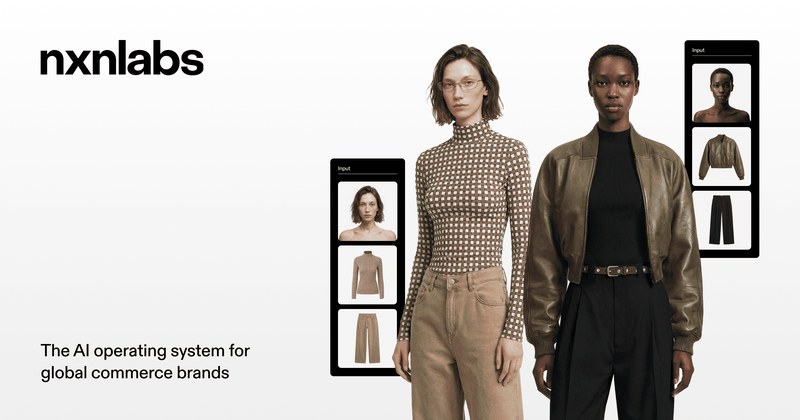
NXN Labs
NXN Labs is a generative-AI company building software that turns flat-lay and mannequin product photos into realistic on-model imagery, virtual try-ons, and campaign visuals for fashion and retail brands. Its flagship platform, Arden AI, is pitched as an 'AI operating system' for creative production - covering asset generation, review-and-approval workflows, deployment, and performance analytics - built on a proprietary multimodal diffusion model. Founded in 2024 and backed by Naver D2SF, KB Investment, Smilegate Investment, and Shinsegae's Signite Partners, the company is expanding from South Korea to North America.