There is a small comedy hidden inside every large company. Ask the chief executive what the brand stands for and you may hear purpose. Ask the sales team and you may hear pipeline. Ask the customer and you may hear the hold music. Each answer can be honest. Together, they can be expensive.
WITH, an independent strategy and creative firm in Atlanta, has built its business in those gaps. The company works with senior marketers on the connective tissue between business strategy, culture, identity and execution. It can design a logo or make a campaign. Its more interesting claim is that neither will hold for long if the organization underneath is pulling in different directions.
The agency calls this brand unification. That sounds like a tidy consultant phrase until you picture the alternative: the annual plan says one thing, employees improvise another, and customers receive a third. The waste is not confined to media spend. It arrives as revision rounds, stalled approvals, unused brand guidelines and the peculiar meeting where 14 people debate an adjective.
The filing cabinet outgrew the filing system
Blair Waugh Brady and Jamie Sims founded WITH in 2012 after working together elsewhere in the agency business. They were first-time entrepreneurs with, as Sims later put it, zero clients. He created a sensible two-digit code for each new account. AT&T became 01. The system worked beautifully until Cortland became client 100.
This is not a hockey-stick startup story. No venture round appears in the record; Brady has said the firm was bootstrapped from the beginning. It is the quieter arithmetic of a services company: one relationship, then another, then enough accumulated trust to discover that your administrative scheme contained an accidental forecast.
The roster grew unusually broad for a deliberately small shop: AT&T, Coca-Cola, Kaiser Permanente, Southern Company, PG&E, Papa Johns, Fleetcor, Visa, EarthLink, Fox Theatre and, more recently, Jimmy John's. The common customer is not an industry. Brady has described it as a brand-forward company - a leadership team that believes the brand can change behavior and will give strategy a seat before production begins.
“Most organizations don't have an idea problem. They have an alignment problem.”Jamie Sims, co-founder and chief strategy officer
The first thing to fail was the plan
In early 2020, WITH had a robust growth plan. Then calendars, venues and ordinary office life stopped cooperating. Brady's first useful move was not to protect the plan. She told the team to assume it would not happen.
The replacement brief was almost comically basic: strip each client down to purpose and promise. Why does it exist? What does it deliver? Only then apply the new conditions. For Kaiser Permanente, Georgia Power, PG&E and EarthLink, the work involved essential services under extraordinary pressure. For Atlanta's Fox Theatre, whose doors were shut, the question became how a place built around gathering could still create what the theatre called a grand sense of occasion.
What failed first, in other words, was not creative output. It was the assumption that last quarter's sequence of activities still deserved obedience. The lesson is portable: when context changes faster than a campaign calendar, purpose is a better restart button than tactics.
Research, audits, architecture, customer journeys and plans turn competing opinions into a decision.
Naming, identity, voice and messaging translate the decision into a shared system.
Campaigns, video, sales tools and internal communications put the system to work.
At ten, the adviser took its own advice
The more revealing pivot came in 2022. WITH had spent a decade maturing its process while presenting itself in the familiar language of a full-service agency. The work had changed faster than the wrapper. So the company ran its Brand Unification Process on itself.
The result was a new visual identity and a sharper description: brand partner agency. The interlocking logo leaned its letterforms into one another; uneven widths and rounded forms gave the geometry a handwritten wobble. It was meant to hold structure and human imperfection at once. More consequentially, the repositioning moved the agency upstream, from a maker of assets to a partner in decisions.
What changed their minds was not a failed mark. It was maturity. The old category no longer described where the company believed it created value. A firm that advised clients to align business and brand had to accept the obvious embarrassment of being misaligned itself.
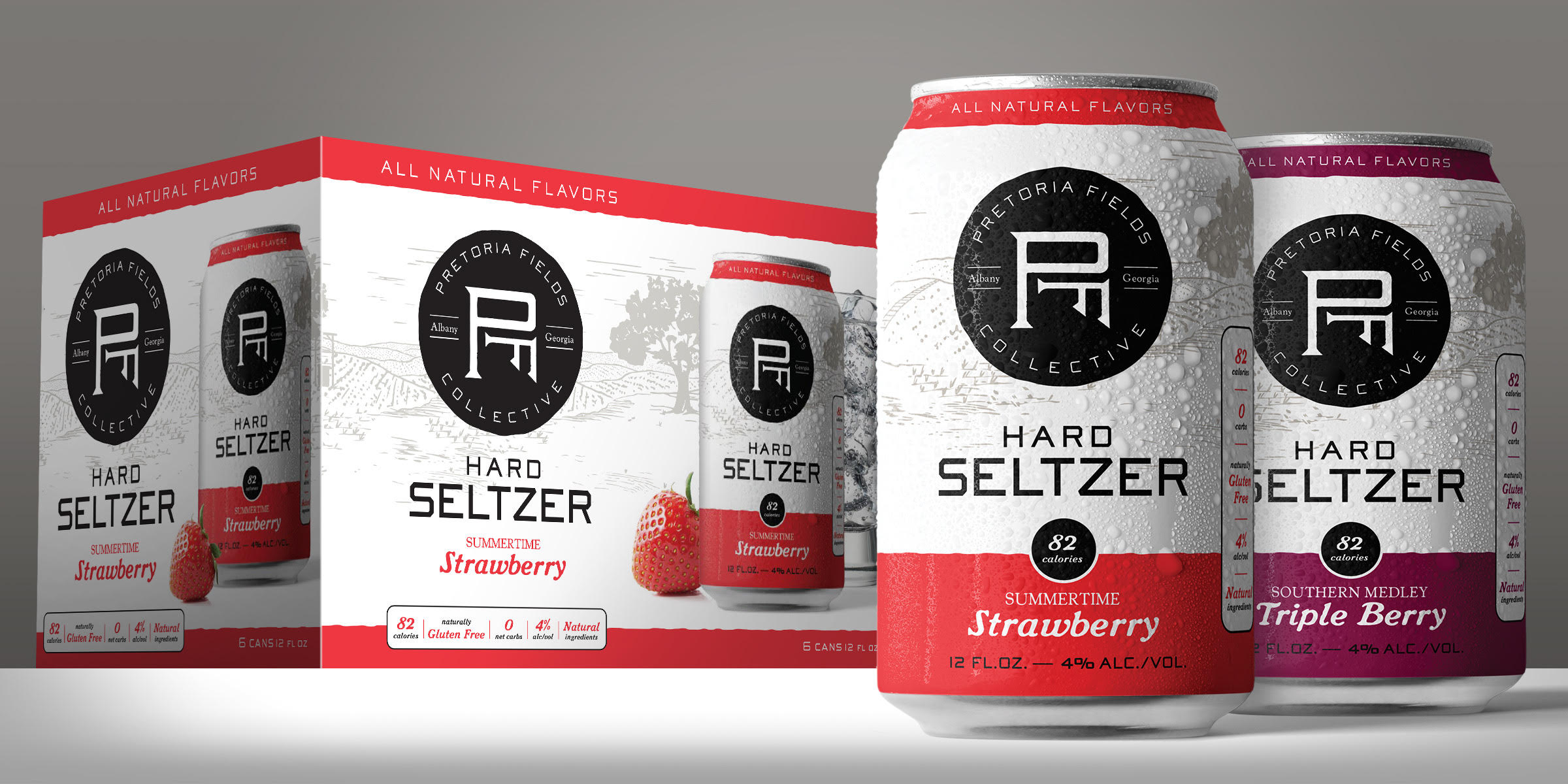
What the buyer is actually buying
The offer now runs through three verbs: strategize, brand, build. The first includes workshops, research, brand and product architecture, personas, customer journeys and annual planning. The second covers naming, identity, voice and rollout systems. The third turns those choices into advertising, collateral, video, presentations, sales enablement and internal communications. A newer Advisory Practice adds senior operators and market-research expertise.
This is a fee-for-service business, sold through projects and longer brand partnerships. WITH does not publish a rate card. The directory Clutch lists a project minimum of $5,000 and an estimated hourly range of $100 to $149, useful as a market signal but not a quote. The real expense depends on scope, senior attention and how much of the organization must be brought into the room.
Begin with one shared decision, not a pile of deliverables. Put business, customer and culture evidence in the same workshop. Give every creative choice an owner and every brand promise an operational consequence.
Senior access, honest disagreement and authority to implement. If leaders want a fresh surface while protecting every internal contradiction, unification becomes expensive theatre.
That requirement marks WITH's place in the market. A specialist studio may be the better choice for a tightly bounded identity. A production agency may be faster when the strategy is truly settled. An in-house team may be cheaper when it has capacity and cross-functional authority. WITH becomes more useful when the problem crosses boundaries - when research, leadership, culture and creative need to arrive at the same answer.
Curiosity is the hedge against automation
The agency's recent behavior makes the position clearer. It hosts Curious, a private Atlanta conversation series that has brought in marketing leaders from Mercedes-Benz USA, Microsoft Advertising and Hyatt. It also completed its first inquiry into “Modern Marketers.” Curiosity ranked as the most important trait, ahead of strategic thinking, creativity and AI fluency. Only 10 percent of respondents said they would hire for AI fluency first.
That finding is convenient for an advisory firm, but it is also sharp. Tools make competent output cheaper. They do not decide which contradiction matters, which customer truth is being politely ignored, or when the annual plan has become a historical document. Those are judgment problems.
WITH's four public promises are modest: listen first, create with understanding, earn trust and use it well, joyfully embrace the process. The joy is optional. The listening is not. An almost-aligned company does not need another voice added to the meeting. It needs someone curious enough to hear why all the existing voices disagree - and disciplined enough to turn the answer into work.