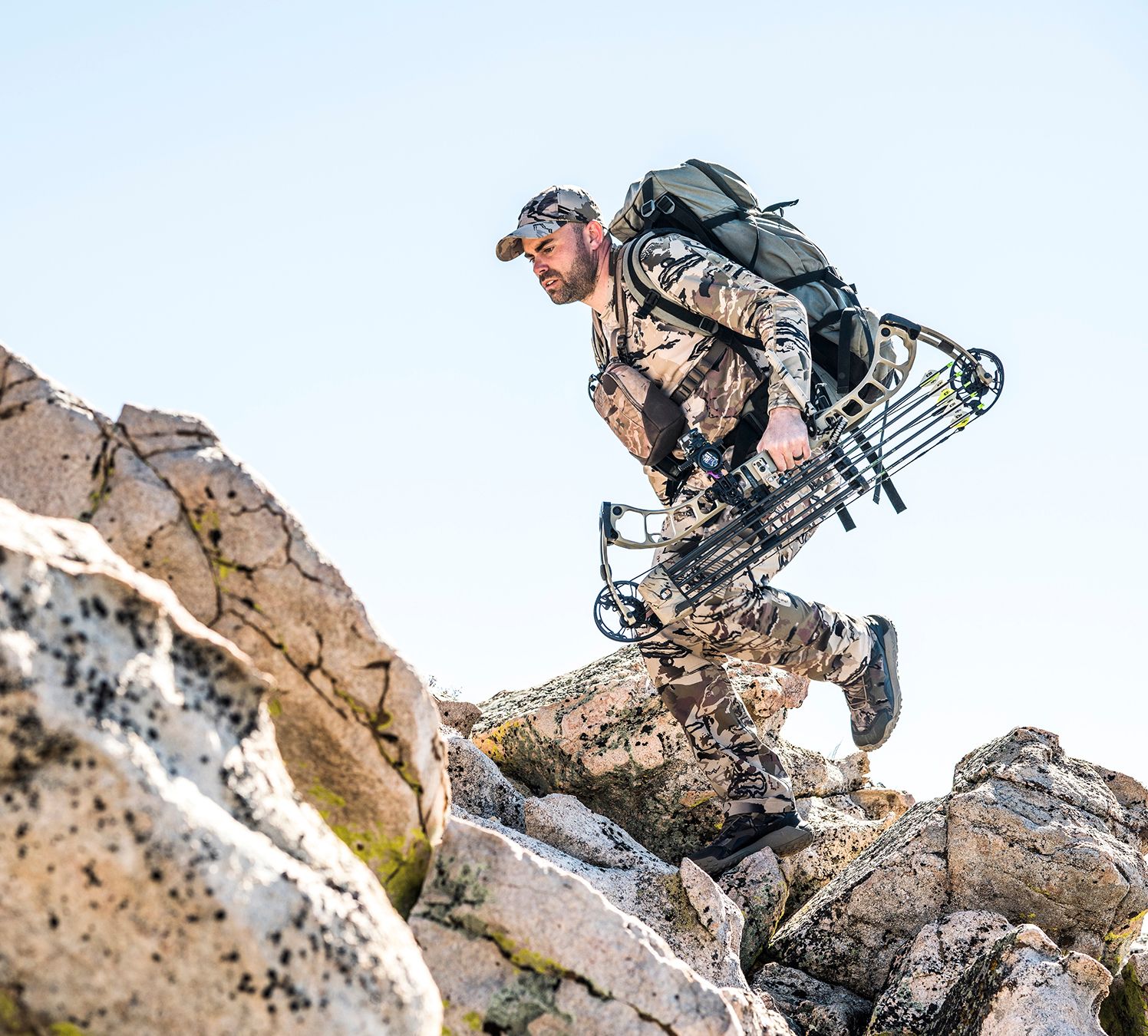
There is a photograph on Idea Ranch's website of a hunter climbing pale rocks with a compound bow in one hand and a serious pack on his back. He is not smiling at the product. He is not standing beside a truck polished to the molecular level. He appears busy. This is a small distinction, but the whole agency seems to live inside it.
Idea Ranch is a full-service advertising, public-relations and consumer-insights company headquartered in Tulsa, with offices in Wichita and Durango. It makes campaigns, films, photographs, packaging, websites, social content and media plans. Its clients include Under Armour Outdoor, Carhartt, Pelican, Cargill, Husky Liners, Costa, Bushnell, Folds of Honor and Atwoods. Those names look eclectic until you notice that most of their customers know the difference between decorative grit and the real kind.
The agency's own test is wonderfully unforgiving: “Storytelling that entertains without selling is a vanity project.” It is an antidote to a familiar agency disease - confusing applause for an outcome. Idea Ranch likes beautiful pictures. It simply insists that the pictures have a job.
The customer can smell the costume
Every niche has its shibboleths. A fly angler notices the grip. A tradesperson notices the spotless gloves. A hunter notices whether the pack is sitting correctly. The general audience sees a handsome scene; the core customer sees a production crew getting away with something. Idea Ranch's advantage is not that its people own hiking shoes. It is that the agency has spent years learning which details the audience uses to decide whether a brand belongs.
For Carhartt, it says it casts doers rather than models, then creates seasonal material for store signs, digital placements and video channels. For Under Armour Outdoor, the assignment was to prove that a brand famous for competitive sports understood the minute-by-minute demands of hunting and fishing. That relationship has lasted more than 13 years. Longevity is the interesting metric here. A spectacular campaign can be luck. Thirteen years is a working system.
We find and feature the doers, rather than models.Idea Ranch, on its Carhartt work
The clue was already in the mail
The Pelican account offers a tidy lesson in strategy. A new chief executive inherited divisions that told different versions of the brand. The first thing failing was coherence: one company, several interpretations. Instead of manufacturing a lofty purpose, Idea Ranch examined piles of customer letters and social posts. People kept describing moments when a Pelican case had protected something that mattered. Customers were already folding the product into their identities.
That observation became a brand cornerstone that has endured for more than a decade. It is also something a smaller company can copy tomorrow morning: collect the phrases customers use when nobody is prompting them, sort for repeated behavior, and build from the pattern. The glamorous part of branding arrives later. First comes the reading.
The Idea Ranch evidence loop
Service is how a foot gets through the door
Cargill began with an internal-communications assignment in 2018. The scope then spread into branding, sales, retail, trade shows, seasonal campaigns and TikTok. Idea Ranch even produced a holiday cookbook around premium beef, handling concept, photography and page design. This is the agency business model in miniature: enter through one problem, reduce the client's anxiety, and earn permission to solve adjacent ones.
The offering is broad by design. Research finds the angle. Brand strategy names it. Photographers and filmmakers make it visible. Copy, web, packaging and social adapt it. Public relations and paid media distribute it. Analytics report back. Clients can buy a project, but the economics favor relationships in which the agency becomes a coordinated external marketing department.
The failed-first pattern in the portfolio is rarely a bad logo. Pelican had internal fragmentation. Husky Liners had years of inconsistent marketing support after inventing its category. Costa had leaned so hard on product features that competitors were pressing into its position. In each case, management changed its mind about what the advertising needed to do. More features were not the answer. The brands needed a shared story grounded in the reasons customers cared.
A ranch is also a filter
In 2020, the business known as Brothers & Company adopted the Idea Ranch name. The predecessor agency traces its history to 1974, but the newer identity declared a sharper market position. “Ranch” carries useful baggage: work, land, competence, independence, mud. It repels a few prospects while attracting the right ones. That is what positioning is supposed to do.
Recent wins show how far the filter can stretch without becoming meaningless. Atwoods hired the agency for digital modernization and storytelling. Greenworks Commercial brought it in to explain the performance and economics of battery-powered professional equipment. Badlands wanted to deepen relationships with hunters. Visit Ulster County chose the firm for tourism marketing that would present a real place “without over polishing it.” Nutrena added an animal-nutrition brand to the roster. The shared category is less “outdoors” than earned belonging.
That belonging runs inward, too. Idea Ranch publishes seven values, including integrity, humility, grace and the claim that a robust life outside the office produces richer perspective. Its practical expressions include paid parental leave, dog-friendly workplaces, extra long weekends and an “Adventure Birthday” for getting outside. Outside magazine gave the company a Best Places to Work honorable mention three years running, from 2022 through 2024.
Perks are nice. But what makes Idea Ranch special isn't just the perks - it's the way we genuinely look out for each other.Jeff Tolle
The handoff says more than the title
In August 2025, chief creative officer Jeff Tolle became president and CEO. Founder Paul Brothers stepped away from the top job and returned to the creative department. Tolle had worked across media, account service and creative; Brothers described the move as the end of a journey more than 25 years in the making. In a consulting business, succession is itself a client signal. The product is judgment, and the new chief executive has made it from several seats.
The timing also puts a useful constraint on the agency's growth. Outdoor imagery is easy to scale badly. Add clients too quickly, and “authentic” becomes another preset: golden-hour light, dusty boots, a drone over a ridge. Idea Ranch's method works when the agency gets access to customers, product truth and field conditions - and when the client's operations can support the promise. It works less well when a company wants the look of a community without accepting its scrutiny.
Five things worth stealing
Narrow the field. A specialty is a sales filter and a learning engine. Repeated exposure turns audience rituals into institutional knowledge.
Mine unsolicited language. Reviews, letters, service calls and social posts contain the metaphors customers already believe.
Cast for credibility. The hand on the tool matters. Experts notice behavior long before they admire composition.
Make service part of the product. Cargill's expanding scope did not begin with a grand reinvention. It began with a smaller assignment handled well.
Give every story a commercial verb. Clarify, recruit, sell, retain, visit, donate. If the verb is only “feel,” the campfire may be warm but the brief is unfinished.
This is the neat paradox of Idea Ranch. Its language is full of soul, wild rides and true north. Its work, underneath, is rather practical. Find what is true. Make it legible. Put it where the right people will see it. Watch what happens. The romance survives because someone remembered to give it a job.