There are more than 40 scratch-off games for sale at a time in Florida. For years, the Lottery advertised them the way supermarkets advertise produce: as a category. Scratch-offs were scratch-offs. Meanwhile, giant jackpots made news, sent people into stores and then vanished, leaving behind a public newly unimpressed by ordinary prizes. The famous product had become the unreliable one.
St. John, the independent Jacksonville agency, saw a smaller door. Treat each new scratch-off as its own product launch. Give it a name, a reason, an occasion and the brief pulse of urgency normally reserved for the enormous jackpot. The intervention sounds almost embarrassingly simple. It was also the sort of simplicity that only becomes visible after someone has studied the shelf instead of staring at the category.
The agency reports that annual Lottery sales moved from $3.9 billion to $6.1 billion during its tenure, a 56 percent rise, with six straight record years. At one point, Florida accounted for 38 percent of nationwide scratch-off growth. The first thing that failed had not been the advertising. It was the old rhythm of demand: occasional spectacular jackpots, followed by long stretches in which nothing felt new. What changed St. John's mind was the abundance hiding in plain sight. Forty-plus small games created forty-plus chances to return.
The lesson was not “make the ad louder.” It was “find the product that can be new more often.”
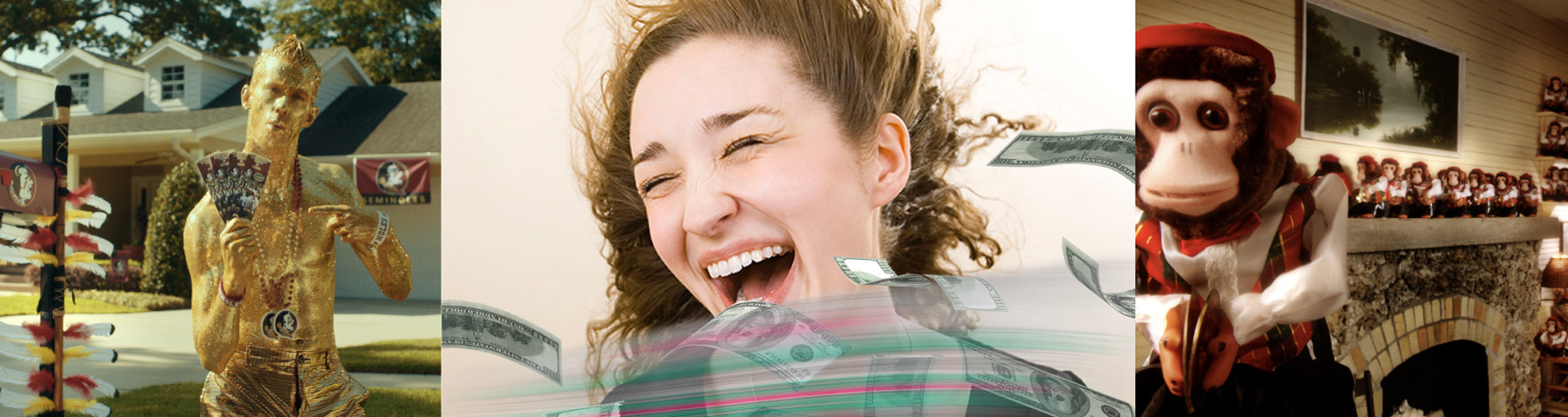
The agency inside the lever
St. John began in 1984 under founder Dan J. St. John. It grew to a reported $18 million agency by 1993 and remains privately held, with its legal name - St. John & Partners Advertising and Public Relations, Inc. - intact beneath the shorter brand introduced in 2021. Its public face is local: Riverplace Tower, a Jacksonville phone number, a founder who grew up in the city. Its client list is national: Rooms To Go, NASCAR, WellCare, PureTalk, Florida Prepaid, Winn-Dixie and restaurant chains with hundreds of doors.
The work now covers strategy, identity, campaigns, production, user experience, CMS integration, traditional and programmatic media, paid social, search, creators, public relations, predictive modeling and attribution. In 2017, president and COO Jeff McCurry led the creation of Nectar Studios, an internal production arm meant to make the content supply faster and more consistent. This is how a regional full-service agency competes with specialist shops and multinational networks: it keeps the thinking and enough of the making under one roof.
Fried chicken needs a town square
The pattern appears again in St. John's longest, most instructive restaurant case. When the agency began working with Zaxby's, the regional chicken chain had 110 restaurants. Sixteen years later it had more than 900. St. John says the brand doubled average unit volume over its tenure, recorded growth in 58 of 64 quarters and beat quick-service benchmarks for lift in store traffic.
The crucial move was to understand Zaxby's as a community before treating it as a menu. The chain began in college towns as a place to gather. St. John formalized that social energy into “Taste Fanatics,” then stretched the idea through real fans, first-timers, celebrity introductions, music, college sports and Friday night football. Celebrities supplied familiarity when the chain entered places where nobody knew it. The community supplied continuity after the famous face left the screen.
This matters for multi-unit marketers. A chain must sound like one brand without pretending every market is identical. Franchisees, committees and local operators all get a vote, and those votes can turn a campaign into beige paste. St. John's pitch is that one clear platform can hold the center while local activations do the adapting. That is not glamorous. It is governance with better headlines.
The monster in the sewer
Sometimes the neglected lever is not a product at all. JEA needed Jacksonville residents to stop pouring grease and flushing wipes into the wastewater system. Instruction alone had failed to make the behavior interesting. St. John created Frederick “Freddy” Fatberg, a communal enemy rendered in the visual language of 1950s and 1960s monster movies. A plumbing lecture became an invasion story. The work won utility-industry awards and was recognized as a best practice by an industry research firm.
That long client history became financially legible in 2025. JEA awarded St. John a five-year public-education contract with two possible one-year extensions and a ceiling of $16.35 million. The agency's blended labor rate was fixed at $135.95 an hour, 7 percent higher than its 2023 rate and slightly above rival finalist Dalton's $132.85. Yet St. John won. Evaluators pointed to experience, design standards, past work and more than a decade of collaboration. The cheaper hour was not the cheaper decision.
The disclosed budget is a useful corrective to the usual mystery around agency economics. The five-year estimate allocated about $4.61 million to agency labor and about $11.74 million to media buys and outside expenses. In other words, most of the large number was money passing through the agency to put work in front of people, not a creative department billing clever thoughts.
Three moves worth stealing
The St. John method travels surprisingly well. First, inventory the moments when a customer could act, not merely the messages you could send. A mature portfolio may contain dozens of launchable occasions. Second, name the human tension in plain language. Metro Diner's “Want What You Want” leaned into indulgence and generated a reported 16 million targeted impressions and more than 67,000 incremental visits. WellCare's “A Better You” made wellbeing personal and cut acquisition cost by a reported 42 to 59 percent. Third, build the measurement into the idea. Store visits, restaurant units, qualified leads and cost per acquisition are harder to admire than a trophy and much harder to fake.
There is a condition attached. This approach works when the business contains a real behavioral lever: a frequent product release, an underused differentiator, a community people already feel, or a complex instruction that can be made memorable. It is weaker when the underlying experience is poor, distribution cannot absorb demand, or management wants a new campaign to substitute for a new reason to buy. A mascot cannot unclog an institution. A celebrity cannot repair a bad meal.
St. John's latest roster keeps the thesis in motion. The agency won Gold at Jacksonville's 2025 ADDYs for Tampa Electric's “Your Neighbor, Mr. Sun,” took Silver for JAXUSA's “JAX Marks the Spot,” and in November 2025 became creative agency of record for Perkins Restaurant & Bakery. A legacy restaurant is precisely the sort of assignment that fits: familiar enough to be overlooked, broad enough to contain something newly specific.
Relevance is not youth. It is a fresh reason for the right person to move now.
The agency describes its culture with three words - character, courage and kindness - and says good ideas can come from anywhere. Its internship program backs up at least the democratic part by putting students on real clients and real teams. Its downtown office, built with roughly $2 million and staff input, includes collaborative spaces, quiet rooms and a café for about 90 people. These details do not prove creative quality. They do suggest the company has spent time designing the conditions in which a useful observation can survive the trip from a junior desk to a client meeting.
Four decades into the business, St. John's competitive position is unusually clear. It is large enough to integrate the work, independent enough to arrange itself around the assignment and experienced in the awkward middle where a regional or challenger brand wants national behavior without national-market waste. The agency does not own the idea of relevance. Its better claim is more practical: it keeps finding where relevance is hiding.