Somebody Automated the Catalog
Here is a fact about selling clothes on the internet that nobody puts on a slide because it is too boring to say out loud: every garment needs a picture of a person wearing it, and those pictures are astonishingly expensive to make. You need a studio, a photographer, a stylist, lighting, and a model who shows up on time. You need to do it again every season, for every SKU, in every market. A mid-sized brand can run thousands of these. The photoshoot is not a creative act so much as a logistics tax, and it is levied on basically every product page in commerce.
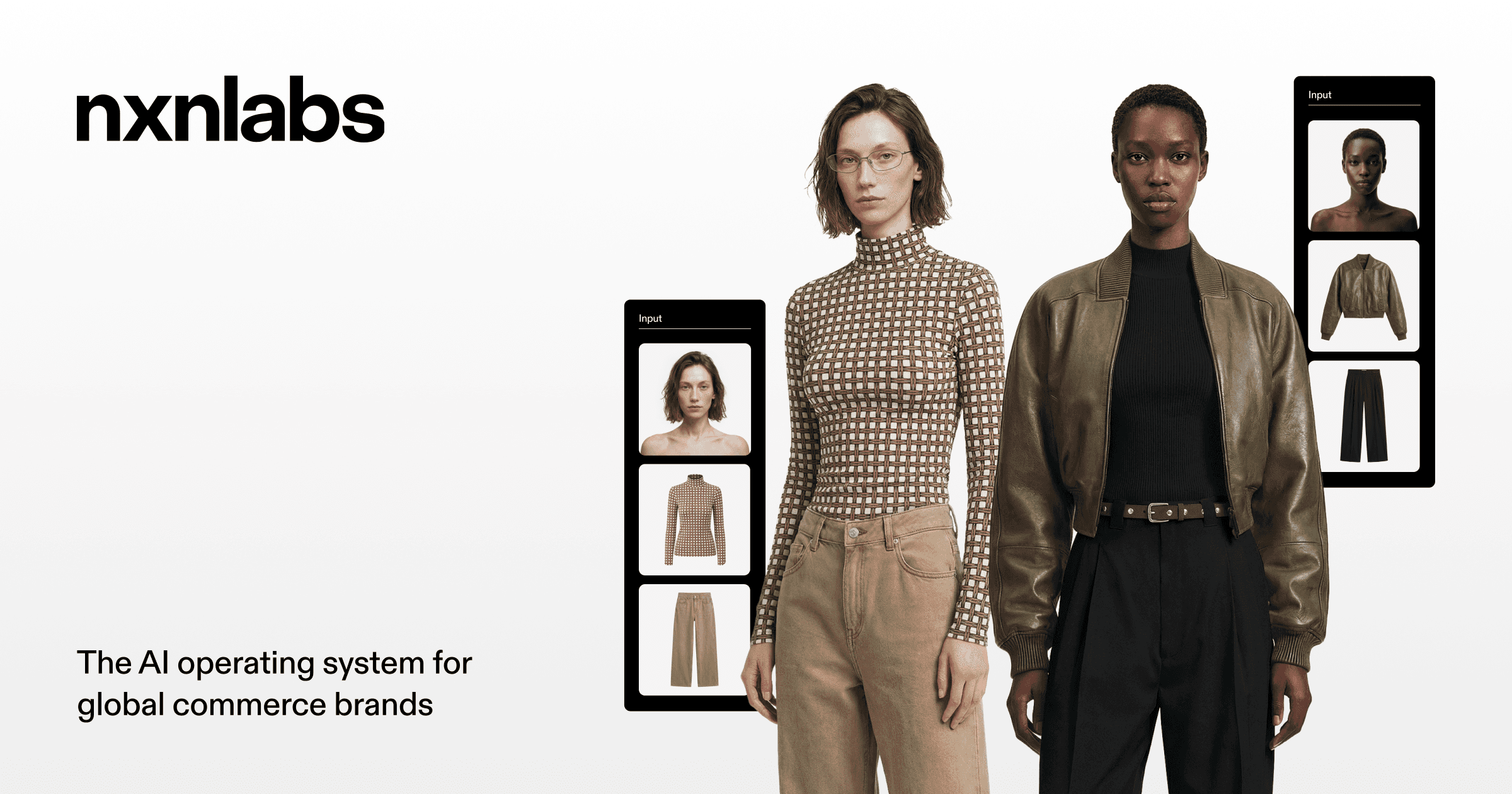
NXN Labs, a South Korean startup founded in 2024 and now setting up in San Francisco, looked at that tax and asked the question that a lot of AI companies are asking about a lot of expensive human processes: what if it were an upload field? You give the software a flat-lay - a garment photographed flat on a table, or on a mannequin - and it returns a realistic image of a model wearing it. Different poses, different bodies, different lighting, on brand, at scale. The model is synthetic. The clothes are not.
This is a subtle and important distinction, and it is where NXN Labs has planted its flag. It is not hard, in 2026, to get an AI to generate a photorealistic person. It is quite hard to get that person to be wearing your specific jacket, with the right seams, the right drape, the right fabric behaving the way that fabric behaves. The company calls this being "fashion-native," which is marketing language for a real technical claim: the boring, unglamorous problem of garment accuracy is the thing that is actually worth solving, and the thing most general image generators get wrong.
A CoPilot Engineer and a McKinsey Consultant Walk Into Fashion
The founding team is the kind of pairing venture capitalists find easy to write checks against. CEO Jen (Jaiwon) Rhi is a Stanford computer-engineering graduate whose resume runs through McKinsey - the part of the world that specializes in looking at an expensive process and diagramming how to make it cheaper. CTO Rina (Lena) Hong is also a Stanford graduate and previously worked on Microsoft's CoPilot team, which is to say she has shipped generative AI to a very large number of people already.
That combination - someone who understands the economics of the workflow and someone who has built the models that replace it - is roughly the ideal composition for a vertical-AI company. You need both the industry room and the infrastructure room, and NXN Labs staffed both from the start.
Jen (Jaiwon) Rhi
Stanford computer engineering; ex-McKinsey. Recognized on Forbes' Y30 list. Runs strategy and go-to-market as NXN moves into North America.
Rina (Lena) Hong
Stanford grad; formerly on Microsoft's CoPilot team in generative AI. Leads the proprietary multimodal diffusion model at the core of the product.
"The AI operating system for global commerce brands."
From a Feature to an Operating System
NXN Labs started with a product called StyleShot AI - virtual human models and on-model imagery, the sort of thing you'd demo at a trade show, which they did, at the NRF Big Show in New York in January 2025. But somewhere along the way the company made a decision that is common among the applied-AI companies that end up mattering: it stopped selling a feature and started selling a workflow.
The result is Arden AI, launched in September 2025 and described - with the straight face these things require - as an "operating system for creative production." Underneath the grand phrasing is a fairly practical observation. Generating the image is only the first step. Brands also have to review it, approve it, tweak it, deploy it across channels, and figure out whether it actually sold anything. Arden AI wraps all of that - generation, a collaborative approval workspace, multi-channel deployment, and performance analytics - into one system. There are audit trails and role-based access, which are not words that make anybody's heart race but are exactly the words a large enterprise buyer needs to hear before signing.
Arden AI
An agentic OS for creative production: asset generation, collaborative review and approval, deployment, and performance analytics for fashion and retail teams.
StyleShot AI
AI virtual human models and on-model imagery for fashion; the company's earlier-branded line, shown at NRF Big Show 2025.
Virtual Try-On
Converts flat-lay or mannequin photos into on-model images and try-on experiences for online shopping.
NXN Studio
A done-for-you production service for brands that would rather outsource the pipeline than run the software themselves.
The Boring Miracle
For a brand, the practical promise is this: take the photograph you already have of a product and turn it into the on-model shot you would otherwise have to schedule, staff, and shoot. Swap the model's body type or pose to match your audience. Generate campaign imagery and short films from the same source assets. Offer shoppers a virtual try-on. Do all of it in the time it used to take to book a studio, and do it consistently enough that your fiftieth product looks like it came from the same shoot as your first.
The people who benefit are e-commerce teams drowning in SKUs, marketing departments that need the same look across a dozen markets, and creative operations groups tired of managing a fragmented stack of tools. It is not, notably, aimed at the hobbyist. Arden AI is an enterprise product with custom pricing, sold to organizations that measure content production in thousands of assets and think about governance before they think about magic.
The garment is real; the model, the studio, the lighting, and the location are not. Somewhere in that sentence is a decade of retail getting rewritten.
Two Months to the First Check
A useful signal about how obvious an opportunity is: how fast the capital shows up. NXN Labs raised its first round roughly two months after incorporating, which is the fundraising equivalent of investors sprinting. The early backers were Naver D2SF (the startup arm of Korea's search giant), KB Investment, and Smilegate Investment - and, notably, they committed before there was much traction to point at. When a vertical is clearly about to be automated, money races to the team that understands the vertical rather than waiting for the metrics.
In December 2025 came a follow-on, this time from Signite Partners - the corporate venture arm of retail conglomerate Shinsegae - and SmartStudy Ventures. That a large retailer's investment arm wants a stake in software that automates content production tells you the customers and the investors are, increasingly, the same people. The stated use of the new money is a North American office in the first half of 2026 and a broader global customer base. Specific amounts and valuation remain undisclosed.
How It Happened
Announces early investment from Naver D2SF, KB Investment, and Smilegate Investment for its AI image-generation technology.
Exhibits its StyleShot AI virtual-model product at NRF Big Show 2025 in New York.
Launches Arden AI, an "AI operating system" for creative production in fashion and retail.
Secures follow-on investment from Shinsegae's Signite Partners and SmartStudy Ventures to fund global expansion.
Plans to establish a North American office and grow its brand and retail customer base.
Who Else Is in the Room
NXN Labs is not alone in noticing that fashion photography is ripe for automation. The category includes players like Lalaland.ai, Botika, ZMO.ai, VModel, and a rotating cast of general image generators being pointed at product photography. The differentiator NXN Labs keeps returning to is depth over breadth: a model purpose-built for garments rather than a generic one wearing a fashion costume, plus the enterprise scaffolding - governance, workflow, analytics - that turns a clever demo into something a large brand can actually deploy. Whether "fashion-native" holds as a durable moat is the open question the whole category is racing to answer.
Things Worth Knowing
Links & Sources
Watch: search "NXN Labs" or "Arden AI" on YouTube for product demos and founder interviews.
Profile compiled from public sources including nxn.ai, LinkedIn, Crunchbase, Tracxn, Dealroom, and press coverage.
Funding amounts and valuation undisclosed. Details accurate as of mid-2026; some figures are approximate.