retail-ai
(32)
The Six-Minute Bet Behind navNote’s Retail AI
A young retail software company is betting that the smartest place for store AI is not always the cloud. Its argument begins with a shelf photo, eight microservices, and one stubborn question: does this help the person on the floor?

itim’s big bet: your next online order is already in the shop
The retail software company wants to turn local stock and store staff into an online advantage. Its work with Majestic Wine shows the idea in action; its own accounts show what it takes to sell the change.

EDITED Turned Fashion's Hunches Into a 5-Billion-SKU Memory
A designer tired of guessing met a programmer who counted milk by the cow. Seventeen years later, their retail intelligence company says its AI can question 12 years of normalized data spanning 90,000 brands and more than 5 billion SKUs.
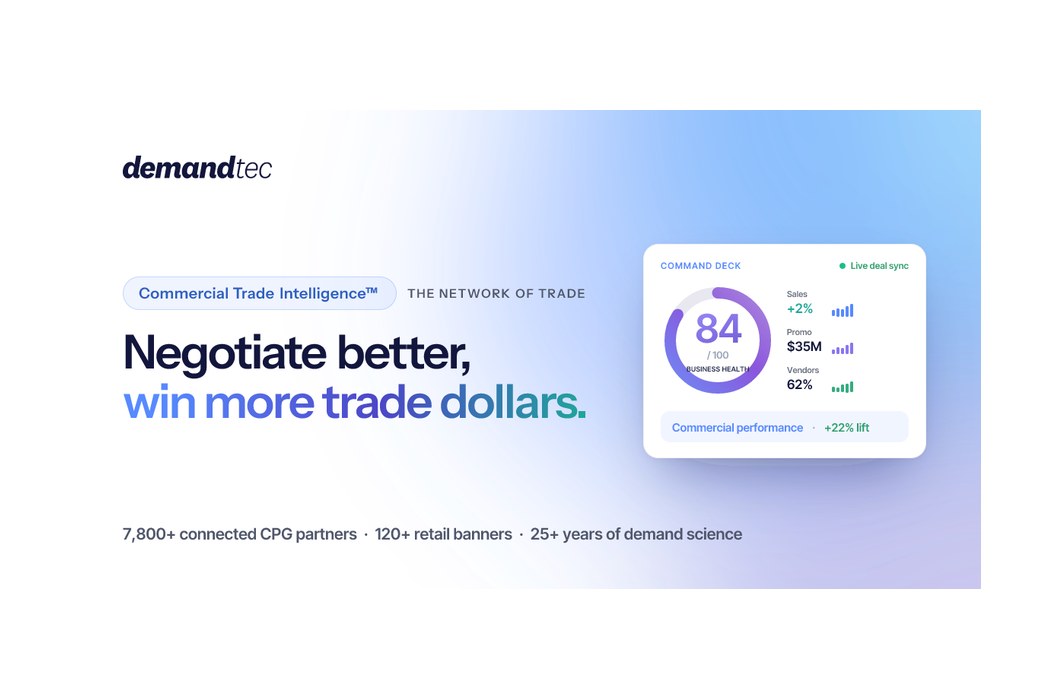
The $440 Million Pricing Brain That Came Back to Run the Grocery Aisle
DemandTec spent 25 years teaching retailers what a price change might do. Now, independent again, it wants retailers and suppliers to stop arguing from different spreadsheets - and put every trade dollar on one shared record.

Rahul Chabukswar Left Microsoft to Fix the Grocery Aisle’s Messiest Problem
He began with a warehouse, learned why supermarket data lies, and built Homesome around a stubborn idea: the neighborhood grocer should own the digital relationship too.

Harshal Nimawat Is Learning to Steer Where Retail Meets AI
From Mastercard and Wharton to CommerceIQ, Harshal Nimawat has built a career around the places where technology, capital and operating judgment collide. His route into the CEO's office includes one unusually literal lesson in keeping a crew on course.

Sampo Parkkinen Is Teaching Beauty Tech to Be More Helpful
The Revieve founder has spent two decades studying how people choose - first in physical stores, now through AI. His useful heresy is simple: stop selling so hard and start helping people buy.
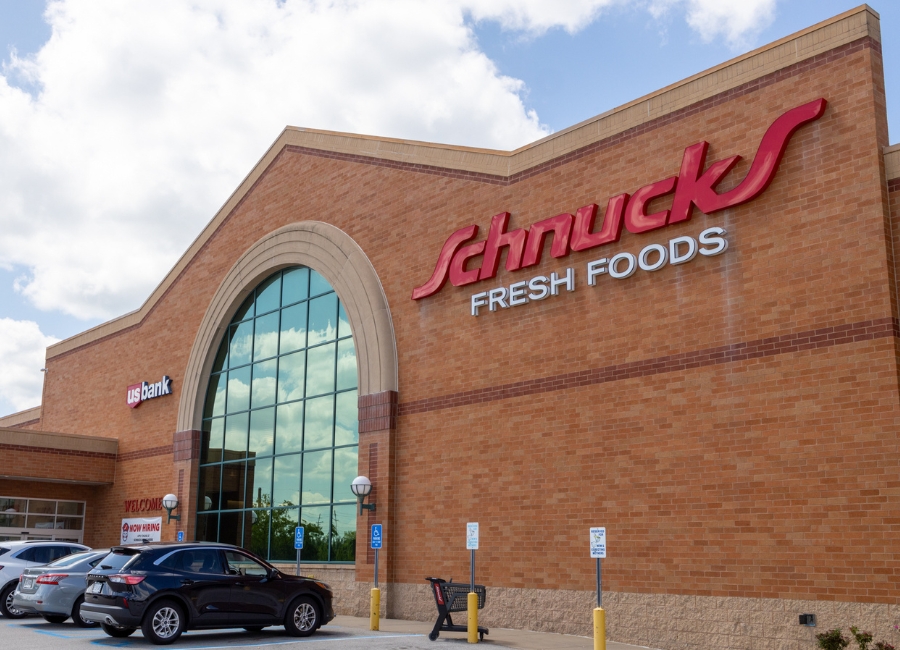
How Schnucks Put AI to Work Beyond the Cart
At Schnucks, the smartest AI is not a spectacle. It is a practical system that reads the paperwork, checks the apples and gives store teams more time for customers.

Angie Westbrock Learned to Read the Factory Floor. Now She’s Teaching Stores to Speak.
The Standard AI CEO built her career by listening to the people closest to the work. Her latest assignment is a company pivot that turns ceiling cameras into a new source of retail intelligence.

Olist Wants to Run the Store Behind Every Brazilian Store
The Brazilian unicorn began by getting small merchants onto giant marketplaces. Now it is stitching inventory, invoices, freight, payments, credit and AI into one control room for retail.
The Software Trying to Run the Whole Grocery Store Before the Lettuce Wilts
Grocers lose money in the gap between a forecast and the person standing in aisle seven. Upshop is building the operating layer that turns scattered data into the next useful action - before an empty shelf, missed order or expiring sandwich becomes a write-off.

The 38-Year-Old Company Trying to Give Retail One Memory
Every click, return and last item on a shelf creates data. ETP Group has spent nearly four decades trying to make sure a retailer remembers all of it at once.
The Software Behind the Sale You Never Think About
Aptos wants a store associate to find the item, know the customer and finish the sale from one screen - even when the network blinks. Its quiet advantage is decades of retail plumbing rebuilt for the cloud.

True Fit
The internet made every wardrobe available and every size chart arguable. True Fit has spent nearly two decades turning what shoppers bought, kept and sent back into a translation layer for fashion - and now it wants AI shopping agents to stop guessing, too.
DTEK.ai
DTEK.ai is a Dubai-based retail AI company whose flagship product, SWIFT, replaces barcode scanning with computer vision: shoppers set their items down on a kiosk, the system recognises them in a fraction of a second, and the transaction closes in about twenty to thirty seconds. Founded in January 2021 as Dukkantek - a cloud point-of-sale and store-management platform for the corner grocers of the Gulf - the company rebranded around late 2023 and rebuilt itself around vision models, adding SIGHT (turning existing CCTV into non-biometric store analytics) and a layer of configurable AI agents for loss prevention and reporting. It has raised $15.2 million across two rounds from investors including Global Founders Capital, BECO Capital, Rocketship and Wamda Capital, and in May 2026 signed its most visible deal to date: a rollout of SWIFT across 50 Oasis by ADNOC convenience stores in the UAE, with ADNOC Distribution citing a target of more than 60 percent faster checkout.

Stylitics
Stylitics is a New York-based retail AI company that helps brands and retailers turn their product catalogs into inspiring, shoppable styling experiences. Its platform combines algorithms, trend data, and human stylist expertise to generate personalized outfit recommendations, bundles, and generative on-model imagery across e-commerce, email, advertising, and stores. Founded in 2011 by Rohan Deuskar and Zach Davis, Stylitics powers styling for more than 100 retailers - including Macy's, Walmart, Kohl's, Puma, and Revolve - reaching over 100 million shoppers.

Standard AI
Standard AI is a San Francisco computer-vision company that turns ordinary store cameras into a data layer for physical retail. Founded in 2017 (as Standard Cognition) around cashierless, autonomous checkout, it pivoted to VISION - an AI and edge-computing analytics platform that measures foot traffic, shopper engagement, product interactions, and store operations for retailers and CPG brands. Backed by SoftBank Vision Fund 2, Y Combinator, CRV, and EQT Ventures, it hit a $1B valuation in 2021 and has grown largely through acquisition, most recently buying spatial-intelligence firm Pathr.ai in January 2026.
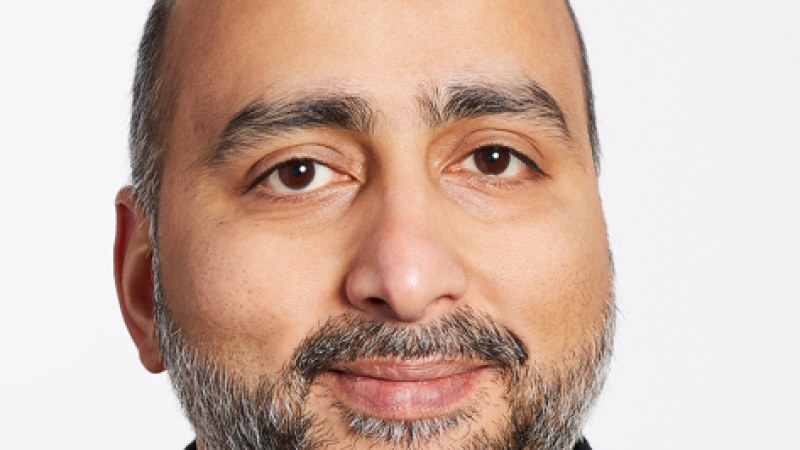
Rohan Deuskar
Rohan Deuskar is the co-founder and CEO of Stylitics, a New York-based visual merchandising and outfitting platform that dresses catalogs for retailers like Macy's, Walmart, Kohl's, Puma and Revolve. Launched in 2011 out of Wharton, Stylitics started as a consumer closet app, pivoted to B2B AI-powered outfit bundling, and raised roughly $105 million in total funding, with an $80 million Series C from PSG in 2022.

Hypotenuse AI
Hypotenuse AI is an AI-first product experience platform for ecommerce. It uses generative AI and AI agents to enrich product data, write on-brand product descriptions and SEO content, and edit or generate catalog imagery at scale. Founded in 2020 out of Y Combinator by Joshua Wong and Low Lin-Hui, the company started as an AI copywriting tool and grew into a broader system of record for product information used by Fortune 500 retailers and more than 500,000 ecommerce users worldwide.
Neuralk-AI
Neuralk-AI is a Paris-based deeptech startup building foundation models for tabular, structured data - the spreadsheets, SQL tables and product catalogs that run retail and commerce but that large language models handle poorly. Its in-house model, NICL (Neuralk In-Context-Learning), delivers predictions via API for tasks like product classification, deduplication, catalog cleaning, demand forecasting and personalization, and the company maintains TabBench, an open benchmark for evaluating tabular models on real industrial use cases. Founded in 2023 by Antoine Moissenot and Alexandre Pasquiou, Neuralk-AI raised a $4M seed round in February 2025 led by Fly Ventures, with angels including Hugging Face co-founder Thomas Wolf and Alan's Charles Gorintin.
NXN Labs
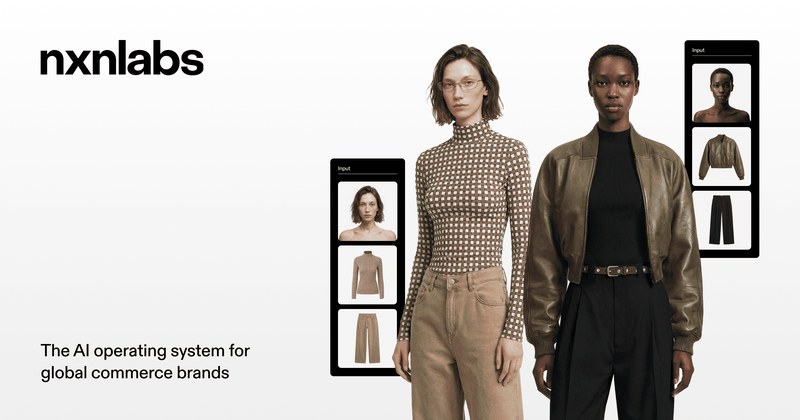
NXN Labs is a generative-AI company building software that turns flat-lay and mannequin product photos into realistic on-model imagery, virtual try-ons, and campaign visuals for fashion and retail brands. Its flagship platform, Arden AI, is pitched as an 'AI operating system' for creative production - covering asset generation, review-and-approval workflows, deployment, and performance analytics - built on a proprietary multimodal diffusion model. Founded in 2024 and backed by Naver D2SF, KB Investment, Smilegate Investment, and Shinsegae's Signite Partners, the company is expanding from South Korea to North America.

Mark Chrystal
Dr. Mark Chrystal is the CEO and co-founder of Profitmind, a Pittsburgh-based agentic AI startup that gives retailers a team of AI analysts for pricing, inventory, assortment, forecasting and competitive intelligence. A 25-year retail operator who ran analytics, supply chain and e-commerce at rue21, David's Bridal, American Eagle, Disney Store and Victoria's Secret, he was recruited by AI pioneer Andrew Ng to build software 'for retailers by retailers.' The company, formerly known as Netail, has raised roughly $14 million to date, including a $9 million Series A backed by Accenture Ventures, with partnerships spanning Accenture and Microsoft.

SymphonyAI
SymphonyAI builds vertical, industry-specific AI software that runs core workflows for demanding sectors - financial services, retail and CPG, manufacturing, media, and enterprise IT. Founded in 2017 by billionaire technologist Dr. Romesh Wadhwani and led by CEO Sanjay Dhawan, the Palo Alto company stitched together a string of startups and acquisitions into a single, profitable enterprise AI company built on its Eureka generative AI platform. With a roughly $500M revenue run rate, 2,000+ customers across some 40 countries, and around 2,300-2,500 employees, SymphonyAI sells ready-to-deploy AI rather than build-it-yourself tooling - and has openly signaled plans to go public.
Profitmind
Profitmind (operated by Netail, Inc.) is a Pittsburgh-based retail decision-intelligence company that builds agentic AI to help merchandising teams make faster, more profitable pricing, assortment, inventory, promotion, and marketing decisions. Founded by retail veteran Dr. Mark Chrystal and incubated inside Andrew Ng's AI Fund/Landing AI ecosystem, its platform unifies a retailer's strategy, internal data, and external competitive signals into prioritized, explainable recommendations - serving retailers from $20M to $100B in revenue across three continents.

Focal Systems
Focal Systems is a Burlingame, California computer-vision company building what it calls the Self-Driving Store. Its battery-powered shelf cameras digitize aisles every hour and feed FocalOS, a retail operating system that automates ordering, restocking, planogram compliance and labor scheduling for some of the world's largest grocers, including Walmart and Morrisons.
Lily AI
Lily AI is a Mountain View-based retail AI company that translates the language of the customer into the language of the catalog. Its platform uses computer vision, NLP and large language models to enrich product data with thousands of consumer-centric attributes - powering site search, recommendations, SEO/SEM and demand forecasting for retailers like Macy's, Bloomingdale's, Gap and thredUP.

Guru Hariharan
Guru Hariharan is the Founder and CEO of CommerceIQ, a unicorn-valued AI platform that helps 2,200+ consumer brands - from Nestle to Kellogg's - automate and optimize their retail ecommerce operations across Amazon, Walmart, and other major retailers. A veteran of Amazon and eBay, he co-invented the Amazon Selling Coach, sold his first company Boomerang Commerce's analytics unit to Lowe's in 2019, and pivoted to build CommerceIQ into a $136.6M ARR business by 2024. In May 2025, he launched AllyAI, a suite of agentic AI teammates purpose-built for retail - a product he describes as pioneering the next era of algorithmic commerce.

Kevin Johnson
Kevin H. Johnson is the CEO of Focal Systems, an AI-powered retail operations company deploying shelf-scanning cameras across brick-and-mortar stores worldwide. A 30-year veteran of building and scaling tech businesses, he grew Ebates forty-fold before selling it to Rakuten for $1 billion, then led Udemy as a publicly-traded company, and now applies that commercial track record to the frontier problem of putting real-time AI intelligence into every grocery aisle.

Purva Gupta
Purva Gupta is the co-founder and CEO of Lily AI, the Mountain View-based AI platform that bridges the gap between how retailers describe products and how consumers actually search for them. Founded in 2015 after her own frustrating experience shopping online as a newly arrived immigrant from India, Gupta built Lily AI into an enterprise-grade solution serving major retailers including Macy's, Bloomingdale's, J.Crew, and thredUP. The company has raised $62 million in total funding, achieved triple-digit year-over-year growth, and is recognized as a Deloitte Technology Fast 500 company. A Tory Burch Fellow, Ad Age Leading Women honoree, EY Entrepreneur of the Year finalist, and venture partner at Unshackled Ventures, Gupta has become a prominent voice in retail AI and immigrant entrepreneurship.

Hypersonix Inc.
Hypersonix is an agentic AI platform purpose-built for retail and eCommerce profitability. Its flagship product, ProfitGPT, gives merchants autonomous decision-making across pricing, promotions, forecasting, and inventory - replacing weeks of analyst work with minutes of AI-driven insight. With 5M+ SKUs optimized and 100K+ daily autonomous pricing decisions, Hypersonix helps retailers like LVMH, Woodman's Market, and Rogers Sporting Goods capture margin lift of 10-12% within 90 days.