There is a peculiar kind of retail failure that occurs when two perfectly respectable facts collide. The inventory system says the cereal is in stock. The shelf, meanwhile, is a beige rectangle of nothing. Somewhere between the loading dock and the shopper, reality has escaped the database. navNote has built a company around that escape.
The startup calls itself an AI operating system for retail. That phrase is roomy enough to hold almost anything, but its actual proposition is quite concrete. A store employee, merchandiser, or field representative takes a picture. Computer vision checks the shelf for missing products, misplaced items, price problems, weak presentation, and planogram compliance. The software can then prioritize the issue, assign it, record the visit, and help a manager ask questions across stores and regions in ordinary language.
In other words, navNote is trying to compress a familiar sequence - observe, report, interpret, assign, verify - into one loop. The interesting part is not that an AI model can identify an empty space. The interesting part is whether the empty space becomes somebody’s next job before a customer walks past it.
a shelf
the scene
the fix
the work
The smallest useful question
Esmaeil Mousavi founded navNote in 2025 with Niklas Kennedy. Mousavi came from applied AI and autonomous-systems research at Weber State University; Kennedy leads engineering, platform work, and go-to-market. The company’s early story moves quickly: a Utah dorm room, incubation support, a base in Beacon, an announced foothold on Madison Avenue, and then headquarters in San Jose. It is the familiar geographic impatience of a startup trying to find the room where customers, engineers, and money are already talking.
But the more consequential movement was conceptual. Todd Kammeyer, president of Kroger’s Fred Meyer division and a mentor to Mousavi, kept returning to one test: did the product help the person on the floor? He also pointed the founders toward the less glamorous barriers in grocery - trust, control of data, and the ability to operate inside the store. This was useful advice because retail technology is rich in things that impress people in conference rooms and irritate people holding scanners.
“Does this help the person on the floor?”The question navNote says became its product test
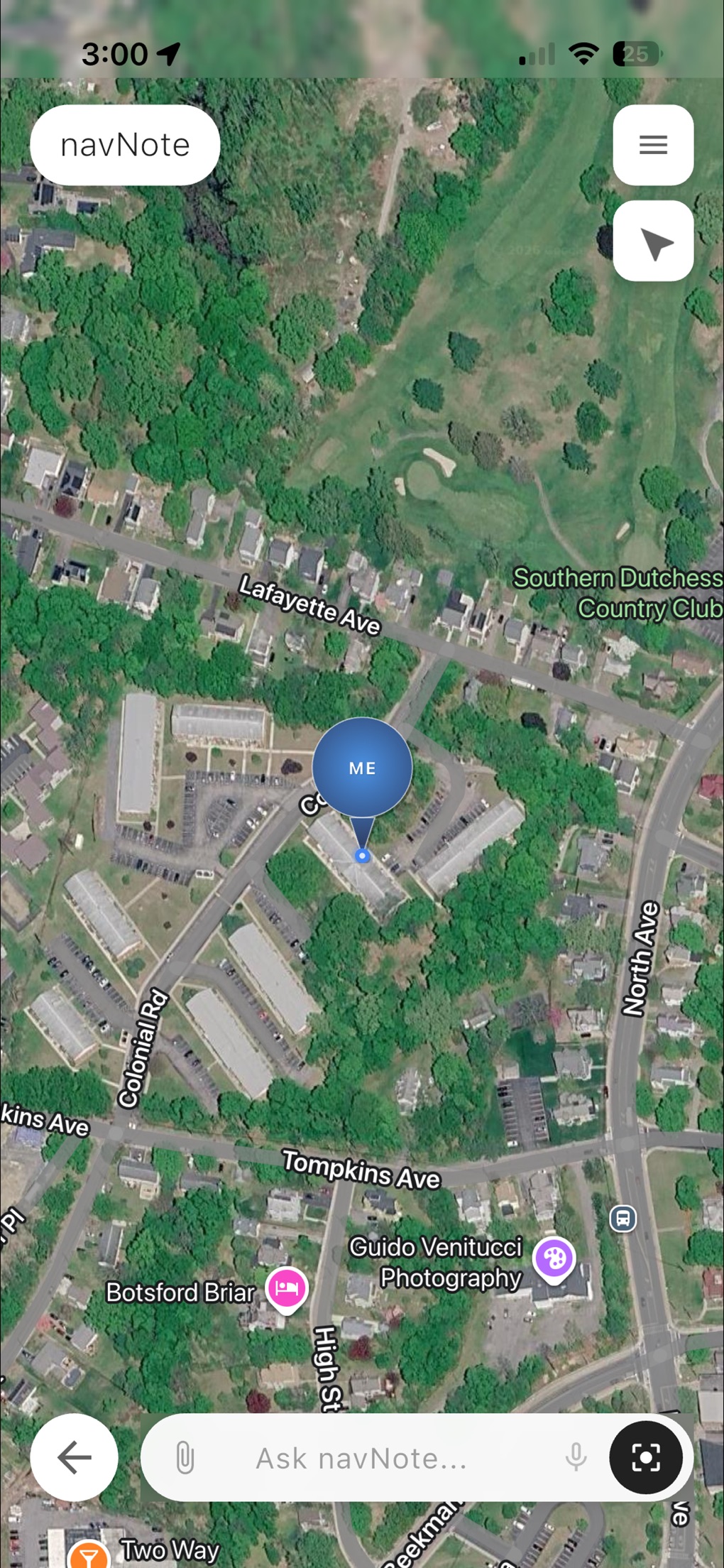
The question changed the center of gravity. navNote is not pitching a detached oracle that predicts retail from afar. It is building native iOS and Android apps for the people who visit stores, plus a web dashboard for the people who manage them. The product tracks visits, location, tasks, photographs, prices, promotions, audits, and performance. Its copilot is meant to answer questions, but also to do things: generate a report, update a record, or send work to the right person.
Eight services, one box, no open door
Here is navNote’s strongest technical claim. Its on-premise stack runs as eight native microservices on mimik’s mimOE runtime. The company says a retailer can install it on its own hardware with one command in roughly six minutes. The setup requires no inbound firewall ports. Store images, pricing strategies, planograms, and model inference can remain on the retailer’s machine.
This is a shrewd response to two enterprise objections. The first is privacy: a grocery chain may not want shelf photos, competitive pricing, or store layouts traveling to somebody else’s cloud. The second is economics: when every image, audit, report, and question creates a metered model call, a busy store can turn small charges into a recurring tax. navNote’s public pitch is that an on-premise customer pays for setup and then runs local inference without the per-question meter. It does not publish the setup price or broader enterprise pricing.
The partnership with mimik matters because navNote is a very small company. Its LinkedIn page lists 2-10 employees. Building a mobile product, a web dashboard, an agent layer, computer vision, and an edge runtime at once would be an extravagant engineering menu for a team that size. Using mimOE gives the company an existing device-first substrate while navNote concentrates on retail workflows. SAKUU is named as a strategic partner. CurrencyM Ventures, The Moinian Group, and Cook Investing are named as private backers, though the amount raised is not public.
The crowded aisle
navNote is entering a market with long shelves of its own. Trax analyzes retail shelves. Repsly manages field teams. GoSpotCheck built image-led field execution. ServiceMax handles complex service work. There are also vision APIs, workforce systems, task apps, and retailer-built tools. navNote’s distinction is the bundle: computer vision plus operational agents plus workforce coordination, with an architecture that can stay off the public cloud.
That bundle is both the advantage and the hazard. A broad product can replace several disconnected tools, which is attractive in grocery operations that still bridge multiple systems with paper and human memory. But breadth creates a brutal standard. The picture must be clear enough to interpret. The planogram or product reference data must be trustworthy. The task must reach a person who has the authority and time to fix it. The model’s mistake must cost less than the problem it was meant to prevent. If one link fails, the elegant loop becomes another inbox.
The company is early. It says its first retail deployment is live and a store team uses it daily for audits and price checks, but it has not named that customer or published a user count, revenue figure, valuation, or measured return on investment. The App Store listing is public and free to download; in May 2026, version 1.1 added improved augmented-reality features and performance refinements. One rating is not market proof. It is, however, proof that there is a shipped object behind the pitch deck.
The honest scorecard: navNote has a crisp operational thesis, a real mobile product, one disclosed live deployment, and an unusually specific on-premise architecture. It does not yet offer the public evidence needed to judge accuracy at scale, customer economics, or whether the suite can displace established retail tools.
The part worth copying
The most portable navNote idea has nothing to do with a particular model. Begin with the person nearest the physical problem. Ask for one piece of evidence they can capture without interrupting the work. Make the system return a decision, not merely a summary. Then design deployment around the customer’s risk, rather than asking the customer to reorganize its risk around your architecture.
That play works where operations repeat, evidence can be standardized, and somebody can act on the result. It is weaker in stores with inconsistent product data, poor image capture, unusual layouts, fragile local hardware support, or teams already drowning in unprioritized tasks. Local inference also trades cloud dependence for responsibility inside the building. Someone still has to maintain the box, validate the models, and decide what happens when the shelf and the machine disagree.
navNote’s bet is that retail does not need one more retrospective dashboard. It needs a loop short enough to catch reality before reality changes again. Six minutes is the company’s installation claim. The more important clock is the one that starts when a customer sees an empty shelf.
See navNote in the wild
The company publishes product updates, videos, and field notes across its own site and social channels.