A grocery store is a distributed system disguised as somewhere to buy parsley. There are shelves, scanners, scales, recipes, loyalty accounts, weekly ads, deli tickets, kitchen printers, pickers, drivers and customers who have perfectly reasonable feelings about the ripeness of a banana. The system is expected to answer a deceptively plain question: can I buy this now? For Rahul Chabukswar, that question became a second career.
His first career took shape in computer science. Chabukswar earned an engineering degree from the University of Mumbai, worked in research at IIT Bombay, then completed a master’s at the University of Southern California. At USC’s GIS lab, his work included a fuzzy-classifier application. The phrase sounds distant from grocery, until one remembers that an online supermarket is a vast classification problem with a produce section attached.
Microsoft came next. After a 2005 internship, Chabukswar joined full time in 2006. He worked on Windows Server, moved into engineering management and later led work around Windows Azure. More than a decade in infrastructure teaches a particular kind of manners: components must talk to one another; unreliable data eventually becomes somebody’s bad afternoon; scale is merely a larger audience for small mistakes.
The operating educationFirst, pick the groceries
In 2017, after inconsistent experiences with marketplace apps, Chabukswar and his team started operating a grocery warehouse. They picked orders. They handled logistics. They met the physical truth of the aisle, where a product can exist in a database and fail to exist in the building. This was not the breezy sort of software education conducted with sticky notes and a catered lunch. It involved the merchandise.
Other retailers began asking what the company was doing. Some wanted Homesome to deliver from their stores too. Those requests exposed a better business than the original one: grocers did not only need another place to list products. They needed the underlying machinery to run ecommerce on their own terms. By June 2018, Homesome had shifted its focus toward becoming a technology provider for neighborhood grocery stores.
“Figuring out what is in the store is critical.”Rahul Chabukswar
The inventory problem was wonderfully impolite. Chabukswar said a store’s point-of-sale system could list five times as many products as were actually in the store. An item’s presence in the file did not guarantee its presence on the shelf. Online, the discrepancy surfaced as substitutions, refunds and a customer unpacking a dinner plan with one ingredient mysteriously missing.
Homesome responded with point-of-sale integration and predictive inventory software. By 2022, the company reported a 96 percent found rate for store customers. The metric is not as glamorous as “engagement,” which is precisely why it matters. A found rate is the distance between what a screen promises and what a picker can place in a bag. It is ecommerce credibility reduced to arithmetic.
The grocery stack, without the polite fiction that checkout is the whole job
or app
and availability
and fulfillment
The strategic betOwn the shop, not just the transaction
There was another mismatch, less visible than a missing carton of eggs. A marketplace could deliver an order while standing between a grocer and its customer. The store might receive revenue, yet lose a clear view of preferences, frequency and behavior. Homesome’s model instead charged a flat monthly fee per store. Chabukswar’s formulation was blunt: “The more they sell, the more they get to keep.”
The model also left the relationship, experience and data with the retailer. That matters because independent grocers compete through distinctions that generic interfaces flatten: a beloved prepared-food counter, a useful butcher, a peculiar local specialty, a loyalty program understood by three generations of one family. Translating that character online requires more than a cart icon. It requires the digital store to behave like the actual store.
Homesome built for those details. Orders could flow to employees using a mobile picking app with barcode scanning and substitution tools. Prepared-food requests could reach kitchen printers according to timing. The platform grew to include loyalty and digital coupons, recipes, tailored recommendations, pickup and delivery integrations, and websites and apps that carried the retailer’s own brand.
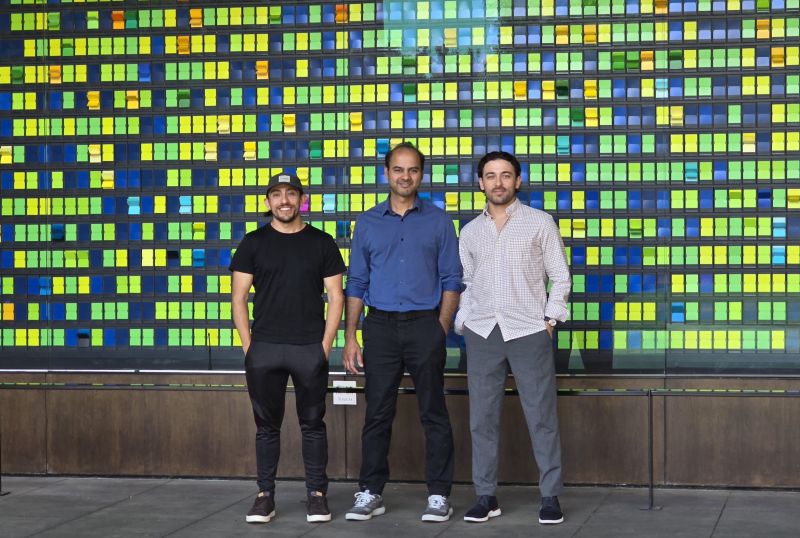
The company’s customer history became a tour of grocery’s many dialects. Erewhon needed an experience attentive to prepared foods and beverages. Westside Market NYC needed speed when lockdowns arrived in March 2020; its chief executive said Homesome brought stores online in ten days. Strack & Van Til wanted personalized shopping, loyalty, coupons and recipe discovery. After its new platform launched, the chain reported a 93 percent year-over-year rise in digital sales.
In September 2020, Homesome raised a $6.7 million Series A led by Itai Tsiddon, with participation from the founders of Rappi, Stephane Kurgan and Ran Makavy. The pandemic had accelerated online grocery demand, but Chabukswar described the company as building for the long term in a capital-efficient way. The money funded product development and growth rather than changing the central thesis.
More signals than receiptsWhat the register never knew
By 2026, Chabukswar’s language had moved upstream. The point-of-sale record remains useful, he argued, but it says what already happened. It does not reveal the search that returned nothing, the abandoned cart, the substitute accepted with a sigh or the preference embedded in a highly specific request. Those signals live in the digital store.
This is where the former Azure manager reappears most clearly. Ecommerce, fulfillment, product data and artificial intelligence are not separate decorations. They are parts of one sensing system. If the grocer owns that system, it can notice demand before the register records a sale. If somebody else owns it, the grocer may receive the completed basket while the reasoning behind the basket travels elsewhere.
Windows Server and Windows Azure engineering roles at Microsoft.
Homesome begins with a warehouse, then pivots toward retailer software.
A $6.7 million Series A follows rapid online-grocery growth.
SNAP payments, enterprise launches and broader personalization arrive.
Food City selects Homesome for a planned rollout across 140 locations.
The largest public proof point so far arrived in May 2026, when K-VA-T Food Stores selected Homesome’s Enterprise, Fulfillment and AI platforms for a planned deployment across 140 Food City locations in the Southeast. The brief had become larger: weekly ads, coupons, loyalty, promotions, ecommerce, fulfillment and personalization, connected under the retailer’s brand.
Chabukswar praised Food City not for its size but for the trust it had accumulated in its communities. His point was that trust must survive the trip online. A digital channel should feel like an extension of the stores, he wrote, rather than a disconnected transaction layer. This is an unusually civic way to discuss software, but grocery has always been an unusually civic form of retail. People notice when their supermarket changes.
The founder’s through-lineSystems should tell the truth
There is a temptation to tell Chabukswar’s story as a dramatic leap from cloud computing to cauliflower. The continuity is more interesting. At Microsoft, he worked on infrastructure that had to coordinate complexity. At Homesome, the components changed, but the duty did not. A kitchen printer must receive the order. A loyalty account must recognize the shopper. A picker must see the substitute. A customer must not be sold an imaginary egg.
His public comments are persistently operational. At the inaugural FMI GroceryLab in Detroit in 2026, where Homesome co-led a session on intelligent merchandising and assortment, he singled out conversations grounded in merchandising, fulfillment and customer experience. He was interested in AI applied to an actual decision, not AI wandering the conference hall in search of one.
The early warehouse supplied that discipline. It forced the company to experience every elegant idea at shopping-cart speed. It also supplied a durable founder lesson: the business people first imagine is sometimes an expensive instrument for discovering the business customers actually need. Homesome began by carrying the groceries. Its scalable product was the knowledge earned while carrying them.
The stealable idea: operate close enough to the mess that customers begin asking for your internal tools. Their request may be the clearest product brief you receive.
For Chabukswar, the resulting ambition remains consistent: give regional and independent grocers a digital channel they control, one that understands their stores closely enough to preserve the relationship they built in person.
Software likes clean abstractions. Grocery replies with weighted produce. The interesting work happens in the negotiation between them. Chabukswar has spent the better part of a decade making the digital promise resemble the physical shelf, then widening the system so the retailer can learn from every search, cart and substitution. The future of grocery may involve agents and personalized discovery. It will still begin with a smaller, older obligation: when the screen says the eggs are there, the eggs ought to be there.