Imagine a shop with exquisite windows and a door that takes several seconds to open. The owner spends another fortune on the windows. The customer tries the handle once, then wanders away. There is something almost comic about the arrangement, provided you are not paying for it.
This is a useful way into ITG, a software engineering company whose work often begins where the attractive part of online retail ends. A shopper sees a picture and a price. Behind them sit product data, payments, inventory, shipping rules and an assortment of systems with different opinions about the same order. ITG builds, connects, tests and maintains that machinery.
- The job: commerce engineering, mobile experiences and enterprise systems that have to work together.
- The evidence: published projects range from Lancôme’s mobile site to Hunter Douglas’s dealer infrastructure.
- The lesson: measure where the customer gets stuck before buying a more fashionable solution.
A sale lost in the waiting room
In ITG’s account of Lancôme’s mobile project, growing phone traffic met content designed for desktops. Loading was slow and shopping involved friction. The beauty company initially considered an iOS app, then chose Mobify’s progressive web approach. ITG integrated the platform and built the front end. The case study reports a 36% year-over-year rise in mobile revenue, alongside more transactions and a higher average order value.
“Initially, we were exploring an iOS app”
Malik Abu-Ghazaleh · Lancôme executive, in ITG’s case study
That change of direction is the interesting part. An app is a tangible commission: an icon, a launch, something to announce. Removing friction is less theatrical. It requires asking what the shopper is already trying to do and how much patience the existing experience demands. For a customer arriving through a browser, a good browser experience has an obvious advantage: it is already in the customer’s hand.
Year-over-year lift reported in ITG’s Lancôme case study. An observed result, rather than an isolated measure of ITG’s contribution.
The case suggests a practical question for any retailer: where does the journey first become tiresome? A difficult product search and an unreliable payment step are different problems. Buying the same remedy for both is rather like prescribing a new shop sign for a sticky door.
The business behind the buy button
ITG occupies the implementation layer of enterprise technology. Platform companies supply the foundations; a business still needs someone to adapt them to its catalog, its workflows and its existing systems. ITG’s commerce practice covers B2B and B2C work, with implementation and maintenance across platforms including Salesforce Commerce Cloud and HCL Commerce. Its published partner roster also includes Microsoft, IBM and fabric.
Consider its Wasserstrom work. ITG describes building a B2B experience on WebSphere Commerce, redesigning the cart and tuning performance. These are specific interventions in an operating business. A wholesale cart has to serve people buying for a purpose; the elegance of the interface means little if completing a routine order becomes a small clerical expedition.
A conceptual map of the work beneath a sale.
Hunter Douglas illustrates the broader version of that job. ITG reports a modernization spanning seven platforms, with more than 6,000 dealers migrated and four portals delivered. Content management, commerce, marketing and a tablet application for field quoting and ordering were part of the engagement.
A dealer-facing system is judged while someone is doing another job. The user may be preparing a quote or answering a customer, rather than settling down to admire the software. The important design question becomes what information must travel with that person. Integration earns its keep when the next step can proceed without another search, another sign-in or another transcription.
This is also how to understand ITG’s position among alternatives. Buyers can hire another implementation consultancy, assemble platform specialists, or build internally. ITG’s portfolio makes a case for handling several connected jobs within one engineering relationship. That is a reason to consider it when integration is central; the portfolio alone cannot establish that it will beat every competing bid.
Software for the morning after
The company’s own ERP product supplies a pleasingly unglamorous detail: rental returns. Its listed modules also cover events, inventory, shipping and receivables. Weddings and proms appear in the product description. Here is business software with an interest in what happens after the splendid evening is over.
A rental return complicates the tidy picture of commerce as a one-way exchange. The item goes out and must come back. The business needs a record of both movements. This explains the value of software built around a particular operating process: the exception to a standard retail model may be the everyday reality of the customer’s business.
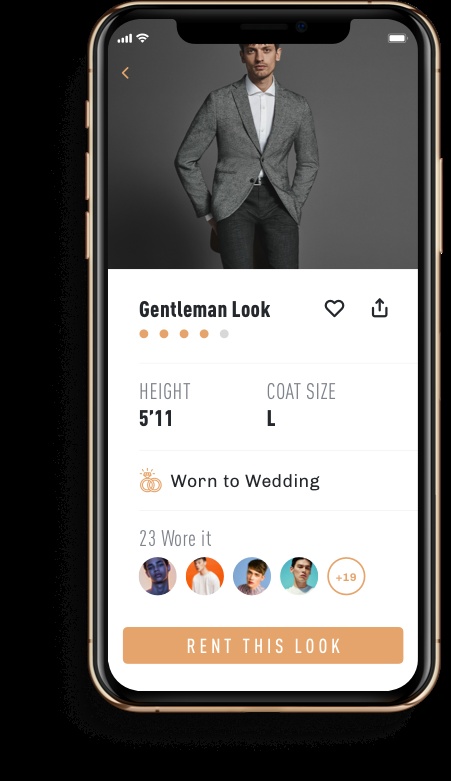
The software keeps the appointment.
A rental experience has to account for the journey back, too.
Alongside enterprise work, ITG lists iCalendar and Awesome Scanner for Apple devices. The breadth is unusual enough to be memorable: the same services portfolio that discusses business integration makes room for scheduling a day and scanning a document. It shows a company with product work as well as client assignments, without making those apps the explanation for its enterprise business.
Maintenance and testing belong in the story, too. ITG’s QA page describes checkout testing for TUMI and testing across Lancôme’s desktop and mobile experiences. Its SharePoint portfolio includes more than 40 portals built or customized for Procter & Gamble. Neither activity lends itself to a dramatic launch photograph. Both concern software that people must be able to use repeatedly.
A buyer can borrow that emphasis. Ask the engineering partner to show the tests for the ordinary transaction, the awkward transaction and the change made six months later. A demonstration proves that a path exists. A useful test plan asks how reliably people can take it.
Faster code, an awkward bill
ITG’s Funko case study describes AI-assisted work on Salesforce Commerce Cloud. Estimated delivery fell from 5.2 weeks to 2.5 weeks. Structured tasks reached up to 90% accuracy in the company’s account, while complex workflows still needed human oversight. Those boundaries matter as much as the headline reduction.
Case-specific estimates published by ITG. These are not universal delivery benchmarks.
Accuracy on a structured task does not mean an entire storefront is ready to trade. A generated object or piece of documentation can be reviewed locally. An order passing through several business systems must behave correctly across the journey. The sensible question is which work became faster, and who checked the result.
CEO Husam Barkawi’s public account adds an economic complication. ITG has offered fixed-price engagements since 2006, he says, and moved away from waterfall development in 2002. AI speeds an existing practice of frequent demonstrations and feedback. He also says AI-tool costs have been higher and more variable than expected.
For a supplier quoting a fixed price, faster production and unpredictable input costs can arrive together. For the buyer, the useful commercial conversation concerns scope, acceptance and responsibility for changes. A productivity improvement has several possible destinations: an earlier launch, more testing, a lower bill or a better supplier margin. The contract helps decide which destination gets the ticket.
Borrow the questions, then choose the tools
ITG’s published discovery guidance recommends agreeing on scope, mapping dependencies and recording risks before development. There is a simple exercise hiding in that advice. Pick one real customer action, trace every system it touches, and decide how you will recognize success. Then ask a prospective partner to explain the difficult handoffs.
The approach needs participation from the people who own those systems and the people who use them. Without their decisions, iteration can become a succession of demonstrations awaiting an answer. It also needs a problem substantial enough to justify custom engineering. A straightforward shop with standard requirements may be well served by configuration and a smaller implementation.
ITG’s appeal lies in a particular kind of business difficulty: a customer should experience one simple action while several complicated systems cooperate. The shopper will rarely congratulate the integration team. They may simply finish the order. In commerce, that is a perfectly respectable ovation.
ITG website ↗ · LinkedIn ↗ · X ↗ · Facebook ↗
Engineering blog ↗ · Lancôme project ↗ · Funko project ↗ · Hunter Douglas project ↗