A ticket looks deceptively simple. Choose a destination, pay, receive a confirmation. Behind that modest transaction sits a less agreeable world: suppliers that need connecting, prices that need updating, payments that need clearing, and servers that must stay awake while everyone else sleeps. RoofStacks began in travel technology. Its subsequent adventures make more sense when you remember how much engineering a ticket conceals.
- The starting point: software behind Bilet Dükkanı, the travel platform.
- The business today: enterprise technology services alongside gaming and AR ventures.
- The useful connection: infrastructure, payments and interaction design travel between industries.
- The buyer’s question: which of those capabilities solves your particular problem?
The company’s range invites a raised eyebrow. Travel, banking, streaming, retail, blockchain, games: the list could belong to a conference programme with an unusually ambitious caterer. But there are specific connections beneath the labels. A booking platform needs reliable payments. A bank needs people to understand its interface. A game needs an audience, and an audience needs infrastructure. RoofStacks’ interesting wager is that working across these problems can produce useful combinations.
The domain name came before the grand plan
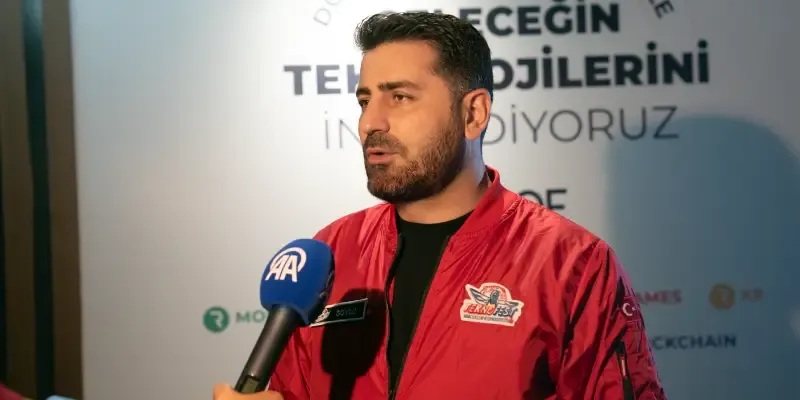
Founder Burak Soylu’s biography traces his commercial education to his father’s travel agency. While still in high school, he bought the biletdukkani.com domain. He later studied law. The software company emerged from his search for better travel technology, rather than from a computer-science origin story polished for investors.
RoofStacks started within HAR Group in 2015 with five people. Its history records an Austin office and the creation of RoofGames in 2020. The geography matters: this is a business with Turkish operating roots and an American presence, selling technical work that can cross borders more easily than the industries it serves.
The booking business met its own ceiling
One Bilet Dükkanı case study describes an offering constrained by one product and one sales channel. RoofTravel helped broaden the catalogue and distribution, adding services and routes to customers beyond the original business-to-business channel. The company says the consumer project went live in under a year.
That is a practical form of digital transformation: give an existing operation more things to sell and more ways to sell them. RoofTravel’s wider offering includes booking engines and integrations with reservation systems, hotel software and payment gateways. For an agency, the value lies in connecting the machinery of a trip without making its staff manually reconcile every piece.
A separate infrastructure account describes high traffic, frequent outages and rising costs. RoofStacks reports a 60% infrastructure saving and 99.95% availability after optimization. Those are company case-study results, without a published measurement period. They describe the result of engineering work, rather than a promise that every customer will receive the same outcome.
Illustrative index, not dollars. RoofStacks reports the percentage saving; the bars translate that claim into a common baseline.
Measurement period unspecified
The company’s later operating review offers another useful distinction. For 2025, RoofTravel reported 450,000 guests, four million sessions and 500 million search requests. These measure different things. One person may search repeatedly; one session may generate many requests. Demand on a system can become enormous well before the customer count sounds enormous.
The transferable lesson is to measure the work your software performs, then compare that workload with the cost of keeping it available. A graph of customers alone can conceal an expensive habit of searching, refreshing and asking again.
When the bank borrowed the game designers
Halkbank wanted a digital banking experience for children that would support financial literacy. RoofMoney led the project, with support from RoofGames. The work combined a child-friendly interface and game elements with infrastructure, security and content development. RoofStacks says the project received a Gold Stevie award in Financial Services in 2024.
The collaboration supplies a better explanation of the portfolio than any diagram of corporate boxes. Game designers think about participation and feedback; banking engineers think about transactions and security. A children’s banking product needs both kinds of attention. The company’s account demonstrates that the teams worked together. It does not establish how much more financially literate the children became.
“This is a 100% local game based on Turkish mythology, and it tells a story of brotherhood.”Burak Soylu on Olpamis · September 2025
RoofMoney’s broader services address bank software and virtual POS payments. RoofBlockchain separately offers trading infrastructure, custody and tokenization. A financial institution can therefore approach RoofStacks for an application, an integration or a deeper infrastructure project. Each requires its own scope; the presence of several capabilities is the beginning of a buying discussion.
A game studio learns to stay longer
RoofGames began with hyper-casual games and later expanded toward mobile and PC/console projects. Its account of starting the studio describes a small core team, limited resources and the need to settle equipment, roles and a sustainable business model. It identifies unexpected interest in an early demo as a turning point.
That account is refreshingly useful at the level of method. Show something playable. Collect feedback. Improve it. Expand the team as the work becomes more concrete. A demonstration gives people something to judge beyond the elegance of a presentation.
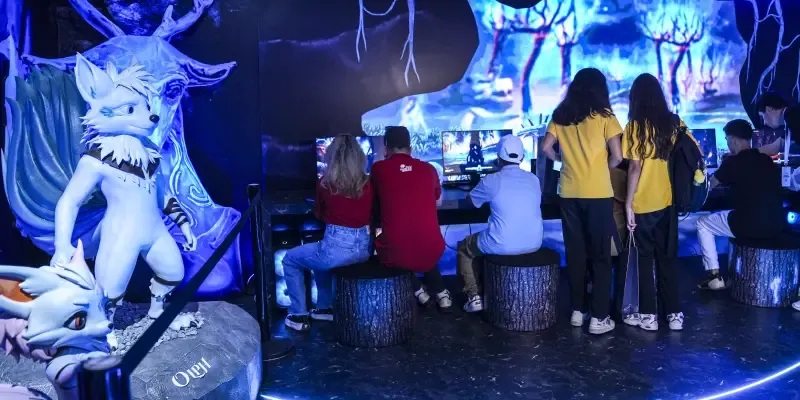
Olpamis, the studio’s Turkish-mythology project, carries a different time commitment from a small mobile experiment. At TEKNOFEST in September 2025, Soylu described roughly a year and a half of work by 30 people and a target of reaching Steam by the end of 2026. That target is a development plan. The staffing and duration are the useful evidence of the commitment involved.
The shared machinery underneath
GoArt Worlds connects augmented reality with Web3 marketing, giving brands, players and creators gamified experiences. RoofXR offers location-based AR and digital loyalty work. The imaginative surface still needs ordinary technical discipline: GoArt’s infrastructure case study describes growing demands for availability, security and usage analysis.
RoofPlatform supplies that less photogenic work: cloud engineering, monitoring, software architecture and business intelligence. RoofStacks announced AWS Select Partner status in July 2025 and a Google Cloud Build Partner relationship that October. The latter announcement names tools for data analysis, AI and deployment. These partnerships help explain how the company assembles solutions from existing cloud services.
An editorial map of the work described across RoofStacks’ portfolio.
Streaming and retail extend the same logic. RoofStream offers live and on-demand video delivery, analytics and monetization infrastructure. RoofRetail addresses shelf labels, loyalty and shopping tools. In September 2025, RoofStacks announced a Tarım Kredi Teknoloji project for a shopping app with product search, barcode scanning and discount tracking, backed by a management panel. The proposed back office is as consequential as the consumer screen.
Buy the connection you actually need
RoofStacks describes its commercial approach as Technology as a Service, built around strategic partnerships. Its position combines enterprise software work with products and ventures developed within the group. A buyer might otherwise choose an internal engineering team, a specialist industry vendor or a software consultancy. RoofStacks’ case rests on sector experience and the ability to combine disciplines.
That breadth has conditions. A retailer buying a simple loyalty tool may be better served by an established product than a custom project. A bank cannot substitute playful design for security and governance. An AR campaign needs a reason for people to participate. Shared engineering makes useful connections possible; it does not make every new market economical.
The lesson to copy is modest and demanding: begin with an operation you understand, identify the capabilities it forces you to build, and test whether those capabilities solve another customer’s problem. RoofStacks’ portfolio is interesting wherever that connection becomes visible. A ticket sells. The engineers discover how much else has to happen.
RoofStacks website ↗ · Company updates ↗ · Blog ↗ · RoofGames ↗ · GoArt Worlds ↗
LinkedIn · X · Instagram · Facebook · RoofStacks on YouTube · RoofGames videos