At a New York NFT event, Archie Ravishankar saw people who had never cared about blockchain suddenly asking what they could own on it. He already ran a consumer banking app. The question that followed was less romantic than most crypto origin stories: if these people wanted a wallet, why make them leave the app that held their money?
That question became Cogni's organizing idea. Founded in 2018, the New York company began with a familiar mobile banking promise: open an account on a phone, get a debit card, avoid routine account fees. In 2022 it raised a $23 million Series A and moved toward a different kind of account, one in which users could hold the keys to digital assets themselves. The leap from debit card to private key sounds vast. In product terms, Cogni tried to make it one more tab.
- Cogni began as a consumer banking app aimed especially at adults aged 18 to 35.
- Its December 2022 wallet launch initially let users hold, send and receive crypto; the larger Web3 plan extended beyond that first release.
- The company's durable design question is simple: can self-custody feel as ordinary as checking a balance?
The bank account was the on-ramp
Cogni's first product was designed for people whose financial lives already lived on a phone. The company offered no-fee basic banking, a debit card and access to a large ATM network through its banking arrangement. It also tried features that said more about its target customer than about banking itself: digital gift cards, single-use cards for subscriptions and carbon estimates attached to transactions. In a 2022 interview, Ravishankar described the customer as someone between 18 and 35 who wanted deals, events and a clearer sense of where money went.
Those additions can look like a restless product roadmap. They also reveal the logic of the later wallet. Cogni wanted to be the place a customer opened before choosing where to spend, save or explore. When Ravishankar encountered mainstream interest in NFTs, he saw another lifestyle decision that a bank-shaped app might host. The company was betting that the hard part of Web3 adoption was less about explaining a chain than about fitting a new action into an old habit.
There was a market reason for the turn, too. Banking apps were no longer a rare sight. Chime, Current and other consumer fintechs were much larger. In April 2022, Cogni's founder said it had users in the tens of thousands and was adding roughly 50 to 60 a day by word of mouth. That is a meaningful base for testing a new interface, but a small one in a market where rivals counted millions. A wallet could give Cogni a more specific reason to exist.
A private key in a familiar room
The distinction Cogni chose was custody. On many crypto buying screens, a platform holds the keys and the customer holds a claim recorded by that platform. A self-custody wallet gives the user control of the keys. Cogni's wallet terms describe a multi-party computation design intended to combine user control with recovery options. The slogan on its website is blunt: “Your Keys, Your Coins.” The actual work lies behind that slogan, in setup, backup, transfers and the anxiety of sending an asset to a long string of characters.
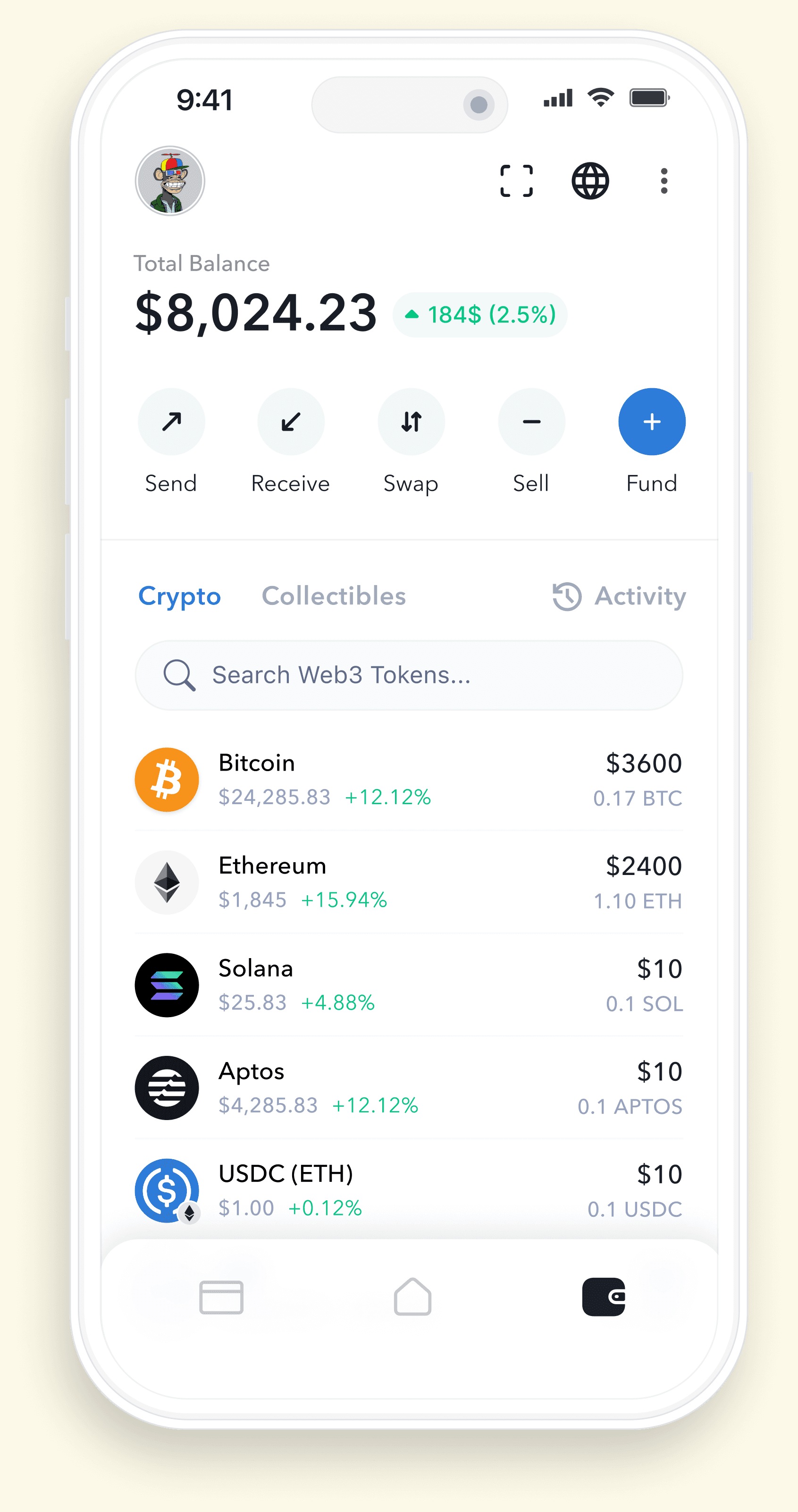
When the wallet arrived in December 2022, users could hold, send and receive crypto. That is a smaller proposition than a full financial universe. It was also a concrete one. At the time, in-app buying depended on a future exchange partnership, while NFT features and deeper decentralized finance access were still part of the expansion plan. Cogni had announced a proposed savings product built on DeFi rails that spring; the reporting also noted that the company was still working through compliance questions around it. The first thing to meet reality was the roadmap, not the basic wallet.
“The average consumer struggles to adopt Web3 services due to poor integration within existing platforms and overly complex user experiences.”Archie Ravishankar, December 2022 launch statement
This is the practical difference between an investment thesis and a release note. Cogni had raised money for a broad bridge between conventional finance and Web3. What it shipped first was a crossing narrow enough to use. Later company materials describe support for multiple chains, NFTs, decentralized apps and wallet actions beyond simple transfers. Its Android listing was updated in March 2025 and shows more than 10,000 downloads, a measure of distribution rather than active use.
Paycheck, card, transactions, gift cards.
Hold, send and receive digital assets.
Domain addresses and a Web3 Passport.
The address book problem
There is a peculiarly human flaw in crypto's machinery: people are bad at reading wallet addresses. A transfer destination looks like a password someone spilled across a keyboard. Cogni's 2023 partnership with Unstoppable Domains gave users a way to send and receive with a readable domain name instead. The company said users could also purchase premium domains through its wallet connection feature. It is a modest change with a large psychological effect. Names are objects people can check; strings of hexadecimal characters invite a second, nervous look.
In 2024, Cogni described a decentralized identity feature called Passport. Put alongside domain addresses, it shows where the company wanted the wallet to go: from a place to store coins toward a way to move through Web3 with an identity and an asset history. The firm's current website presents self-custody, multi-chain support, layer 2 networks, NFTs and decentralized apps as the central product. The banking origin is still essential to understanding the design, even as the wallet became the public face.
One balance view, readable destinations and familiar send and receive actions.
Different chains, key control, recovery, app connections and assets that carry different risks.
The cost of making complexity disappear
For a user, Cogni's basic banking pitch was free. Ravishankar told a podcast host in 2022 that the account had no basic fee and that the company was considering premium features such as credit tools. The public record does not give a clean breakdown of what Cogni earned from the account, the wallet or partners. The visible cost of the strategy is the $23 million Series A, co-led by Hanwha Asset Management and CaplinFO, with Solana Ventures, FTX Ventures and Ship Capital among the participants. Cogni also had to build across two worlds whose rules do not match neatly: regulated consumer finance and user-controlled digital assets.
That mismatch is the limit on the copycat version of this idea. A founder can borrow the useful part: introduce a difficult new behavior beside an existing, frequent one; launch the smallest version that teaches customers what to do; replace intimidating strings with readable names. It works only if the old habit is trusted, the new action is genuinely useful and the company can carry the operational and compliance load. A slick screen cannot make a wrong crypto address reversible, and a banking interface cannot insure wallet assets. Cogni's own site makes clear that crypto wallet funds are not held at a bank or FDIC insured.
What remains striking about Cogni is the direction of its walk. Many crypto products begin with a believer and ask everyone else to learn the vocabulary. Cogni began with the ordinary customer: a person buying groceries, collecting a paycheck or checking a card balance. Its story is the attempt to invite that person into a wallet without pretending the wallet is a bank account. The future it advertised was broad. The useful lesson is smaller, and sturdier: if you want someone to try a new financial tool, first show them where it belongs in the day they already have.