NASA’s contract management system arrived with a detail worth lingering over: nine months. Appian says the agency deployed NCMS in that time by adapting a proven solution. For a piece of software concerned with purchasing rather than planets, it is a surprisingly good opening line. The drama is in the starting point. Somebody had already done useful work, and the next team had the good sense to use it.
- The result: Appian reports a nine-month NASA deployment using adapted software.
- The business: HumanIT combines systems integration, low-code applications, analytics and security for federal clients.
- The lesson: Examine an existing baseline before paying to invent the whole application.
HumanIT Solutions, the Ohio technology company involved in that deployment, makes its living in this territory. It develops and integrates the systems that help organizations write contracts, manage investigations, connect databases and keep applications running. Its customers include government and defense organizations as well as commercial clients. These are jobs in which a beautiful demonstration is merely an introduction. The software must fit the institution.
That distinction gives HumanIT a more interesting identity than the usual catalogue of cloud, cyber and consulting services. Its acquisition work has a lineage. A system developed for one federal setting becomes the starting material for another. The pleasure of the story is that progress can involve a certain lack of originality.
Nine months, with a head start
The NASA Contract Management System handles the machinery around procurement. HumanIT describes its work as supporting contract writing, administration, workload management and reporting. Appian’s 2025 conference session, featuring NASA officials Stephen Shiplett and Geoffrey Sage, credits software reuse with saving millions in funding and years in development time and costs. Those are attributed savings, rather than an audited return-on-investment calculation.
Adapt a proven Appian solution. Deploy the procurement system. Keep improving it.
At Appian World in 2026, NASA returned to the subject. The session description emphasized a unified procurement platform managing billions in annual contract actions, a phased rollout and the contribution of expert partners. HumanIT’s own account identifies the company as having designed, developed and delivered the application in partnership with NASA.
The distinction between nine months and a phased rollout matters. A deployment number tells you when something became usable; the rollout account tells you that adoption has a sequence. Readers planning a modernization project should pay attention to both. A deadline can be met while a much longer process of configuration, support and improvement continues.
“Procurement is the foundation to get Artemis to the moon.”
Stephen Shiplett, quoted by Appian in 2026
A family tree of purchase orders
HumanIT’s acquisition capability sheet supplies the missing mechanism. It describes work on the Air Force’s CON-IT system. For the Centers for Medicare & Medicaid Services, the company says it refactored and federalized a CON-IT baseline for CALM in AWS GovCloud. For NASA, it describes NCMS as accelerated with the CALM baseline.
Here, CALM means the acquisition system in HumanIT’s capability material. The functions listed include requisitions, contracts, clause logic, solicitations, source selection, vendor management and closeout. It is a useful reminder that a contract is a life cycle, with work before the signature and after it. Automating a single form leaves plenty of bureaucracy untouched.
- 01CON-ITAir Force contracting baseline
- 02CALMAdapted for CMS and AWS GovCloud
- 03NCMSCALM baseline adapted for NASA
The word “baseline” does considerable work. It means a starting configuration, rather than a finished application that can simply be copied into a new agency. HumanIT lists architecture, cloud, training, development and DevSecOps among its NASA responsibilities. Adapting an existing system still requires engineers, domain knowledge and decisions about what must change.
The same habit appears in investigative software. HumanIT describes ORION work encompassing case management, legacy migration and a cross-domain solution. Its case-management sheet then describes the Pentagon Force Protection Agency starting from the ORION baseline for an incident and investigation system. Reuse is a recurring technique across its published work.
The other clock is procurement
A federal technology project has a purchasing schedule as well as an engineering schedule. HumanIT addresses the former through established acquisition routes, including its GSA Multiple Award Schedule and work associated with CADE, its Chatter Analytics Decision Engine. The business sells contracted expertise: development, integration, modernization and ongoing support.
The company presents SBIR Phase III as another route. In its description, this phase covers work derived from, extending or completing earlier SBIR research. HumanIT advertises an acquisition process of 45 to 90 days. That is a company estimate about getting on contract; it is a different clock from building and deploying software.
The practical inference is that technical reuse and a suitable purchasing route can reinforce each other. That inference has a condition: the proposed work must actually fit the route and the relevant research lineage. A convenient contract mechanism does not, by itself, make an unsuitable application suitable.
Reported potential value of the NCMS lifecycle optimization order awarded in December 2023, including Appian requirements and vendor-management solutions and licenses.
That figure comes from HigherGov’s record of NASA order 80NSSC24FA094. It illustrates the scale and scope of a particular engagement. It cannot be used as the price of the original nine-month rollout, a standard HumanIT fee or an amount already earned. An order’s potential value and a company’s revenue answer different questions.
A faster release needs a receipt
Low-code development helps explain how a reusable application can be adapted. HumanIT describes visual interfaces, prebuilt modules and automated routine coding. Business users and developers can work around a shared representation of the process. The appeal is concrete: spend less time recreating ordinary application plumbing and more time deciding how the work should move.
HumanIT also offers integration of CRM, ERP, business intelligence and custom applications. Its published approach begins with assessing existing systems and identifying their connection points. This is where the attractive new interface meets old records and other applications. The benefits depend on those systems exchanging usable, consistent information.
CADE adds another layer. HumanIT’s examples include measuring development velocity through Jira tickets, comparing planned milestones with completion dates, tracking elapsed time from development handoff to production and counting issues encountered in the delivery pipeline. It also describes tracking corrective-action time and help-desk tickets following releases.
Those examples are more illuminating than a broad promise of analytics. They provide a vocabulary for asking whether a team is improving. A release can arrive sooner and generate more support work. Looking at the release date alongside defects and ticket closure makes the claim of speed easier to examine.
Security accompanies that work. HumanIT describes controls incorporated into new systems and additional protections applied to existing ones. Its DevSecOps offering combines automated delivery with testing, assessments, vulnerability scanning and penetration testing. Its cloud services cover access controls, authentication and deployment choices across cloud, on-premises and hybrid environments.
The people behind the baseline
Mark Human, the company’s president and CEO, is an Air Force veteran with more than 30 years of enterprise IT experience, according to his company biography. HumanIT was founded in 2016; company profiles identify Human and Devon Twesten as co-founders. Its service-disabled veteran-owned identity belongs to a business serving institutions whose routines its leadership knows.
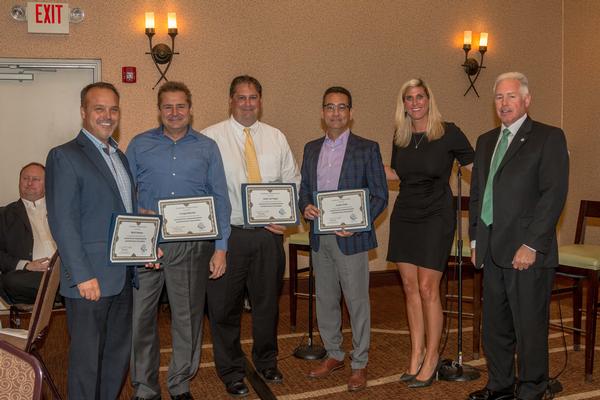
There are tangible details behind the company’s culture pitch. Its careers page advertises 20 leave days, 11 federal holidays including three floating holidays, and an approximately 5% annual employer retirement contribution whether the employee contributes or not. It also describes training, certifications and a commitment to recruiting and retaining veterans. These are stated employment benefits and priorities, rather than an independent verdict on the workplace.
Inc.’s record supplies an external growth marker: HumanIT appeared on the Inc. 5000 from 2021 through 2026. Its highest position in that sequence was No. 498 in 2022; the 2026 profile lists No. 3,164 and 95% three-year growth. Rankings move. The useful point is the repeated appearance of a business built around institutional software work.
What to borrow from the shortcut
HumanIT fits between software platforms and organizations that need those platforms made useful. Appian supplies a platform; HumanIT supplies integration and implementation expertise around real agency work. Buyers can also consider other systems integrators, other implementation partners or their own engineering teams. The distinguishing evidence here is the documented reuse lineage and the NASA deployment account.
For a reader, the copyable habit is straightforward. Before commissioning a new system, inspect existing workflows and applications. Identify what can travel, what must be rewritten and what the new environment demands of data and security. Set a usable first release, then measure what happens after people start using it.
That approach is most persuasive when organizations share substantial process logic. If the workflows, data structures or security requirements diverge sharply, adaptation may lose its time advantage. This is an engineering implication of reuse, rather than a reported HumanIT project failure. The baseline is valuable only to the extent that it fits.
NASA’s nine months offers a memorable number. The more useful idea sits underneath it: experienced people recognized that an existing system could become the beginning of the next one. For anyone staring at a proposal to rebuild everything, that is a question worth taking into the meeting.